

The solar system just got a little bigger. In the cold, dark expanse beyond Neptune, astronomers have spotted a new resident, giving us a fresh glimpse into the mysterious frontier of our own cosmic neighbourhood. This is the story of 2026 ED138.
A New Neighbour in the Darkness
Scientists
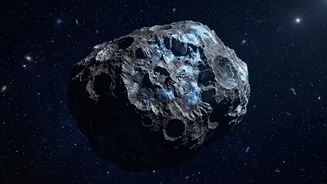
have announced the discovery of 2026 ED138, a large and bright object located in the far reaches of our solar system. It's classified as a trans-Neptunian object, or TNO, which means its orbit around the Sun is further out than Neptune's. For context, Pluto is the most famous TNO. While its exact size is still being determined, initial estimates place it between 600 and 1,500 kilometres in diameter, making it a candidate for dwarf planet status if confirmed. To be a dwarf planet, an object needs to be massive enough for its own gravity to pull it into a roughly spherical shape. This discovery is significant because there are currently only a handful of confirmed dwarf planets, including Pluto, Eris, and Makemake. The orbit of 2026 ED138 is also unusual; it is tilted significantly compared to the flat plane where the major planets travel, suggesting a turbulent past influenced by the gravity of giant planets like Neptune.
The Eye That Found It
This discovery wasn't just a lucky find; it was made possible by one of the most powerful new tools in astronomy: the Vera C. Rubin Observatory. Located high in the mountains of Chile, the observatory is conducting a decade-long project called the Legacy Survey of Space and Time (LSST). Its mission is to scan the entire southern sky every few nights, creating a massive, time-lapse movie of the universe. At its heart is the largest digital camera ever built for astronomy, with the ability to detect objects 100 million times dimmer than what's visible to the naked eye. This incredible sensitivity, combined with powerful software that sifts through billions of points of light, allows Rubin to spot faint, moving objects that were previously lost in the crowded backdrop of stars. In fact, after 2026 ED138 was first identified in recent data, scientists were able to find it in older images from other telescopes, some going back a decade, where it had been sitting unnoticed.
Why This Discovery Matters
Finding a single distant object like 2026 ED138 is more than just an astronomical curiosity. These TNOs are like frozen time capsules from the birth of our solar system over 4.5 billion years ago. Studying their composition, size, and orbits helps scientists piece together how the solar system formed and evolved. Their orbits can hold clues about the migration of the giant planets and how smaller objects were scattered into the outer solar system. Discoveries like this help us understand if our solar system's structure is common or rare in the galaxy. Furthermore, the orbits of some of these extremely distant objects have led to the tantalizing hypothesis of a yet-undiscovered 'Planet Nine', a large planet thought to be gravitationally influencing these smaller bodies from the shadows. Every new TNO provides another data point to test this theory.
The Tip of the Iceberg
As exciting as the discovery of 2026 ED138 is, it's just the beginning. The Vera Rubin Observatory only officially began its 10nday survey in June 2026. Even during its testing and early operations, the observatory has already identified thousands of new asteroids, including hundreds of TNOs. Astronomers have called these early finds 'the tip of the iceberg'. The LSST is expected to find millions of solar system objects, creating an unprecedented inventory of our cosmic backyard. This flood of data will empower scientists globally, as the information will be accessible through an online platform, revolutionizing how we map our corner of the galaxy. Discoveries of faint satellite galaxies and other transient events are already being made with early data, proving the observatory is a true discovery engine. Over the next decade, we can expect a wave of similar announcements, filling in the vast, dark gaps in our map of the solar system.