

A Famous Storm Gets a Fresh Look
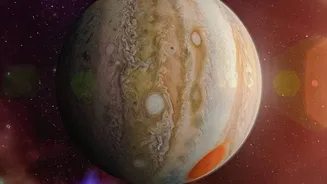
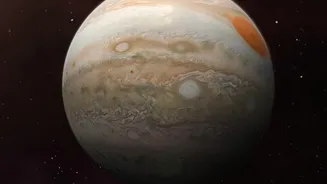
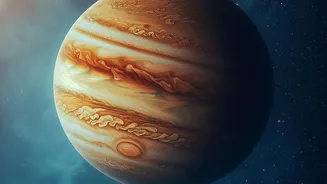
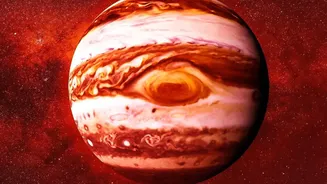
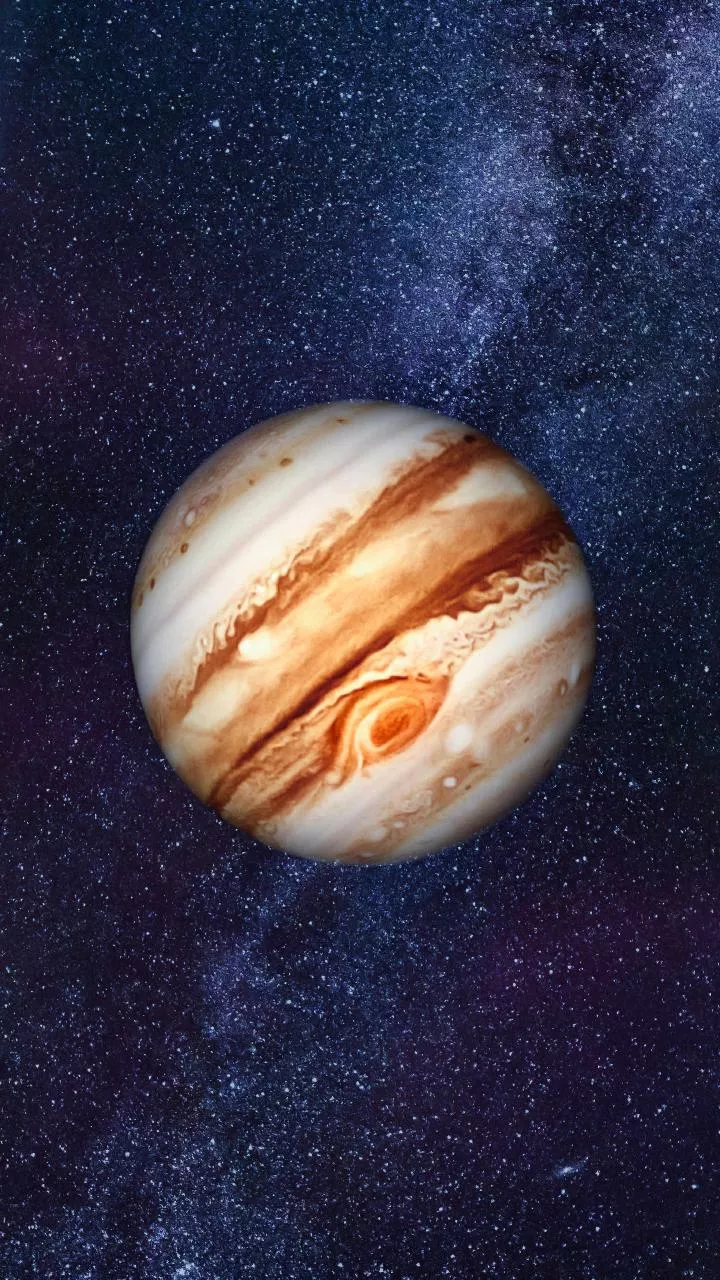
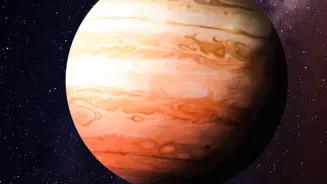
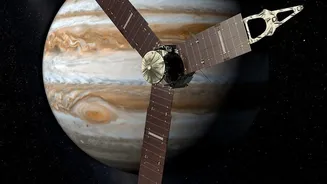
For as long as we have aimed telescopes at Jupiter, the Great Red Spot has stared back. This gigantic anticyclone is the largest and longest-lived storm in our solar system, a churning vortex of crimson clouds with winds far faster than any hurricane
on Earth. For over 150 years, it has been a permanent, if ever-changing, fixture. But the story of the Great Red Spot is one of constant evolution. Recent observations have confirmed that the storm is not just a static landmark but a dynamic and evolving weather system with new surprises in store for the astronomers who study it.
What the New Cameras Are Seeing
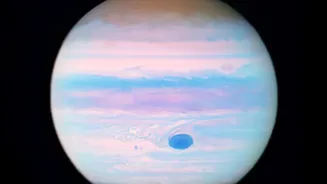
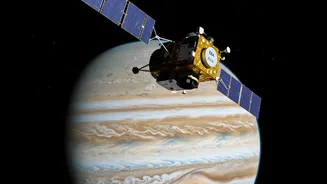
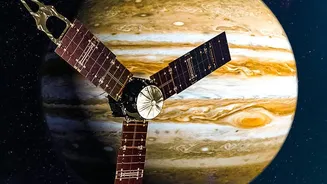
The latest findings come from a new generation of planetary imaging technology, including instruments on the Hubble Space Telescope. These powerful tools have documented significant new shifts in the storm’s dynamics. Rather than just steadily shrinking, the spot is now observed to be changing shape, becoming more circular and less of a distinct oval. Furthermore, the storm seems to oscillate, jiggling and changing in size and speed over a 90-day cycle. Scientists have noted that while the storm’s overall size continues a long-term shrinking trend, its internal wind speeds are not necessarily slowing down, and the storm itself appears to be growing taller as it contracts in width.
The Incredible Shrinking, Shifting Spot
The fact that the Great Red Spot is shrinking is not new. Astronomers have tracked its diminishing size since the late 1800s, when it was wide enough to swallow multiple Earths. In 1979, NASA's Voyager flybys measured it at about 23,000 kilometres across. More recent measurements put it closer to 14,000 kilometres, barely wider than one Earth. The rate of this shrinkage appears to have accelerated in the last decade. What makes the latest observations so compelling is how they complicate this narrative. The storm isn't simply fading away; it's reorganizing itself, with its shape becoming more compact and its structure changing in complex ways. Some scientists theorise that smaller eddies feeding into the storm could be responsible for these accelerated changes.
Why This Cosmic Weather Report Matters
Studying the Great Red Spot is more than just a celestial curiosity; it's a real-world laboratory for understanding planetary atmospheres. The forces that power this centuries-long storm could provide invaluable insights into fluid dynamics and meteorology that apply here on Earth. The surprising new data challenges existing models that predicted the storm would gradually dissipate. Instead, it seems to be transforming into a different kind of entity—more compact, but still intensely powerful. These findings force scientists to rethink their theories about what gives the storm its incredible longevity and what its ultimate fate might be. Will it eventually disappear, or will it stabilize into a new, more circular form? The answers remain hidden in Jupiter's turbulent clouds.