



What Is Space Weather?
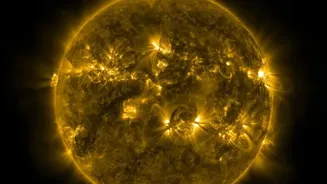
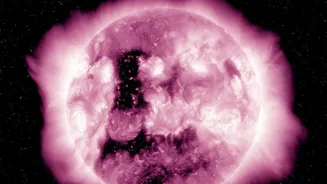
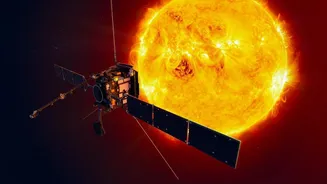
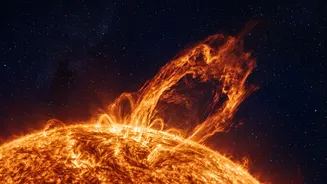
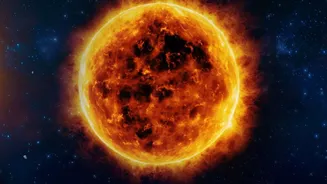
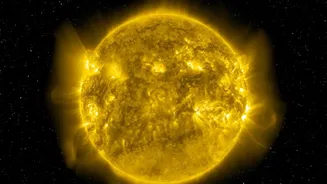
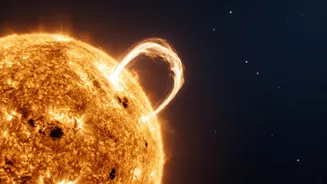
Think of space weather as the environmental conditions in space, driven primarily by our sun. Just like weather on Earth, it can be calm or stormy. The sun constantly releases a stream of charged particles called the solar wind. But sometimes, it unleashes
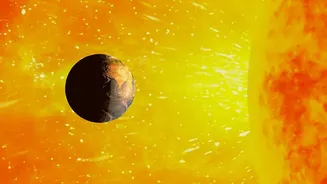
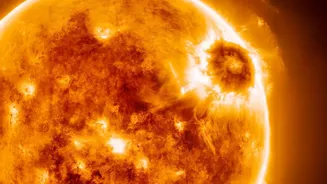
much more violent events: solar flares, which are intense bursts of radiation, and coronal mass ejections (CMEs), which are massive clouds of solar plasma and magnetic fields hurtling through space. When these events are aimed at Earth, they can cause significant disruptions, creating what are known as geomagnetic storms.
Why We Need to Pay Attention
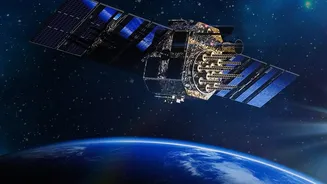
In our hyper-connected world, the impact of a severe solar storm could be devastating. These storms can disrupt radio communications, damage satellite electronics, and threaten astronauts with radiation. More critically, they can induce powerful electrical currents in the ground that can overload and damage power grids, potentially leading to widespread and long-lasting blackouts. They can also interfere with GPS signals, affecting everything from aviation and shipping to agriculture and personal navigation. As our reliance on technology grows, so does our vulnerability to the sun's temper tantrums.
The Old Way: A Race Against Time
Traditionally, forecasting space weather has been a significant challenge. Scientists have relied on physics-based models that, while useful, are often too slow to provide timely warnings for fast-moving events. By the time these models could process the data from satellites and predict the impact of a solar storm, there was very little time left to take protective measures. Some previous models could provide global predictions, but they weren't timely, while others were fast but only offered forecasts for specific local areas. It was clear that a faster, more accurate global system was needed.
Enter DAGGER: NASA's AI Forecaster
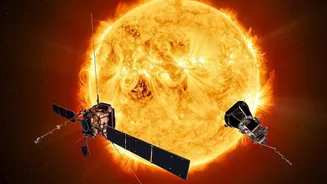
This is where NASA's new AI comes in. A model called DAGGER (Deep Learning Geomagnetic Perturbation) is changing the game. Developed by an international team of researchers, DAGGER uses artificial intelligence to analyze real-time data from NASA satellites monitoring the solar wind. By combining deep learning with live measurements from space, it can predict the location and severity of a geomagnetic disturbance anywhere on Earth with about 30 minutes of advance warning. The most incredible part? The AI can generate a new, updated prediction in less than a second.
How It Works and Why It's a Breakthrough
DAGGER was trained on vast amounts of data from past solar storms, allowing it to recognize the subtle connections between solar wind conditions and their eventual impact on Earth. When tested against storms that occurred in 2011 and 2015, the model was able to quickly and accurately forecast their effects. This speed and global precision represent a major leap forward. A 30-minute warning might not sound like much, but it's enough time for power grid operators, satellite controllers, and airlines to take critical preventative actions. This moves us from a reactive to a proactive stance. The lead author of a paper on the model, Vishal Upendran from India's Inter-University Center for Astronomy and Astrophysics, noted that this AI makes rapid, accurate global predictions possible, helping to prevent devastation to modern society.