


The Allure of a Hidden Ocean
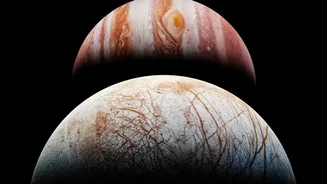
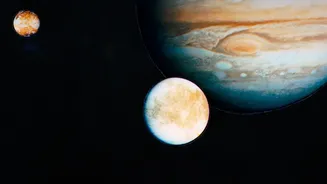
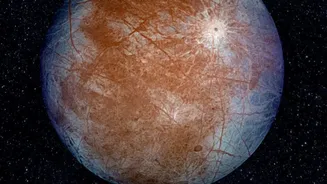
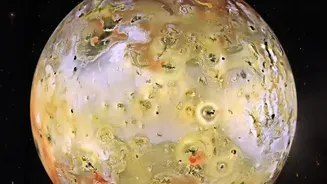
For decades, scientists have been captivated by Europa, one of Jupiter's largest moons. Slightly smaller than Earth's own moon, its surface is a bright, fractured landscape of ice, making it one of the smoothest objects in the solar system. But the real
excitement lies beneath. Data from the Galileo spacecraft in the 1990s revealed strong evidence that a global ocean of liquid saltwater is sloshing beneath that icy crust, which could be 10 to 15 miles thick. This ocean might be up to 100 miles deep. The gravitational tug-of-war with Jupiter generates enough heat through tidal flexing to keep this vast body of water from freezing solid, a process that could also fuel geological activity on the seafloor.
Introducing the Europa Clipper
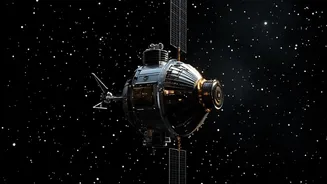
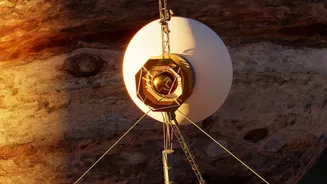
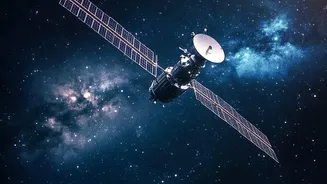
To investigate this tantalizing world, NASA launched the Europa Clipper spacecraft in October 2024. It’s the largest interplanetary spacecraft the agency has ever built, with solar arrays that span the length of a basketball court. After a 1.8-billion-mile journey, which includes gravity-assist flybys of Mars in 2025 and Earth in December 2026, the Clipper is scheduled to arrive in orbit around Jupiter in April 2030. Instead of orbiting Europa directly, which would expose it to Jupiter’s intense radiation, the spacecraft will loop around the gas giant and perform dozens of close flybys of the moon, some as low as 16 miles above the surface. This strategy allows it to gather detailed measurements while minimizing damage to its sensitive electronics, which are further protected inside a thick titanium and aluminum vault.
A Toolkit for an Alien Sea
The Clipper is equipped with a sophisticated suite of nine scientific instruments designed to act as our remote eyes, ears, and hands. Its ice-penetrating radar, called REASON, will be used to determine the thickness of the ice shell and confirm the presence of the ocean below. A magnetometer will measure the strength and direction of the magnetic fields around Europa, which can help determine the ocean's depth and salinity. Cameras will map the surface in high resolution, looking for signs of recent geologic activity, while spectrometers will analyze the chemical composition of the surface and any potential water vapor plumes that might be venting material from the ocean into space. These plumes, if they exist, could offer a direct sample of the ocean's chemistry without ever needing to drill through the ice.
Searching for the Ingredients of Life
While Europa Clipper is not designed to find life itself, its primary goal is to determine if Europa has the necessary ingredients for it: liquid water, essential chemistry, and a source of energy. We know the water is likely there. For chemistry, the mission will search for key compounds like carbon, hydrogen, nitrogen, and sulfur. For energy, since sunlight can't reach the subsurface ocean, life would need a different power source. This could come from chemical reactions fueled by interactions between the ocean water and the rocky seafloor, potentially at hydrothermal vents similar to those found in Earth's deepest oceans. Jupiter’s radiation, while dangerous on the surface, may also create compounds on the ice that, when cycled into the ocean, could provide chemical energy for life.
Beyond Europa: Understanding Ocean Worlds
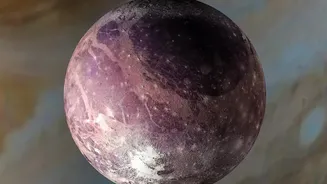
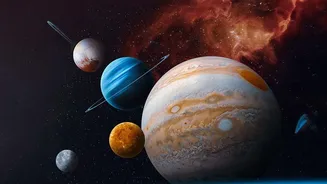
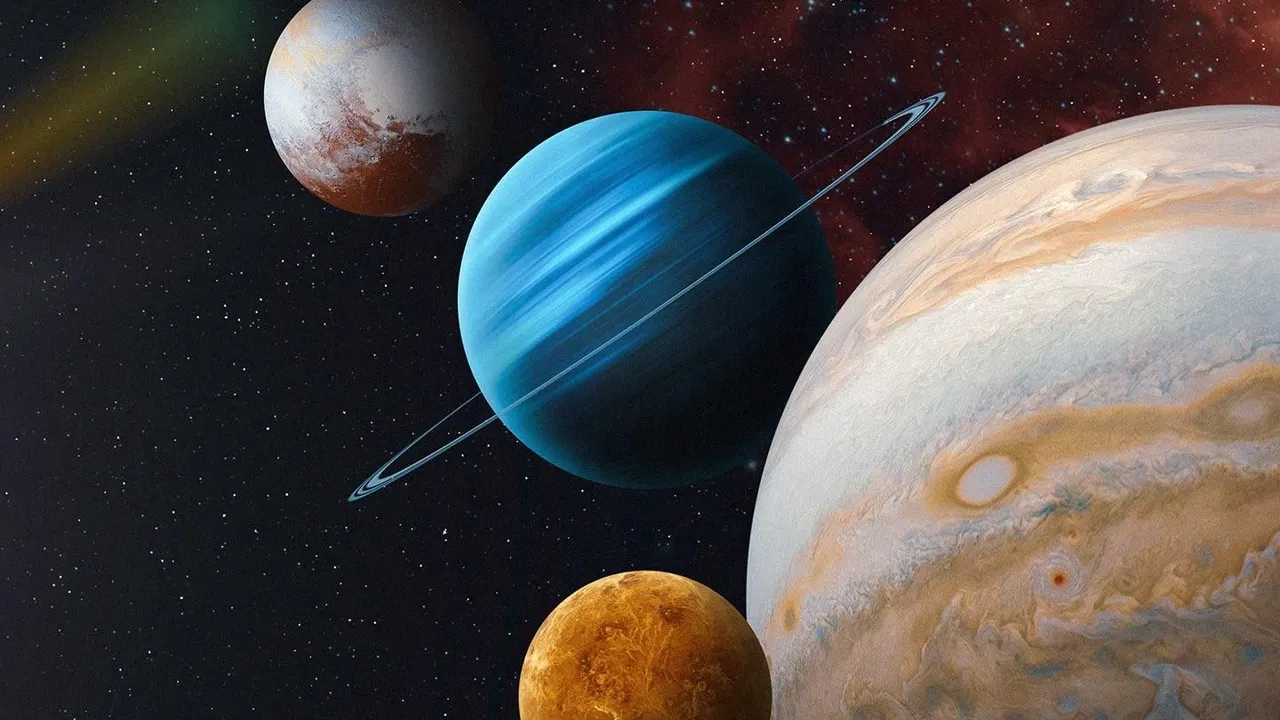
Europa is just one of several "ocean worlds" suspected to exist in our solar system, a list that includes Saturn’s moons Enceladus and Titan, and even the dwarf planet Pluto. These worlds have shattered the traditional idea of a "habitable zone" being defined solely by distance from a star. They show that gravitational energy can create habitable niches far from the sun's warmth. What the Europa Clipper mission learns will not only reveal the secrets of this specific moon but will also provide a blueprint for how to explore other ocean worlds. It will help us understand how common these environments are, how they work, and whether the potential for life exists in the cold, dark depths of our solar system and in similar worlds across the galaxy.