




A Policy Shift Opens the Skies
The catalyst for this transformation has been a deliberate policy shift by the Indian government. The establishment of the Indian National Space Promotion and Authorisation Centre (IN-SPACe) in 2020 was a game-changer. This agency was created to be a single-window
facilitator, empowering private companies to participate in the entire spectrum of space activities. From building satellites and launch vehicles to providing space-based services, the sector was thrown open. This move has been a resounding success, with the number of Indian space startups soaring from just a handful a few years ago to over 450 by mid-2026. The government's goal is to move beyond ISRO's foundational work and create a self-sustaining, competitive commercial space ecosystem. This has unlocked a wave of innovation and investment, setting the stage for exponential growth.
The Rocket Builders: Reaching for Orbit
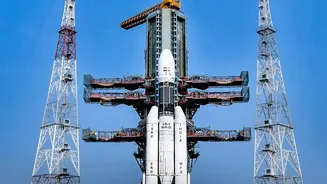
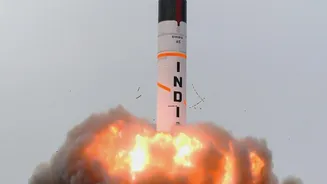
At the forefront of this new wave are the launch vehicle startups. Skyroot Aerospace made history in July 2026 with the successful orbital launch of Vikram-1, India's first privately developed orbital rocket. This landmark achievement placed India in an elite club of nations with private orbital launch capabilities, alongside the US and China. Not far behind is Agnikul Cosmos, which launched the world's first rocket powered by a single-piece 3D-printed engine. This innovation, along with their mobile launchpad system, promises to make space access more flexible and cost-effective. Both companies, founded by former ISRO scientists, exemplify the synergy between public sector experience and private sector agility, developing launch vehicles designed to carry small satellites into orbit for a global clientele.
The Eyes in the Sky: Satellites as a Service
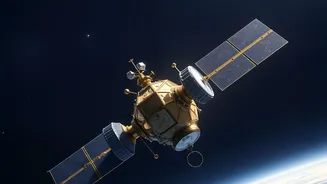
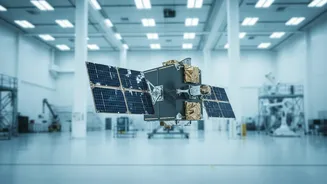
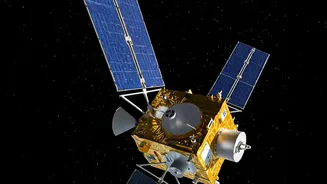
It’s not just about the rockets. A growing number of startups are focused on what goes inside them. Pixxel is a leader in this domain, deploying a constellation of the world's highest-resolution hyperspectral imaging satellites. These "eyes in the sky" can detect phenomena invisible to standard satellites, offering powerful data for agriculture, environmental monitoring, and industrial activity. By 2025, Pixxel had successfully launched the first phase of its 'Firefly' constellation and is planning its next-generation 'Honeybee' constellation for 2026. Meanwhile, Hyderabad-based Dhruva Space operates on a 'full-stack' model, providing everything from satellite components like solar arrays to complete satellite platforms and launch services for its clients. These companies are building the critical infrastructure for a data-driven economy, with applications spanning from telecommunications to disaster management.
Fueling the Economic Engine
The impact of these startups is not just technological; it's profoundly economic. India's space economy, currently valued at around $8.4 billion, is projected to surge to over $44 billion by 2030. This rapid growth is attracting significant investment, with private funding in the sector gaining momentum. Dhruva Space recently secured major funding to expand its satellite manufacturing capabilities. This influx of capital and activity is creating thousands of high-skilled jobs and fostering a robust domestic supply chain for complex engineering components. The commercial arm of ISRO, NewSpace India Limited (NSIL), has also seen its revenues skyrocket, reflecting the growing global demand for Indian space technologies and services. The goal is to increase India's share of the global space economy from the current 2-3% to a much more significant portion in the coming decade.