






A Telescope on a Planetary Scale
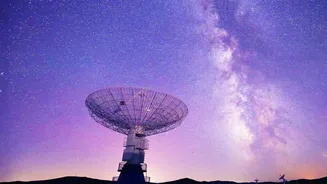
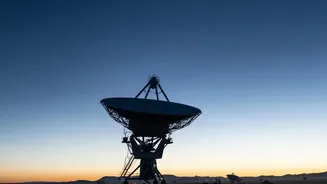
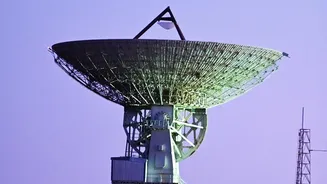
The Square Kilometre Array isn't a single telescope but a monumental project spanning two continents. In the deserts of Western Australia, over 131,000 tree-like antennas form the SKA-Low telescope, designed to capture low-frequency radio waves. Meanwhile,
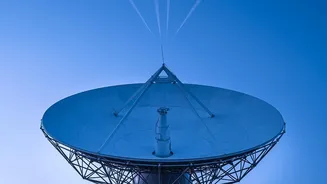
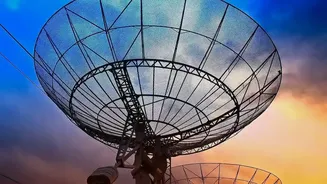
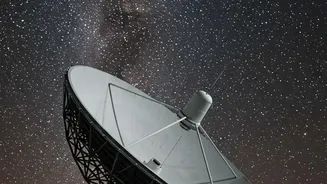
in South Africa's Karoo region, nearly 200 large dish antennas will make up the SKA-Mid telescope. Together, they form a single, colossal observatory managed by the SKA Organisation (SKAO) headquartered in the UK. Construction began in late 2022 and is expected to be completed in phases, with early operations already underway and full initial operations anticipated by the end of the decade. This global collaboration is one of the most significant scientific and engineering projects of the 21st century.
Listening for the Universe's First Light
The headline mission for the SKA is to peer back into a mysterious era known as the Cosmic Dawn. This is the period, a few hundred million years after the Big Bang, when the universe was emerging from its 'dark ages' and the very first stars and galaxies began to form. These first celestial objects were incredibly faint, and their light has been travelling for over 13 billion years. As the universe expanded, this ancient light was stretched into long, low-frequency radio waves. The SKA-Low telescope, in particular, is engineered with the extreme sensitivity needed to detect the faint signal of neutral hydrogen, the most abundant element in the early universe, which holds the key to mapping this transformative period.
Answering Fundamental Cosmic Questions
By detecting these primordial signals, astronomers hope to answer some of the biggest questions in cosmology. Observing the Cosmic Dawn and the subsequent Epoch of Reionisation—when light from the first stars changed the nature of hydrogen gas—will create a 3D map of the early universe's structure. This will reveal how the first stars and galaxies were born, how they evolved, and how the vast cosmic web of matter we see today came to be. Beyond this primary goal, the SKA's power will be used for a vast range of science. It will test Einstein's theories of gravity by timing pulsars with unprecedented accuracy, hunt for the origins of mysterious Fast Radio Bursts (FRBs), study the formation of planets, and even search for technosignatures that could indicate intelligent life elsewhere in the cosmos.
India's Pivotal Role in the Project
India is a full member of the SKA Observatory and has been a crucial partner from the project's early days. The Union Cabinet has committed ₹1,250 crore to the construction phase. Indian expertise, coordinated by the National Centre for Radio Astrophysics (NCRA) in Pune, has been central to the project's development. A key contribution was leading the design of the Telescope Manager—the complex software system that will serve as the 'brain' and 'nervous system' of the entire observatory. Indian institutions are also contributing significantly to the digital signal processing hardware and will host a regional data centre to process the immense volumes of information the telescopes will generate. This involvement places India at the forefront of global science and ensures its researchers will have prime access to this revolutionary facility.