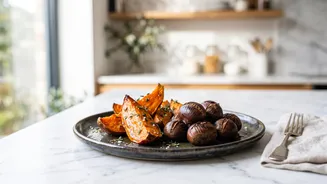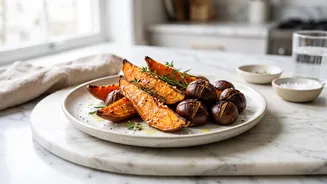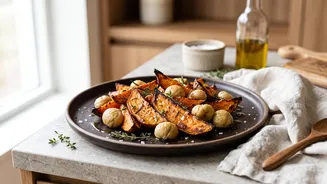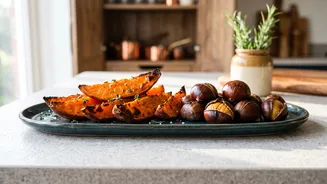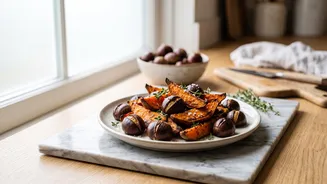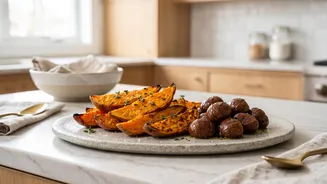


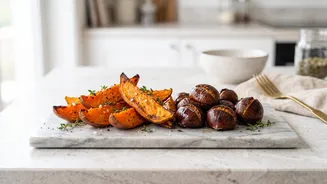
Sweet potatoes and chestnuts are beloved staples, especially as the weather cools. While both are celebrated for their starchy goodness, they couldn't be more different in texture. One bakes into a creamy, moist delight; the other is floury and crumbly.
The Tale of Two Starches
The secret to this textural mystery lies in their starch composition. Starch isn't just one thing; it's primarily made of two molecules: amylose and amylopectin. Think of amylose as straight, simple chains that can pack together tightly, creating dense, firm, and sometimes dry or floury textures. Amylopectin, on the other hand, is a large, bushy molecule with many branches. These branches prevent it from packing neatly, resulting in softer, moister, and stickier textures when cooked. The ratio of these two starches is the primary factor that dictates whether a food will be creamy like a sweet potato or crumbly like a chestnut.
The Sweet Potato’s Creamy Secret
Sweet potatoes, particularly the common orange-fleshed varieties, generally have a higher proportion of amylopectin and a significant amount of moisture. But their real magic trick involves enzymes. Sweet potatoes contain an enzyme called amylase that activates during cooking, specifically in the temperature range of about 57°C to 77°C. This enzyme breaks down the large starch molecules into smaller sugar molecules, primarily maltose. This process not only makes the sweet potato taste sweeter but also contributes to its signature moist, velvety texture. Slow roasting keeps the potato in this enzyme-active zone for longer, maximizing both sweetness and creaminess. The combination of high moisture, branched amylopectin, and enzymatic sugar conversion is what gives you that perfect, luscious baked sweet potato.
The Chestnut's Floury Firmness
Chestnuts, by contrast, are more like a potato than a typical oily nut. They have a high starch content but with a greater proportion of amylose. This high amylose content means the starch granules are more structured and less prone to turning gooey. Chestnuts also have a lower water content compared to sweet potatoes. When cooked, the starch granules swell and gelatinize, but because of the linear amylose chains, they separate into a fine, floury, or crumbly texture rather than a smooth paste. If overcooked, chestnuts can lose too much moisture and become hard and dry. Their unique structure makes them ideal for applications where you want a dense, slightly grainy texture, such as in stuffings or ground into gluten-free flour.
A Head-to-Head Comparison in the Kitchen
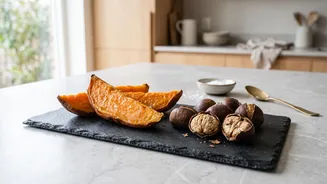
Imagine roasting both. The sweet potato will slowly soften, its skin might leak a syrupy, caramelized liquid, and its interior will become uniformly soft and spoonable. A roasted chestnut, after its shell is scored and peeled, reveals a firm but tender interior that easily crumbles under pressure. Now, consider mashing them. Mashing a cooked sweet potato yields a smooth, almost purée-like consistency, perfect for pies or creamy soups. Attempting to mash a chestnut results in a coarse, slightly dry meal. This fundamental difference is why sweet potato starch is often used as a thickener or to create chewy noodles, as it forms a stable, viscous gel. Chestnut flour, on the other hand, is prized in baking for providing structure and a delicate, crumbly texture.
Making the Most of Each Texture
To harness their best qualities, lean into their natural tendencies. Use orange-fleshed sweet potatoes for silky mashes, rich soups, and moist baked goods where their creamy texture and sweetness can shine. Their ability to bind and hold moisture is a significant asset. Reserve chestnuts for dishes where their earthy flavor and crumbly texture are desired. They are fantastic when roasted and broken into pieces over salads, incorporated into holiday stuffings for a pleasant textural contrast, or puréed into rich, decadent soups where their dense nature adds body. Candied chestnuts, or 'marrons glacés', are a perfect example of a preparation that celebrates the firmstentender structure of the cooked nut.