



Farming the Sun
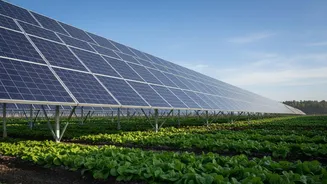
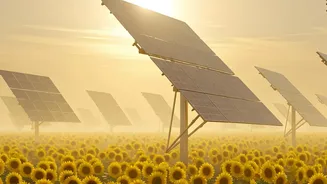
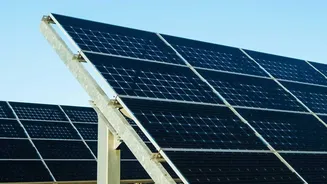
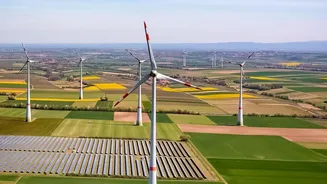
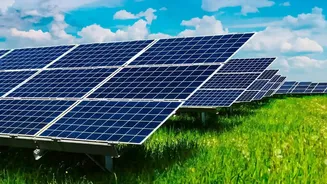
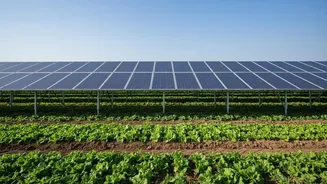
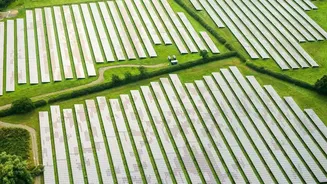
Imagine a farm where crops grow under the partial shade of solar panels, which are mounted high above the ground. This is agrivoltaics, the dual use of land for both agriculture and electricity generation. Instead of pitting energy needs against food
security in a competition for land, this model suggests they can coexist and even help each other. For a land-scarce, sun-rich country like India, which has ambitious renewable energy goals, the appeal is obvious. By potentially using just a fraction of its agricultural land, India could significantly boost its solar power output without displacing farming. The concept is being actively encouraged through central government initiatives like the PM-KUSUM scheme, which helps farmers install solar pumps and power plants.
The Dual-Benefit Promise
On the ground, the benefits of agrivoltaics can be significant. Farmers gain a second, stable income stream by selling surplus power to the grid, insulating them from the unpredictability of crop yields and market prices. This dual income is a cornerstone of schemes like PM-KUSUM. Furthermore, the solar panels create a unique microclimate. The shade they provide reduces heat stress on crops and lowers water evaporation from the soil, which is a major advantage in arid and semi-arid regions. Some studies and pilot projects across India have shown that certain crops, particularly shade-tolerant varieties, can see improved yields under the panels. This approach enhances climate resilience, protecting plants from harsh sun and extreme weather, while making land use more efficient.
The Limits of Capacity
However, India's push for agrivoltaics also shines a light on a critical issue: building generation capacity is only one part of the energy puzzle. The intermittent nature of solar power—it only works when the sun shines—poses a massive challenge for grid stability. Incidents like the 2023 voltage fluctuation at Pavagada Solar Park, which caused a huge loss of power in seconds, underscore how fragile the grid can be when integrating large amounts of variable renewables. Agrivoltaics decentralizes power generation, but it doesn't solve this fundamental problem of intermittency. Every new solar panel, whether on a mega-park or a small farm, adds to this challenge.
Beyond the Panels
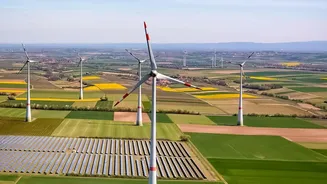
The real limitations highlighted by the solar push are systemic. Firstly, there are the high upfront costs and technical complexities of agrivoltaic systems, which can be a barrier for small farmers despite subsidies. Secondly, there is a growing mismatch between where renewable energy is generated and where transmission infrastructure exists to carry it. As of early 2026, a significant amount of renewable capacity, was connected via temporary grid arrangements, leading to power curtailment—a forced reduction in output—because the grid couldn't handle the load. This means that even when solar farms are generating power, they are sometimes asked to shut down, leading to revenue losses. This problem will only be amplified as thousands of new, small-scale agrivoltaic producers come online.
A More Integrated Approach
Simply adding megawatts of solar capacity, whether through large-scale parks or distributed agrivoltaics, is not a complete strategy. The success of India's energy transition depends on simultaneous investment in modernizing the grid, expanding transmission lines, and deploying energy storage solutions. Recent government initiatives, such as the Pradhan Mantri Surya Sarovar Yojana which aims to build floating solar projects with co-located energy storage, are a step in the right direction. These schemes acknowledge that managing peak demand and ensuring a stable power supply are as important as the generation source itself. For agrivoltaics to truly succeed, it needs to be part of a holistic ecosystem that includes not just panels and crops, but also smart grids, storage, and robust transmission networks.