





Gujiya: The Sweet Crescent
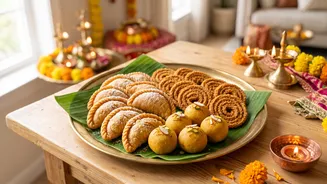
Arguably one of the most iconic Diwali sweets, particularly in North India, is the gujiya. These are sweet, crescent-shaped dumplings made from a simple flour pastry. The magic, however, lies within the filling: a rich and fragrant mixture of khoya (milk
solids), grated coconut, chopped nuts like almonds and pistachios, and scented with cardamom. Once filled, they are deep-fried until golden and crisp. The process of making gujiyas is often a family affair, with different generations gathering to roll, stuff, and shape these festive parcels. They represent the sweetness and richness that everyone hopes for in the year ahead.
Chakli or Murukku: The Savoury Spiral
To balance out the array of sweets, every Diwali spread needs its savoury stars. Chakli, also known as murukku in South India, is a crunchy, spiral-shaped snack that is utterly addictive. It's typically made from a dough of rice flour, gram flour, and a blend of spices like cumin and sesame seeds. This dough is then pressed through a special tool to create its signature spiky, circular shape before being deep-fried to perfection. The result is a light, crispy, and flavourful snack that is perfect to munch on as guests come and go. While the ingredients can vary by region, the satisfying crunch is universal.
Ladoo: The Essential Sweet Sphere
No Indian festival is complete without ladoos, and Diwali is no exception. These spherical sweets come in countless varieties. One of the most popular for Diwali is the Besan Ladoo, made by slow-roasting gram flour (besan) in ghee until it turns nutty and fragrant, then mixing it with sugar and shaping it into balls. Another favourite is the Motichoor Ladoo, made from tiny droplets of fried chickpea flour batter that are soaked in sugar syrup and then formed into spheres. Making ladoos is a labour of love, and offering them to guests and as part of religious ceremonies is a core tradition.
Namak Para & Shankarpali: The Diamond Cuts
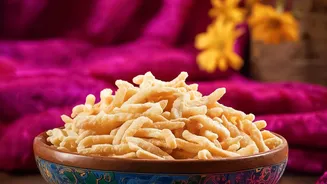
These crispy, diamond-shaped snacks are a staple in many households, especially in Western and Northern India. They come in two primary forms: the savoury 'namak para' and the sweet 'shankarpali'. Namak para is seasoned with salt, ajwain (carom seeds), and sometimes other spices before being fried. Shankarpali, its sweet counterpart, is made from a lightly sweetened dough that becomes wonderfully crisp and flaky when fried. Both are prepared in large batches before the festival begins and stored in airtight tins, ready to be served to anyone who drops by.
Chivda: The Ultimate Festive Mix
Chivda, also called Poha Chivda, is a savoury trail mix that is a cornerstone of the Maharashtrian 'Diwali Faral' (a collection of festive snacks). The base is flattened rice (poha), which is either fried or roasted until crispy. This is then mixed with a variety of other ingredients, including fried peanuts, roasted chana dal (split chickpeas), cashews, raisins, and thin slices of dried coconut. The entire mixture is seasoned with turmeric, salt, and curry leaves tempered in hot oil, creating a snack that is a delightful mix of sweet, salty, and crunchy textures.
Barfi: The Fudge of India
Barfi is a milk-based sweet with a texture similar to fudge, and it serves as a canvas for a wide range of flavours during Diwali. Kaju Katli, made from cashew nuts, is perhaps the most famous and is often gifted during the festival. Other popular versions include Coconut Barfi, made with fresh or desiccated coconut, and Besan Barfi, which has a rich, nutty flavour from roasted gram flour. These sweets are often decorated with edible silver leaf (varak) or chopped nuts, making them as beautiful to look at as they are to eat.