



Your Body's Natural Air Conditioner
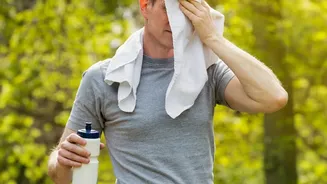
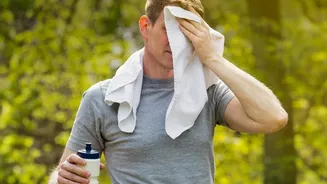
Your body is incredibly smart at managing its temperature. During exercise, your muscles generate a tremendous amount of heat as a byproduct of producing energy. To prevent overheating, your body initiates a cooling process, and its star player is sweat.
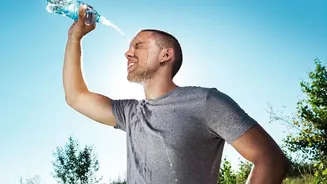
But it's not the sweat itself that cools you down; it's the evaporation of that sweat from your skin. As the liquid turns into vapor, it takes heat with it, effectively acting like a personal air-conditioning system that keeps your core temperature in a safe range. In dry conditions, this system is remarkably efficient.
How Humidity Hijacks the System
Humidity throws a wrench in these works. High humidity means the air is already saturated with water vapor. When your sweat appears on your skin, there's simply nowhere for it to go. The evaporation process slows down dramatically or even stops. Instead of vanishing into the air and taking heat with it, the sweat just pools on your skin, dripping off without providing much of a cooling benefit. Your body's primary cooling mechanism is severely compromised, forcing it to work much harder to try and regulate its temperature.
The Strain on Your System
When your body can't cool itself efficiently, a cascade of physiological effects begins. Your core temperature starts to rise more quickly than it would in drier conditions. In response, your cardiovascular system goes into overdrive. Your heart has to pump harder to send more blood to the surface of your skin in an attempt to shed heat, all while still needing to supply oxygen to your hard-working muscles. This dual demand leads to an increased heart rate, a phenomenon sometimes called cardiovascular drift. Essentially, you are putting a much greater strain on your heart to perform the same amount of work, which is why your perceived effort skyrockets.
Adapting Your Workout for Safety
This doesn't mean you have to abandon your fitness goals whenever it's humid. It just means you need to train smarter. First, hydration is key. Drink plenty of water before, during, and after your workout to replace the fluids lost through excessive sweating. Consider adding an electrolyte drink for longer or more intense sessions. Second, adjust your expectations and your intensity. Accept that you may not hit your personal bests; slow down your pace and listen to your body. Third, choose your gear and timing wisely. Wear light-colored, loose-fitting, and moisture-wicking clothing to help any possible evaporation. Opt to exercise during the cooler parts of the day, like the early morning or late evening.
Know the Warning Signs
Pushing too hard in high humidity can be dangerous and increases the risk of heat-related illnesses like heat exhaustion and the more severe heatstroke. Be aware of the early warning signs of heat exhaustion, which include heavy sweating, dizziness, fatigue, nausea, headache, and muscle cramps. If you start to experience any of these symptoms, you must stop your workout immediately, move to a cooler place, and rehydrate. Signs of the more serious heatstroke include confusion, a fast heart rate, hot skin that is not sweating, and a very high body temperature. Heatstroke is a medical emergency that requires immediate attention.