







A Fiery Greeting from Halley's Comet
The Orionid meteor shower is an annual event that occurs when Earth passes through the stream of debris left behind by Halley's Comet (1P/Halley). While the legendary comet itself only visits the inner solar system every 76 years—with its next return
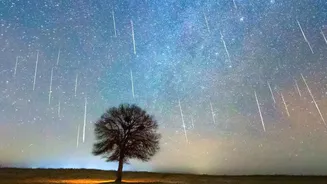
in 2061—it leaves a trail of cosmic dust and ice in its orbit. When these tiny particles, often no bigger than a grain of sand, enter our atmosphere at incredible speeds of around 66 kilometres per second, they burn up, creating the brilliant streaks of light we call meteors or 'shooting stars'. The Orionids are considered one of the most beautiful showers of the year, known for producing fast, bright meteors that can sometimes leave glowing trails lasting several seconds.
Peak Viewing and Moon Conditions for 2026
The key to a great meteor shower experience is timing and sky conditions. The Orionids will be active from early October to early November, but the best time to watch will be during the peak, on the night of October 21-22, 2026. Under ideal, dark-sky conditions, you could see between 10 to 20 meteors per hour. However, this year presents a challenge: a bright, waxing gibbous moon will be in the sky for much of the night, washing out the fainter meteors. But all is not lost. The best viewing window will be in the pre-dawn hours, after the moon sets (around 3 a.m. local time) but before sunrise. This period of darkness will be your prime opportunity to catch the show.
How and Where to Watch in India
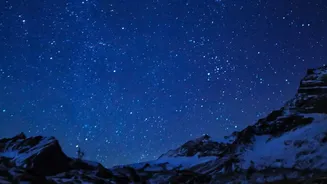
To see the Orionids, you don't need any special equipment like a telescope or binoculars, which actually limit your field of view. Your eyes are the best tool. The meteors will appear to radiate from the constellation Orion, but they can streak across any part of the sky. The best strategy is to find a comfortable spot, lie back, and look up at the widest expanse of sky possible. For the best experience, getting away from city lights is crucial. Light pollution from cities can drastically reduce the number of visible meteors. Consider heading to the outskirts of your town or city. For those seeking truly dark skies, places like Ladakh, Spiti Valley, the Rann of Kutch, and remote areas in the Himalayas or Western Ghats offer world-class stargazing conditions.
Your Simple Meteor-Watching Guide
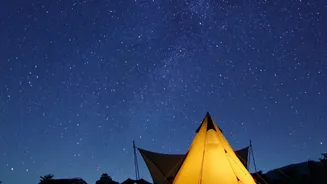
To make the most of the Orionid meteor shower, a little preparation goes a long way. First, check your local weather forecast for clear skies. Next, find a safe viewing location with minimal light pollution. Dress warmly, as even in India, the pre-dawn hours can get chilly, especially at higher altitudes. Bring a blanket or a reclining chair for comfort, as you'll be looking up for a while. It's essential to give your eyes about 20 to 30 minutes to fully adapt to the darkness; this will help you spot more of the fainter meteors. Finally, be patient. Meteor watching is a waiting game. There can be lulls in activity, followed by a sudden burst of several meteors. Enjoy the peace of the night sky while you wait for the cosmic fireworks to begin.