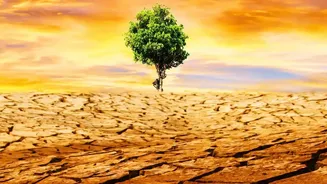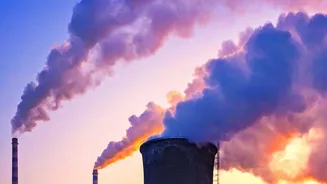






A stark new warning shot has been fired ahead of the COP31 climate summit. A UN-backed report confirms that global climate action has stalled, making it virtually inevitable that the world will overshoot the critical 1.5°C warming threshold.
Five Years of Stalled Progress
According
to a report released during a UN climate meeting in Antalya, Türkiye, global efforts to combat climate change have effectively stagnated for the past five years. The analysis, conducted by the independent Climate Action Tracker, found that while some positive steps have been taken, they have been cancelled out by setbacks and a failure to implement promised plans. This marks a significant slowdown from the first five years after the 2015 Paris Agreement, when global commitments managed to reduce the projected end-of-century warming by a full degree Celsius. Since then, however, the needle has barely moved, with global greenhouse gas emissions remaining at record highs in 2025, nearly identical to 2024 levels. The report warns this collective inaction has put the world on a dangerous path.
The 1.5°C Goal is Now Unavoidable to Overshoot
The most sobering conclusion from recent UN Environment Programme (UNEP) reports is that the window to limit global warming to 1.5°C without at least temporarily exceeding it has now closed. This overshoot is no longer a distant possibility but an impending reality, largely due to decades of insufficient action. Even under the most optimistic scenarios, where all national pledges and long-term net-zero targets are fully met, warming is projected to hit 1.9°C to 2.1°C. Current policies have the world on track for a much higher rise of 2.6°C to 2.8°C by 2100. Scientists stress that every fraction of a degree of overshoot matters, as it increases the risk of triggering irreversible tipping points, such as the collapse of ice sheets and abrupt changes in ocean circulation.
A Growing Gap Between Promises and Reality
The core of the problem lies in the widening 'emissions gap'—the difference between the emissions cuts countries have promised and the far deeper cuts required to meet the Paris Agreement goals. The latest UNFCCC Synthesis Report, which analyzes national climate plans (known as Nationally Determined Contributions or NDCs), found that current pledges are 'substantially off track'. Even if fully implemented, these plans would only reduce emissions by about 6% to 9% below 2019 levels by 2035. To have a chance of limiting the overshoot and returning to 1.5°C by the end of the century, global emissions need to be slashed by 45% by 2035 compared to 2025 levels. The current gap between promises and the necessary action is estimated to be a staggering 16 gigatonnes of CO2 equivalent in 2035.
What This Means for India and the World
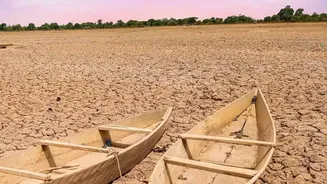
For climate-vulnerable nations, including India, an overshoot of the ١.٥°C target is not an abstract number ; it translates into more frequent and intense heatwaves, floods, and droughts . The reports highlight that while India's per capita emissions remain well below the global average, the country, along with China, continues to have significant coal capacity under construction, which poses a concern for future emissions . Negotiators from the Least Developed Countries (LDCs) have expressed alarm that divisions over mitigation ambition and a lack of adequate climate finance are undermining global efforts . They argue that while an overshoot may now be unavoidable, the fight must shift to limiting its magnitude and duration, which requires immediate, deep emissions cuts and robust financial support for adaptation in developing countries .
With the ١.٥°C goal effectively missed for now, the conversation among climate experts and policymakers has shifted . The focus is now on achieving the 'lowest possible overshoot' and ensuring a 'point of return' to ١.٥°C by ٢١٠0 . This is the new , urgent battleground . Achieving this will require an unprecedented acceleration of action : tripling renewable energy capacity , cutting coal -fired power by at least ७٥% , and slashing methane emissions by ٢0٣٥ . These stark findings will form the critical backdrop for the upcoming COP३١ negotiations in Antalya , where world leaders will be under immense pressure to abandon incrementalism and finally deliver the transformative climate action that science has long demanded .