



Nature's Unplanned Experiments
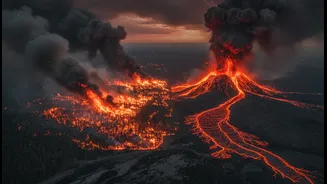
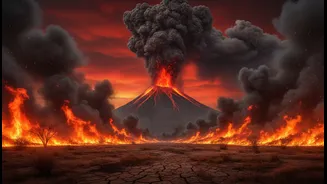
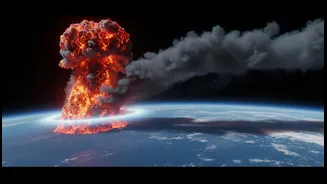
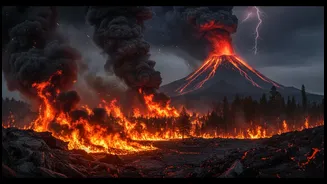
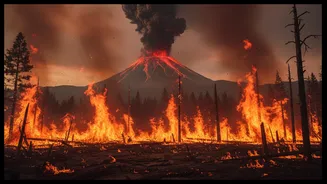
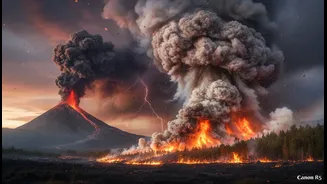
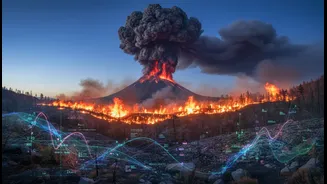
When a major volcano erupts or a massive wildfire burns, it represents a disaster on a huge scale. But for climate scientists, it's also an unplanned experiment. These events inject enormous quantities of gases, ash, and smoke into the atmosphere, providing
a rare opportunity to see how Earth’s climate system responds to a major jolt. Scientists use these events to test and refine Earth system models, which are the complex computer simulations used to project future climate scenarios. By comparing what the models predict with what actually happens after an eruption or fire, researchers can identify weaknesses in their simulations and improve them. It's a crucial process for separating natural climate fluctuations from human-caused changes.
The Volcanic Cooling Effect
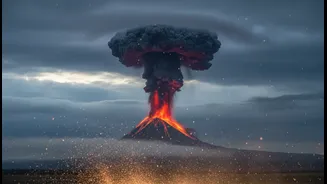
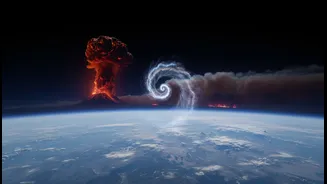
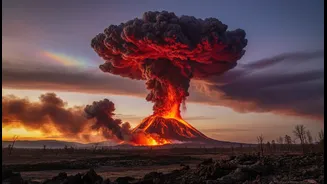
Large volcanic eruptions, especially in the tropics, are famous for their temporary cooling effect on the planet. When a volcano like Mount Pinatubo erupted in 1991, it spewed millions of tons of sulfur dioxide into the stratosphere. This gas converts into sulfate aerosols, tiny reflective particles that act like a planetary sunshade, scattering sunlight back into space and cooling the Earth's surface for a year or two. By studying the aftermath of such eruptions, scientists have been able to validate and improve how their models handle aerosols. This is vital, as aerosols are one of the biggest sources of uncertainty in climate projections. However, this effect is complex; the aerosols also trap heat, and their overall impact can change depending on how warm the Earth already is. Accounting for the sporadic, unpredictable nature of volcanic eruptions remains a major challenge for long-term forecasting.
Wildfires and Atmospheric Chaos
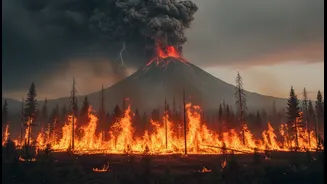
Unlike the more straightforward cooling from volcanoes, the impact of wildfires is more complex and challenging to model. Extreme wildfires can now generate their own weather, creating massive, smoke-infused thunderstorms called pyrocumulonimbus (pyroCb) clouds. These powerful storms can inject smoke into the stratosphere, with an impact comparable to a moderate volcanic eruption. This smoke can travel long distances, affecting air quality and weather far from the fire itself. Simulating these fire-atmosphere feedback loops, where the fire influences the weather which in turn influences the fire, is a new frontier in climate science. Recent breakthroughs now allow some Earth system models to simulate pyroCb events, providing a foundation to explore their regional and global impacts.
A Lesson in Humility and Uncertainty
While these natural disasters provide invaluable data, they also serve as a profound lesson in humility. The headline's caution against "overstated climate certainty" is critical. Scientists use these events to better understand specific processes, like aerosol behavior or cloud formation, but they are not perfect analogues for human-caused climate change. For instance, while volcanic aerosols provide temporary cooling, they don't counteract the long-term warming from centuries of carbon dioxide emissions, which remains in the atmosphere for much longer. Similarly, studying volcanic cooling has revealed potential risks and limitations of proposed climate geoengineering techniques. The unpredictable nature of these events—and the complex, sometimes contradictory effects they produce—reinforces a core principle of climate science: the Earth's system is incredibly complex. The more scientists learn from these events, the more they understand the scale of the uncertainties they still face.