





Why Do Interest Rates Change?
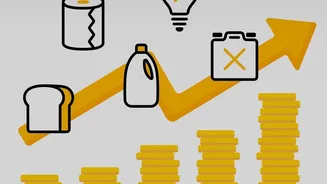
Central banks like the RBI use interest rates as a primary tool to manage the economy. When inflation is high, meaning prices for goods and services are rising too quickly, the RBI increases its main policy rate, known as the repo rate. This makes borrowing
more expensive for commercial banks. To maintain their funds and attract more public savings, banks then tend to increase the interest rates they offer on products like loans and, importantly, fixed deposits. This chain reaction is designed to slow down spending and bring inflation under control.
Good News for New Deposits
If you are planning to open a new FD, a rate hike cycle is great news. When banks increase their FD rates, any new deposit you book will be locked in at this higher rate. This means you earn more interest over the tenure of your deposit compared to someone who invested before the rates went up. Investors looking to open fresh FDs can benefit significantly by securing these improved returns, which provide a bigger payout at maturity. Timing your investment to coincide with a period of rising rates can be a simple but effective strategy to maximise your earnings from FDs.
The Dilemma of Existing FDs
For those who already have money locked in an FD, the situation is different. The interest rate on your existing fixed deposit is locked in for its entire tenure and does not change even if the bank starts offering higher rates on new deposits. This can be frustrating, as you see new investors getting a better deal. You are stuck with the older, lower rate until your deposit matures. This leads to a common question: should you break your existing FD to reinvest at the higher rate?
Should You Break Your FD? Do the Math
Before you rush to break an existing FD, it's crucial to understand the costs. Banks impose a penalty for premature withdrawal, typically ranging from 0.5% to 1%. More importantly, the bank recalculates the interest you've earned. You won't get the original contracted rate; instead, you'll get the rate that was applicable for the period the deposit actually ran, minus the penalty. For example, if you break a 3-year FD after one year, you'll get the 1-year rate that was available when you started, less the penalty. You must calculate if the extra interest from the new, higher-rate FD will be enough to cover both the penalty and the interest lost from your original deposit. Often, if the rate difference isn't substantial or your FD is close to maturity, it's better to let it run its course.
A Smarter Strategy: FD Laddering
Instead of putting all your money into a single FD, a strategy known as 'laddering' can offer more flexibility in a changing rate environment. This involves splitting your investment into multiple FDs with different maturity dates. For instance, you could divide your funds into one, two, and three-year deposits. As each FD matures, you can reinvest it at the prevailing interest rate. This approach provides regular access to your funds (liquidity) and allows you to take advantage of rising rates without having to break existing deposits. It helps balance your portfolio, ensuring that at least part of your money can be reinvested at higher rates during a rising cycle.