





The Body's Secret Postal Service
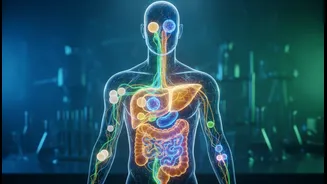
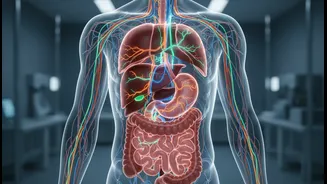
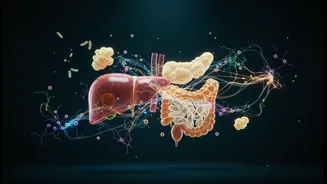
Think of your body's organs—like the liver, fat tissue, and brain—as different cities. For the entire country to run smoothly, these cities need to communicate. Scientists call this "inter-organ communication" or "crosstalk". For a long time, we've known
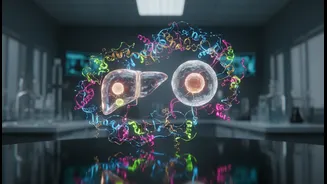
about hormones and nerves carrying messages, but a deeper, more intricate system is now coming into focus. This system uses proteins and other molecules as its couriers. An organ like your liver can release a specific protein into the bloodstream, which then travels to fat tissue with a set of instructions, and vice-versa. This constant messaging is essential for maintaining a healthy balance in everything from your energy levels to your appetite. When this communication network functions well, your body maintains metabolic homeostasis; but when the signals get crossed, it can lead to disease.
Proteins: More Than Just Building Blocks
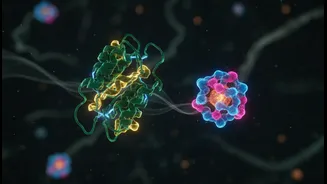
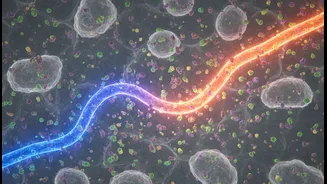
When we hear 'protein,' we often think of muscle-building and diet. But some proteins have a second, crucial job as signaling molecules. These messenger proteins, sometimes called cytokines or organokines, are produced by a sending cell and secreted into the body's circulation. They travel until they find a target cell on another organ that has the correct 'receptor'—a sort of molecular docking station that perfectly fits that specific protein. Once the protein binds to the receptor, it triggers a chain of events inside the target cell, delivering its message and causing a change in the cell's behavior. This might involve switching a gene on or off, or telling the cell to produce more or less of a certain substance. It's an incredibly precise system that regulates countless biological processes.
The Fat, Liver, and Immune System Connection
The conversation between adipose (fat) tissue, the liver, and the immune system is particularly important for metabolic health. Healthy fat tissue sends out signals that help regulate energy and keep inflammation in check. However, in conditions like obesity, the fat tissue itself can become inflamed and start sending out pro-inflammatory signals. Research shows that in severe obesity, adipose tissue can produce 100 to 1000 times more inflammatory cytokines than the liver, effectively becoming a 'cytokine factory'. These harmful signals travel to the liver, contributing to conditions like non-alcoholic steatohepatitis (NASH), a serious form of fatty liver disease. This crosstalk is a two-way street; stress signals from the liver can also trigger responses in fat tissue and alert the body's immune system, creating a cycle of low-grade, chronic inflammation that is linked to many modern diseases.
When Good Signals Go Bad
Dysregulation in this complex communication network is a key driver of disease. For instance, faulty signals from inflamed fat tissue can contribute to insulin resistance, a hallmark of type 2 diabetes, by telling muscle and liver cells to ignore insulin's message to absorb sugar from the blood. Similarly, confusing or incorrect signals can disrupt the delicate balance of the immune system, causing it to either underreact to threats or overreact and attack the body's own tissues. Scientists are now investigating how these communication breakdowns contribute to a wide array of conditions, including metabolic syndrome, cardiovascular disease, neurodegenerative disorders, and even some forms of cancer. By understanding where the messaging goes wrong, researchers hope to find new ways to intervene.
The Future: Eavesdropping and Intervening
This clearer picture of organ-to-organ communication opens up exciting new possibilities for medicine. What if we could develop drugs that intercept the 'bad' signals sent by inflamed fat tissue? Or what if we could create therapies that mimic the 'good' signals to restore balance? Researchers are already exploring these avenues. A recent breakthrough at Duke University identified molecules that can directly target key proteins involved in moderating these signals, potentially offering a way to fine-tune cellular responses with pharmacological precision. The ultimate goal is to move beyond treating symptoms and instead target the root cause of the disease by correcting the faulty communication. By learning the language of our organs, we may be able to develop smarter, more effective treatments for some of our most challenging health problems.