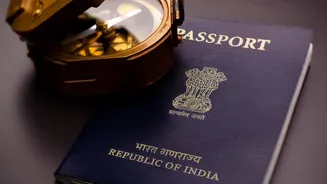







Triple-Check the Personal Details
The most basic errors are often the most disruptive. Before any payment, meticulously review all personal information. Ensure every passenger's name is spelled exactly as it appears on their government-issued ID or passport. A small typo can lead to significant
issues at airports or hotels. Double-check all dates and times, paying close attention to AM/PM, especially for flights that depart after midnight. It's easy to book a flight for 1:00 AM on the wrong day, meaning you show up to the airport a full 24 hours late. Also, confirm airport codes, as some Indian cities have multiple airports.
Verify Your Vendor’s Legitimacy
A professional-looking website is not enough to prove a tour operator or travel agency is genuine. Before committing, do some quick research. Ask for the company’s registration details. A legitimate operator in India should be able to provide a Goods and Services Tax number (GSTIN), which you can verify on the official GST portal. You can also check for Ministry of Tourism approval. Look for a physical office address you can find on a map and read reviews spread across multiple independent platforms, not just the company’s own website. Be cautious of operators who pressure you to pay immediately, as this is a common red flag.
Scrutinise the Inclusions and Exclusions
Vague terms like 'all-inclusive' can be misleading. A trustworthy proposal should clearly list what you are paying for. If booking a tour package, confirm that hotels are named, not just described by a category like 'five-star'. Check if monument entrance fees, meals, domestic flights, and guide services are explicitly included. For transportation, understand the vehicle type and whether a dedicated driver is provided for the entire trip. If something is not written down, assume it is not included. Ask direct questions to clarify any doubts. A reliable company will give you straight answers.
Get Everything in Writing
Verbal agreements are easily forgotten or disputed. Insist on a written confirmation for all your bookings before you transfer any money. This document should serve as your contract and include all the specifics: final prices, payment schedules, accommodation details, flight itineraries with booking references (PNRs), and a full list of inclusions. This 'paper trail', whether in an email or a formal document, is your primary source of proof if any issues arise later. Save all correspondence, receipts, and confirmations in a secure digital folder and consider keeping printed copies as well.
Confirm Directly with the End Provider
Even if you book through a travel agent or a third-party website, it is wise to make a direct confirmation. Once you have a booking reference, call or email the hotel or airline directly to verify your reservation. This simple step helps you bypass common scams where a driver might falsely claim your hotel is closed to redirect you to a commission-based alternative. Direct confirmation ensures that your booking exists in their system and matches the details you were given, providing an essential layer of security and peace of mind before you travel.
Understand the Cancellation Policy
Plans can change, and it’s important to know what happens if they do. Before paying a deposit, make sure you have received and understood the cancellation terms in writing. Be aware that the cheapest fares and rates are often the most restrictive, with no option for refunds or changes. A legitimate company should be transparent about its cancellation and refund policies. Understand when your final balance is due and what penalties apply if you need to alter your dates or cancel the trip. This information is just as important as the price itself.