









Defining Your High-Energy Days
A high-energy day is a period when you feel mentally sharp, focused, and motivated. During these peak times, you’re primed to tackle your most demanding and important work. This is the time for what author Cal Newport calls "deep work"—tasks that require
intense concentration, problem-solving, and creativity. Think of activities like writing a complex report, brainstorming a new strategy, coding a difficult feature, or engaging in high-stakes decision-making. By scheduling these cognitively demanding tasks during your peak windows, you produce higher quality output in less time and with less struggle. Wasting this precious time on minor administrative chores is like using a race car for a grocery run; it’s an inefficient use of a powerful resource.
Understanding Maintenance Days
Maintenance days, or low-energy periods, are just as crucial for a sustainable plan. These are the times when your energy naturally dips, and focus becomes more difficult. Instead of fighting this slump with another cup of coffee, you can use these periods strategically. Maintenance days are perfect for handling routine, low-stakes tasks that don’t require significant brainpower. This includes answering emails, organizing your files, scheduling meetings, paying bills, or tidying your workspace. These activities, while necessary, can fragment your attention if done during peak hours. By batching them together during low-energy times, you keep your high-energy periods free for what truly matters, preventing mental fatigue and maintaining momentum.
How to Identify Your Energy Rhythms
The foundation of this entire strategy is self-awareness. To identify your unique energy patterns, you need to become an observer of your own daily cycles. For one to two weeks, keep a simple energy log. Every few hours, rate your energy level on a scale of 1 to 10 and briefly note what you're doing. You'll start to see clear patterns emerge. Maybe you’re a classic morning person who feels sharpest from 9 AM to noon. Or perhaps you're a night owl who finds a creative surge after 6 PM. Pay attention to the post-lunch slump or a surprising second wind in the late afternoon. This data is your personal map to scheduling work more intelligently.
Structuring Your Week for Sustainability
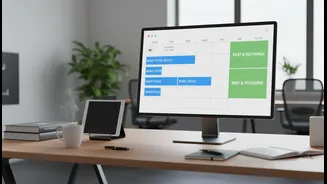
Once you have a handle on your energy peaks and troughs, you can start structuring your week. Look at your calendar and your to-do list together. Categorize your tasks into high-energy and low-energy (maintenance) buckets. Now, block out time in your calendar for deep work during your identified peak hours. Treat these blocks like non-negotiable appointments. Then, schedule your maintenance tasks during your energy dips. For example, if you're sharpest in the morning, reserve 9 AM to 11 AM for your most important project and save email replies for 2 PM to 3 PM when you feel a natural slowdown. This method of time-blocking around energy ensures you’re always using the right fuel for the task at hand.
The Power of Intentional Rest
A sustainable plan isn’t just about sorting tasks; it’s about recognizing that rest is not a luxury but a necessity for performance. True maintenance isn't just about clearing your inbox; it's about recharging your energy. Building recovery time into your routine is essential for avoiding burnout. This means prioritizing 7-9 hours of sleep, taking short breaks throughout the day, and completely detaching from work. A short walk, a few minutes of meditation, or simply stepping away from your screen can help refresh your mind and prevent the fatigue that leads to mistakes and exhaustion. Scheduling recovery on purpose ensures your energy reserves are replenished, allowing you to show up fully for your next high-energy session.