



The Mission's Enduring Success Story
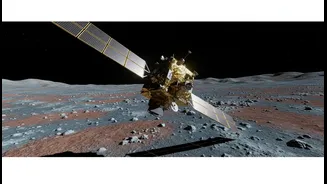
Launched in 2019, the Chandrayaan-2 mission had two primary components: a lander-rover duo and an orbiter. While the Vikram lander's attempt to soft-land near the South Pole ended in heartbreak, the orbiter successfully entered its planned orbit 100 km
above the Moon. This unsung hero of the mission was packed with eight advanced scientific instruments, designed to map the Moon's surface, study its mineralogy, and peer into its tenuous atmosphere. Years later, it's this orbiter that continues to provide a treasure trove of high-resolution data, far exceeding its initial mission objectives and proving its immense long-term value.
The Groundbreaking Hunt for Water Ice
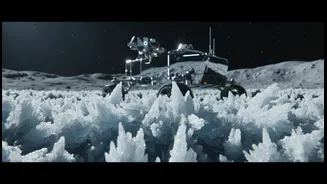
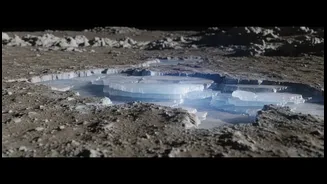
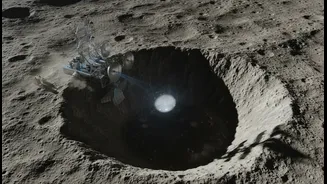
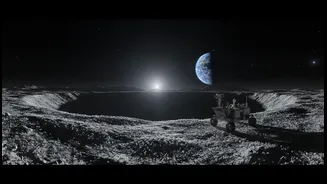
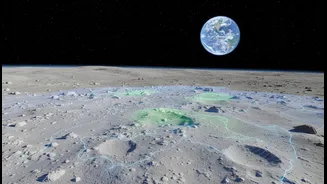
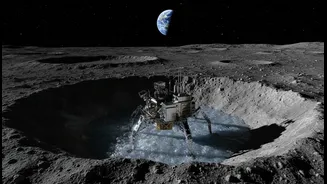
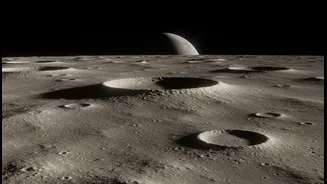
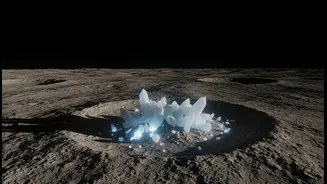
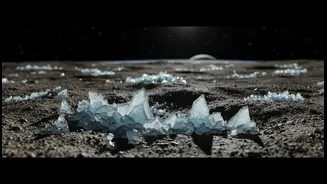
The most significant conversations driven by Chandrayaan-2 revolve around water ice. The Moon's South Pole is a region of strategic importance precisely because it contains Permanently Shadowed Regions (PSRs) — craters and depressions that haven't seen sunlight in billions of years. In these incredibly cold areas, with temperatures dropping to around -248°C, scientists theorized that water ice could be trapped and preserved. The orbiter's Dual-Frequency Synthetic Aperture Radar (DFSAR) has been crucial in this search. This powerful instrument can probe beneath the lunar surface, distinguishing between rough, rocky terrain and potential ice deposits. Recent analyses from scientists at the Physical Research Laboratory using DFSAR data have revealed strong evidence of subsurface ice in several craters, some buried under a layer of lunar soil. This is a game-changer, suggesting reservoirs of water not just on the surface, but hidden below.
Why Subsurface Ice is a Holy Grail
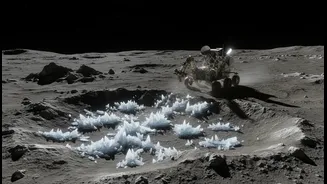
Finding ice is one thing, but finding it buried beneath the surface is even more significant. This subsurface ice is better protected from the harsh space environment, including solar radiation and micrometeoroid impacts, making it more stable over geological time. For future lunar missions, this resource is a potential goldmine. Water ice can be harvested and converted into drinking water for astronauts, breathable oxygen, and, critically, hydrogen and oxygen for rocket fuel. The ability to generate these resources on the Moon itself — a concept known as In-Situ Resource Utilisation (ISRU) — would dramatically reduce the cost and complexity of establishing a long-term human presence or a base for further exploration into the solar system. Chandrayaan-2's data is essentially a treasure map, pointing future missions toward the most promising locations for these vital resources.
Informing the Next Wave of Lunar Missions
The data from Chandrayaan-2 isn't just for Indian scientists. It has become a vital resource for the global space community. Its high-resolution cameras, like the Orbiter High Resolution Camera (OHRC), offer some of the most detailed images of the lunar surface ever captured from orbit. These images were used by JAXA, Japan's space agency, to help their SLIM lander achieve its historic pinpoint landing in 2024. Furthermore, Chandrayaan-2's data is being used to help NASA identify and characterize potential landing sites for its upcoming Artemis missions, which aim to return humans to the Moon. By complementing data from older orbiters like NASA's Lunar Reconnaissance Orbiter (LRO), Chandrayaan-2 helps to create a much clearer picture of the challenges and opportunities at the lunar South Pole. The orbiter's instruments are also revealing new insights into the Moon's very thin atmosphere, or exosphere, by observing how it reacts to solar events like Coronal Mass Ejections.