





Seeing the Invisible
The light our eyes can see is just a sliver of the full electromagnetic spectrum. Beyond the red light we perceive lies infrared, a wavelength of light that is essentially heat radiation. Many objects in the universe are too cool or distant to glow brightly
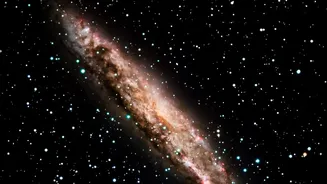
in visible light, but they still emit this infrared heat. More importantly, visible light is easily blocked by vast clouds of cosmic gas and dust. Infrared light, with its longer wavelength, can pass straight through this cosmic fog. This allows astronomers to see what was previously hidden, like the turbulent centers of galaxies, stellar nurseries where new stars are born, and planets orbiting other suns.
A Serendipitous Discovery
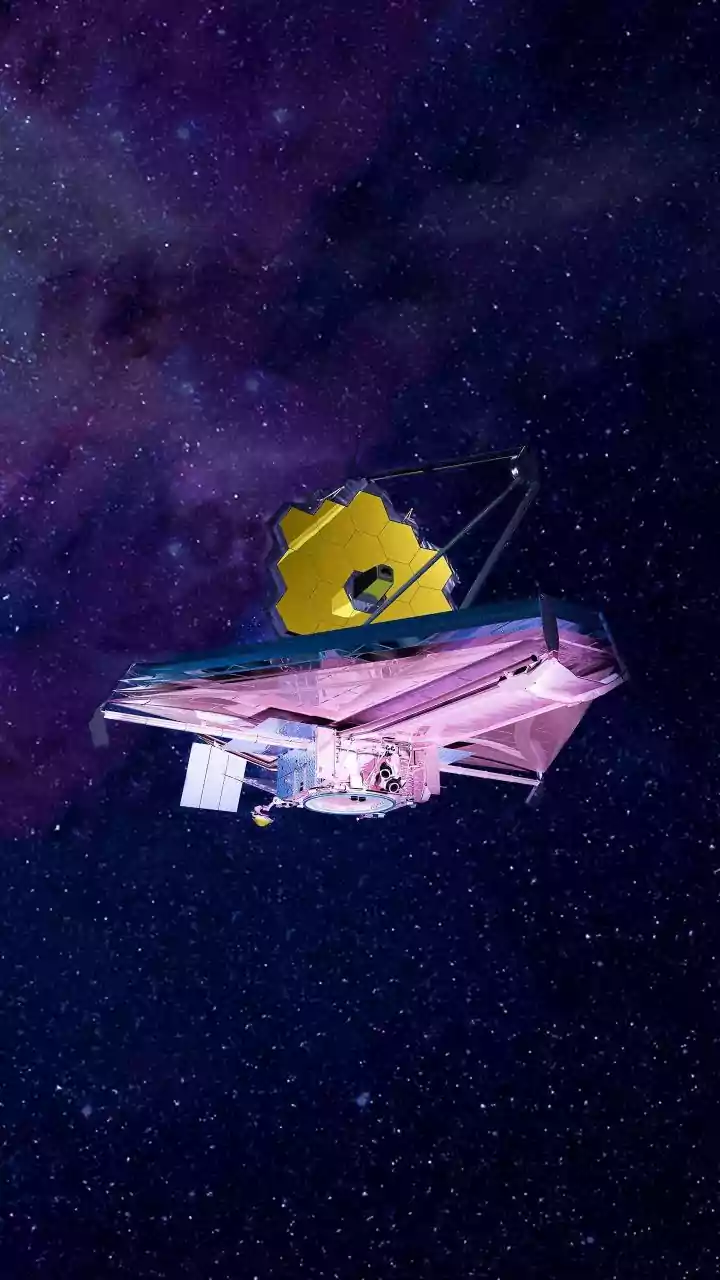
The latest stunning example of this technology in action comes from NASA's James Webb Space Telescope (JWST). While studying the well-known planetary system Beta Pictoris, located about 63 light-years away, astronomers found something they weren't even looking for. The system was already famous for hosting two giant planets. But as researchers used Webb's Near-Infrared Spectrograph (NIRSpec) to analyze the atmosphere of one of these known worlds, a tell-tale signal appeared in the data from an unexpected location. It was a third, previously unknown planet, which has now been named Beta Pictoris d.
Peering Through the Dust
So why was this planet missed for so long? Beta Pictoris is surrounded by one of the brightest, densest debris disks ever observed. This swirling disk of dust and debris acts like a thick fog, scattering the star's light and making it incredibly difficult for conventional telescopes to spot any planets within it. It was like trying to find a firefly in a blizzard. But Webb's infrared instruments didn't need to 'see' the planet as a point of light in the traditional sense. Instead, they detected its chemical fingerprint. By looking for the unique signature of molecules like methane, carbon monoxide, and water vapor in the infrared spectrum, scientists could prove a planet was there, hidden within the haze.
A New Era of Exploration
The accidental discovery of Beta Pictoris d is more than just another planet for the catalog. It represents a powerful new way to find worlds that have so far remained elusive. By using spectroscopy—analyzing the chemical makeup of an object's atmosphere—astronomers can now hunt for planets in complex and cluttered environments where traditional imaging fails. This technique allows them to not only confirm a planet's existence but to immediately begin learning about its composition and temperature. This breakthrough demonstrates how infrared astronomy is fundamentally changing our ability to explore the cosmos. These powerful new eyes are not just showing us clearer pictures of things we already knew; they are revealing parts of the universe that were completely invisible and, in doing so, are solving long-standing mysteries about how planetary systems form and evolve.