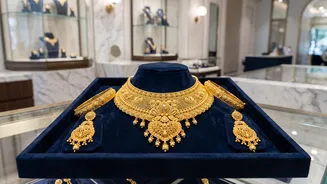








The festive season is buzzing with activity, and for many Indian families, that means buying gold. But with prices correcting after hitting record highs, many are left wondering: what is actually happening in the market, and is now a good time to buy?
The 'Rs 1.8 Lakh' Peak Explained
First, let's address the headline-making figure. The claim of gold correcting from a peak of around Rs 1.8 lakh per 10 grams has caused some confusion. Market data shows that gold indeed hit a record high in India in January 2026, with prices reaching approximately Rs 1,78,850 for 10 grams of 24-carat gold. This was a significant, albeit brief, spike. Since then, prices have seen a notable correction. As of mid-November, prices have fallen considerably, trading in the range of Rs 1,36,000 to Rs 1,42,000 per 10 grams. This recent drop, just as festive demand picks up, is what's catching everyone's attention.
A Boost in Festive Demand
The price dip has coincided perfectly with Dhanteras and Diwali, traditionally the most auspicious time for gold purchases in India. Jewellers and industry bodies have reported a significant uptick in sales. According to the India Bullion and Jewellers Association (IBJA), gold demand rose by as much as 30% in volume terms during the festive period compared to last year. Consumers reportedly purchased about 52 tonnes of gold, valued at around Rs 72,000 crore. This surge suggests that while high prices earlier in the year may have deterred some buyers, the recent correction has unleashed pent-up demand, especially with the wedding season kicking off.
Why Are Prices Correcting?
The fall in domestic gold prices isn't happening in isolation. It's largely a reflection of global trends. A primary factor is the outlook for US interest rates. Expectations that the US Federal Reserve might keep interest rates higher for longer make non-yielding assets like gold less attractive compared to interest-bearing investments. A stronger US dollar also adds pressure, as it makes gold more expensive for buyers using other currencies. While geopolitical tensions can sometimes boost gold as a 'safe-haven' asset, the powerful influence of US monetary policy and dollar strength has recently outweighed those concerns, leading to a broader market correction.
Changing Consumer Behaviour
Interestingly, the volatility has highlighted a shift in how Indian consumers approach gold. While the cultural significance remains strong, more people are treating gold as a financial asset. Earlier in the year, when prices were at their peak, there was a noticeable increase in households selling old gold to book profits. Now, with prices dipping, the focus has shifted back to buying. However, consumer habits are adapting to the high-price environment. Many are opting for lighter-weight jewellery, smaller coins, or are exchanging old jewellery to offset the cost of new purchases. This shows a pragmatic approach: preserving tradition while making financially savvy decisions.
What Should You Do?
For those considering a purchase, the current correction offers a more attractive entry point than the record highs seen earlier this year. With the wedding season demand expected to keep the market active, dealers note that prices are likely to remain firm as long as they stay near current levels. However, the global factors influencing gold are constantly in flux. The price you pay in India is a combination of the international price, the USD/INR exchange rate, import duties, and local levies. Short-term predictions are difficult, but the long-term role of gold as a store of value and a portfolio diversifier remains a key consideration for many.