

The Problem with Scoops
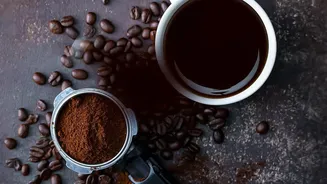
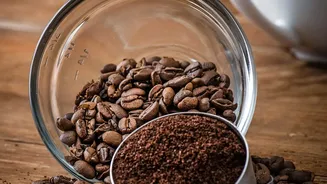
Many of us start our coffee-making journey with a simple scoop. The problem? Not all scoops are created equal, and neither are coffee beans. A scoop of dark, oily beans weighs less than the same volume of a dense, light roast. Even the grind size changes
the mass; a scoop of coarse grounds has more air than finely ground coffee. This variability is why one day your coffee tastes perfect and the next it tastes thin and weak, even when you did 'the same thing'. Using volume (like scoops or cups) to measure coffee introduces guesswork, but using weight provides unwavering consistency. Fifteen grams of coffee is always fifteen grams, ensuring you have a stable foundation to build your brew upon.
Understanding the 'Golden Ratio'
The solution is to use a coffee-to-water ratio. This is simply a comparison of the weight of your coffee grounds to the weight of the water you use to brew. For filter and drip coffee, the most common starting point is called the 'golden ratio'. While the term can vary slightly, it generally falls within the range of 1:15 to 1:18. This means for every one gram of coffee, you use between 15 and 18 grams of water. A ratio of 1:16 is often cited as a perfect middle ground to start with. So, for a standard mug of coffee, you might use 20 grams of coffee and 320 grams of water (20 x 16 = 320). The best part about a ratio is that it scales perfectly whether you're making one cup or a full pot.
Why a Kitchen Scale is Your Best Tool
To properly use a brewing ratio, a simple digital kitchen scale is the most important tool you can add to your setup. It’s a small investment that makes a massive difference in quality and repeatability. By weighing both your coffee beans and your water (remembering that 1 millilitre of water equals 1 gram), you remove the single biggest variable from your process. This allows you to replicate that 'perfect' cup every single time. It also empowers you to make intentional adjustments. If a cup tastes weak or sour, you know exactly how to tweak the recipe for next time, instead of just guessing with another scoop.
Ratios for Different Brewing Methods
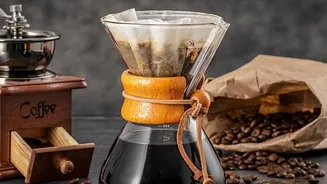
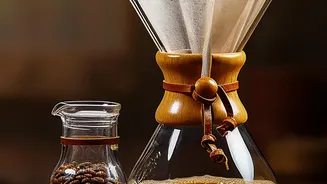
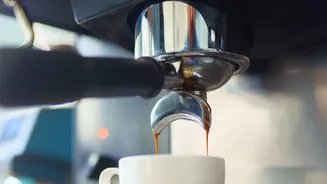
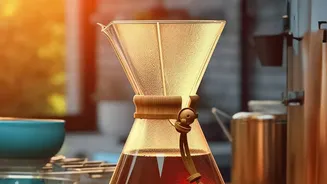
While 1:16 is a great all-purpose starting point, different brewing methods extract flavour differently and can benefit from slight adjustments. A full-immersion method like a French press, for instance, often shines with a slightly stronger ratio, somewhere between 1:12 and 1:15, which contributes to its characteristically bold and full-bodied taste. Pour-over methods like a V60 or Chemex work beautifully in the 1:15 to 1:17 range. For espresso, the ratio is much more concentrated, typically starting at 1:2 (e.g., 18 grams of ground coffee yielding a 36-gram liquid shot). Cold brew, which uses time instead of heat, requires a very strong ratio for its concentrate, often between 1:4 and 1:8, which is then diluted to taste.
Finding Your Personal Perfect Cup
The most important thing to remember is that these ratios are starting points, not strict laws. Think of them as a reliable map to get you into the right territory. From there, your personal taste is the ultimate guide. If you find a 1:16 ratio produces a coffee that's too intense, try a 1:17 ratio next time (using more water for the same amount of coffee) for a lighter, more delicate cup. If you want something bolder and richer, try 1:15 (using less water). The key is to change only one variable at a time. By locking in your ratio first, you gain control over the strength of your coffee, allowing you to then fine-tune other elements like grind size to perfect the flavour.