



Our Sun, A Volatile Neighbour
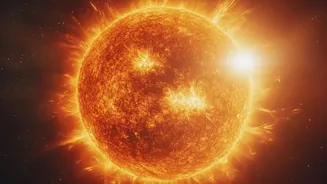
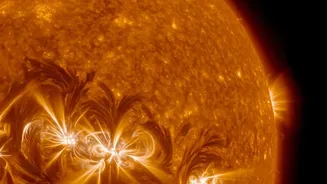
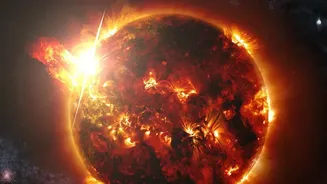
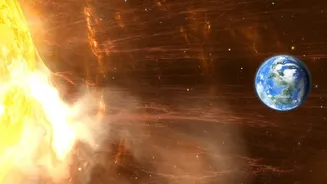
The sun isn't just a steady ball of light in the sky. It's a dynamic star with an 11-year cycle of activity, featuring solar flares and, more consequentially for Earth, coronal mass ejections (CMEs). A CME is a massive expulsion of plasma and magnetic
fields from the sun's outer atmosphere, the corona. Think of it as a colossal solar cannon firing billions of tons of material into space. While the sun produces about three CMEs daily during its peak activity, most miss Earth entirely. But when one is aimed in our direction, it travels across the 150 million kilometres to our planet, capable of causing significant disruption.
The Threat of Space Weather
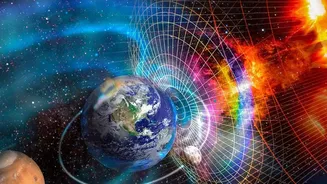
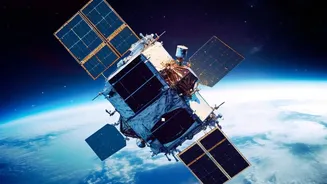
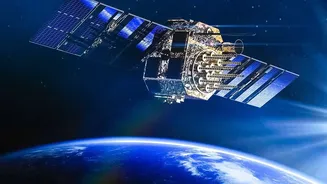
When a CME collides with Earth's magnetic field, it can trigger a geomagnetic storm. While our planet's magnetosphere protects us from the most hazardous radiation, these storms can still wreak havoc on our technological infrastructure. The most severe threat is to our power grids. Fluctuating magnetic fields can induce powerful currents in long transmission lines, potentially overloading systems and causing widespread blackouts. A powerful storm in 1989 did just that, leaving six million people in Quebec, Canada, without power for nine hours. Beyond the grid, these storms can damage critical satellites used for GPS, communications, and weather forecasting, and disrupt radio signals vital for aviation.
A Leap in Predictive Power
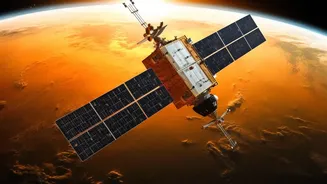
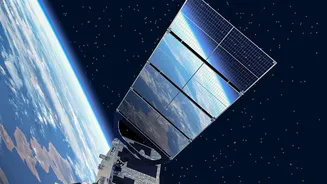
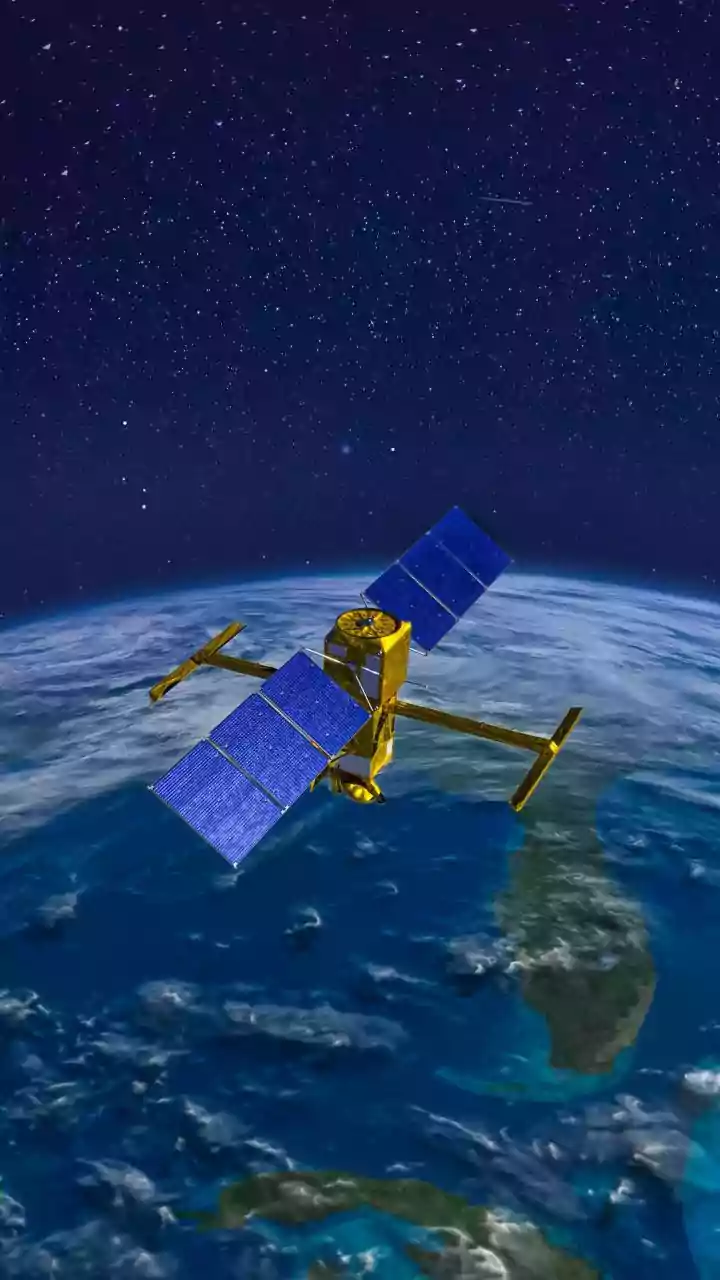
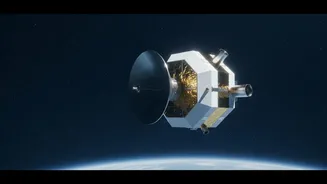
Until recently, forecasting the impact of a CME was a significant challenge. Scientists could see a CME leave the sun and estimate its general path, but predicting its arrival time with any accuracy was difficult. The error margin could be as wide as five hours, making specific preparations challenging. This has changed thanks to new modeling techniques combined with better data from missions like NASA's Polarimeter to Unify the Corona and Heliosphere (PUNCH). Launched in 2025, this constellation of four satellites provides continuous imagery of CMEs as they travel from the sun to Earth.
From 'If' to 'When and Where'
The latest breakthroughs involve feeding this stream of high-resolution data into advanced computer models. By analysing the shape and speed of the CME throughout its journey, these models can now forecast its arrival with astonishing accuracy. In recent tests using data from a 2025 event, scientists were able to predict the CME's impact time to within just half an hour. This represents a monumental leap in forecasting precision. It's the difference between knowing a cyclone is somewhere in the ocean and knowing exactly when and where it will make landfall. Other recent studies have also helped model how multiple CMEs can merge and consolidate into a larger, more powerful storm, further enhancing our predictive understanding.
Protecting Our Connected World
This newfound precision is not just an academic achievement; it has profound real-world implications. With a reliable and narrow impact window, authorities and industries can move from general awareness to targeted action. Power grid operators can have time to reconfigure their networks to better withstand the electrical surges. Satellite operators can place their valuable assets into a protective safe mode to prevent damage. Airlines can reroute flights away from polar regions where communication and radiation risks are highest during a storm. This ability to prepare effectively transforms space weather from an unpredictable threat into a manageable event, safeguarding the intricate technological nervous system that powers our daily lives.