





Why Sitting Is the New Smoking
The phrase 'sitting is the new smoking' has gained traction for good reason. When we sit for extended periods, our bodies enter a state of inactivity that has wide-ranging consequences. Blood flow slows down, particularly in the legs, which can lead to
swelling and increase the risk of circulation issues. Muscles that are crucial for stability, like our glutes and core, become weakened and inactive. Meanwhile, other muscles, such as the hip flexors, shorten and tighten, pulling on the lower back and contributing to poor posture and pain. This combination of muscle imbalances and reduced blood flow leads to stiff, poorly lubricated joints, which can accelerate cartilage breakdown and increase the risk of chronic conditions over time.
The Power of Micro-Movements
The solution isn't necessarily a grueling hour-long gym session after work. While that's beneficial, research shows that breaking up long periods of sitting with short, frequent bursts of movement can be more effective at counteracting the daily toll of a desk job. These small, intentional actions, often called 'micro-movements', keep your muscles engaged, your joints lubricated, and your blood circulating. The goal is to reintroduce movement variability throughout the day, preventing your body from adapting to a static, hunched position. Think of it as hitting a mini-reset button for your nervous system and posture every hour.
Strategies to Break the Sitting Cycle
Integrating more movement into your workday is about building simple, sustainable habits. Start by setting a timer on your phone or computer to remind you to get up every 30 to 60 minutes. Use these short breaks to walk to the kitchen for water, visit a colleague's desk instead of sending an email, or simply stand up and stretch. Make movement opportunistic: take phone calls while standing or pacing, opt for the stairs instead of the elevator, and consider 'walking meetings' for small group discussions. Even a technique as simple as placing your printer or dustbin further away from your desk can force you to get up more regularly.
Desk-Friendly Mobility: Neck and Shoulders
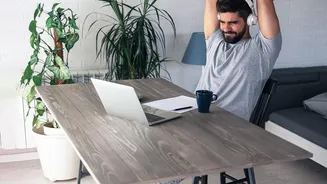
You don't need to leave your workstation to give your joints some much-needed attention. To combat 'tech neck' and shoulder tension, try these simple moves. First, perform Chin Tucks: sit tall and gently draw your chin straight back, creating a double chin. This counteracts the forward_head posture from looking at a screen. Hold for a few seconds and repeat ten times. Next, do Shoulder Blade Squeezes: with your arms at your sides, gently squeeze your shoulder blades together as if holding a pencil between them. This activates the underused muscles in your upper back. Hold for five seconds and repeat several times. Finally, try Seated Spinal Rotations by sitting tall and twisting your torso gently from side to side to mobilize your mid_back.
Desk_Friendly Mobility:_ Hips_and_Spine
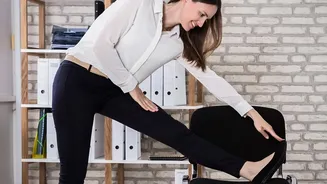
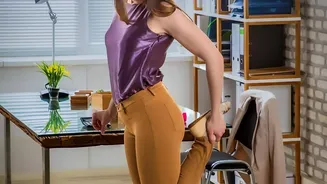
Your hips and lower back bear a significant burden from sitting. To open them up, try a Seated Hip Flexor Stretch. Scoot to the edge of your chair, extend one leg straight back, and feel the stretch in the front of your hip. Hold for 30 seconds on each side. The Seated Figure_Four Stretch is another excellent option for tight glutes. While sitting, cross one ankle over the opposite knee and gently press down on the elevated knee until you feel a stretch. Finally, to mobilize your lower spine and hamstrings, perform a Seated Hip Hinge. Sit at the edge of your chair, keep your back straight, and hinge forward from your hips until you feel a gentle stretch in your hamstrings and lower back.