
From Statement Piece to Thoughtful Integration
The return of curved furniture was a welcome change after years of sharp, minimalist geometry. These pieces, with their organic, flowing lines, promised comfort, elegance, and a more natural sense of flow in our homes. The initial wave was all about the statement:
a large, crescent-shaped sofa or a set of enveloping accent chairs became the undeniable focal point of a room. This shift reflected a collective desire for spaces that feel calmer and more welcoming. The arc of a sofa encourages conversation, and rounded edges feel inherently safer and more intuitive to move around. But as with any major trend, the first iteration is often followed by a period of refinement. Homeowners who went all-in on oversized, chunky pieces are now finding their rooms can feel dominated or unbalanced. The rebalance isn’t about abandoning curves, but about applying them with greater intention.
The Challenge of Scale
The single biggest challenge with curved furniture is its scale. A serpentine sofa that looks perfectly proportioned in a vast showroom can quickly overwhelm a standard living room, eating up floor space and disrupting traffic flow. Unlike rectangular pieces that can sit flush against a wall, curved furniture demands breathing room to allow its shape to be appreciated. This often means “floating” the piece away from the walls, a technique that requires a generous floor plan. According to some designers, a common mistake is not considering how the proportions of a curved piece relate to the proportions of the room itself. The result can be an awkward layout where the furniture feels like a beautiful but impractical obstacle. The new approach prioritizes finding a curve that complements the room's dimensions, rather than forcing a large-scale piece into a space that can't handle it.
Creating Balance with Contrast
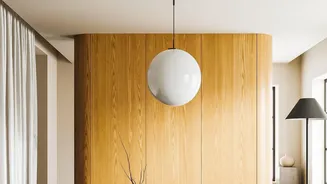
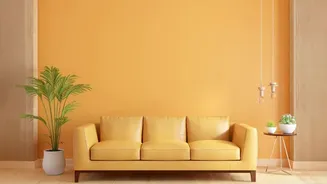
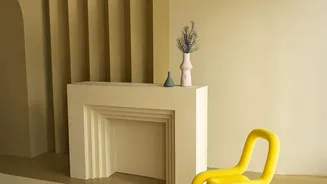
The key to successfully integrating curved furniture now lies in balance and contrast. Instead of a room filled only with rounded shapes, which can feel unstructured, designers recommend mixing curves with straight lines. Think of it as a conversation between shapes. A sweeping sofa feels more intentional when paired with a rectangular coffee table or linear shelving. This contrast grounds the space and allows the curve to be the hero without creating chaos. A good rule of thumb is to aim for a mix, such as 70% straight-lined pieces and 30% curved. This principle extends to smaller items, too. You can soften a boxy room by introducing curves through an arched floor lamp, a circular mirror, or a round rug. These smaller echoes of shape create a cohesive, layered look that feels sophisticated and deliberate.
Thinking Beyond the Sofa
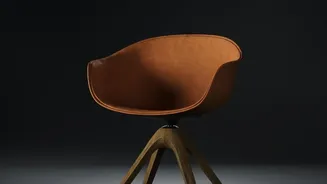
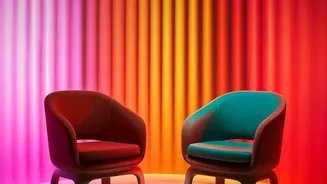
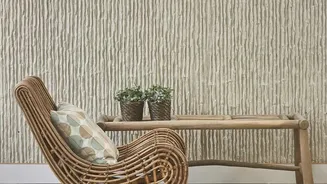
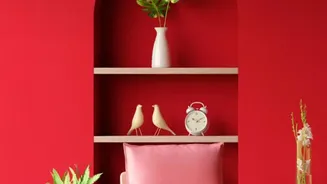
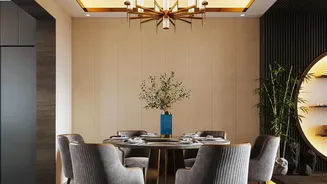
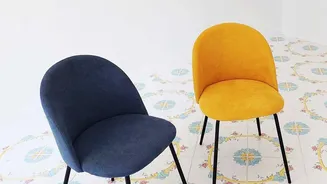
While the sofa is often the poster child for this trend, the focus on scale applies to all types of curved furniture. The rebalanced approach invites homeowners to incorporate the trend in more subtle, accessible ways. A round dining table is excellent for creating an intimate, conversational atmosphere. A pair of accent chairs with soft, rounded backs can introduce the trend without the commitment of a large sofa. Even smaller decorative items can play a part. A sculptural vase, a round side table, or cushions with curved patterns can add that desired softness and visual interest. This allows anyone to participate in the trend, regardless of room size or budget. An arched headboard can transform a bedroom, while a demilune (half-moon) console table can elegantly fit into a narrow hallway or alcove, proving that curves can be both beautiful and practical when scaled correctly.