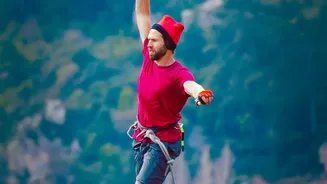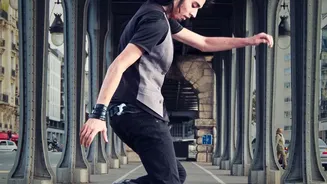

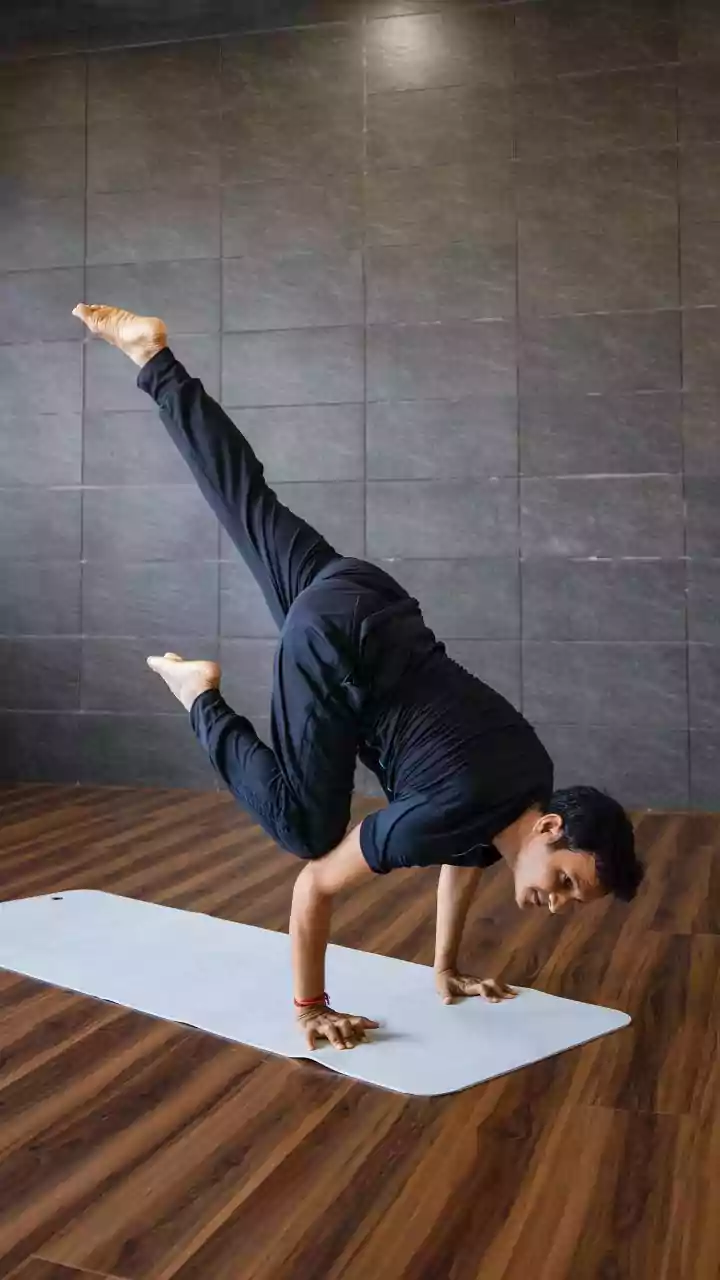




At its core, balance is a conversation between your body and the ground. While both hiking and skateboarding are masterclasses in this dialogue, they speak entirely different languages depending on the surface, requiring unique physical adjustments.
The Body's Internal Balancing Act
Before
diving into boots and boards, it's helpful to understand how balance works. It’s a complex dance choreographed by three main systems. The vestibular system, located in your inner ear, acts like a gyroscope, sensing head motion and orientation. Your visual system provides external cues about your surroundings. And finally, proprioception is your body's internal sense of its position, allowing you to know where your limbs are without looking. This network of signals allows your muscles to make constant, tiny corrections to keep you upright. Both hiking and skateboarding challenge these systems, but in profoundly different ways.
Hiking: Reactive Stability on Unpredictable Ground
Hiking is an exercise in reacting to an unpredictable environment. When you're on a trail, the surface is constantly changing—from soft dirt to slick mud, loose gravel, or jutting tree roots. Your body’s goal is to maintain a stable center of gravity over a solid base. Hikers instinctively slow down, shorten their stride, and widen their stance on technical terrain to improve stability. Each step is a calculated decision. Balance adjustments are largely reactive; your foot lands on an angled rock, and your ankle, knee, and hip joints immediately flex to absorb the shock and correct your posture. Research shows that walking on uneven terrain significantly increases muscle activity and mechanical work at the knee and hip as the body fights for stability with every step. Sturdy hiking boots aid this by providing ankle support, but the primary work involves deliberate, conscious adjustments to external chaos.
Skateboarding: Dynamic Control Over Instability
Skateboarding flips the script entirely. Instead of reacting to an unstable surface, the skater is mastering a permanently unstable platform: the board itself. Balance here is dynamic and fluid, not static and deliberate. A skateboarder doesn't just stand on the board; they actively control it, using subtle shifts in weight to steer. The ankles, rather than being braced, become incredibly mobile, acting as the steering wheel. This constant motion requires immense core engagement and fast-twitch muscle adjustments to manage the board's movement. While a hiker's brain is reacting to the ground, a skater's brain is often in a predictive state, anticipating how the board will move and planning moves ahead of time. This is why experienced skaters can feel a wheel about to lift before it happens and make a correction.
The Surface Makes a World of Difference
The nature of the surface dictates the type of adjustment required. For a hiker, a 'difficult' surface is uneven and unpredictable, requiring cautious placement of the feet. For a skateboarder, surface challenges are different. Smooth concrete is ideal, offering low friction for speed and cruising. Rougher asphalt, however, creates high-frequency vibrations and requires more effort to maintain momentum. Hitting a small crack or pebble can abruptly stop the board, forcing the rider's body to absorb the forward momentum to avoid a fall. A skateboarder learns to read these surfaces, making micro-adjustments in foot pressure and body posture to glide over imperfections, whereas a hiker's focus is on finding stable footing on top of them.
Training the Brain for Different Challenges
Ultimately, the biggest difference lies in the neuromuscular pathways being trained. Hiking builds reactive strength and stability, teaching the body to respond to external surprises. It hones your ability to engage stabilizing muscles when you're thrown off balance by a loose rock or slippery patch. Skateboarding, by contrast, trains proactive and dynamic balance. It develops an intuitive, flowing control over an object that is an extension of your body. Skaters learn to find serenity and control amidst constant motion. One discipline teaches you to find stability on an unstable world; the other teaches you to create stability on an unstable platform. Both require focus and train the body's balance systems, but the mental and physical approaches are worlds apart.