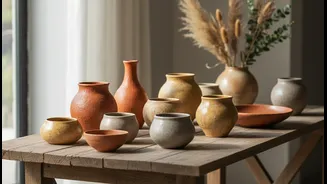



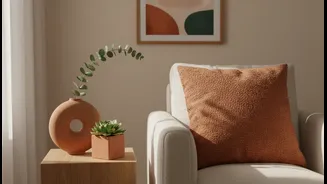
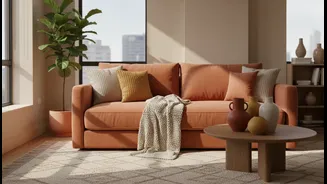


Embracing the Earthen Palette
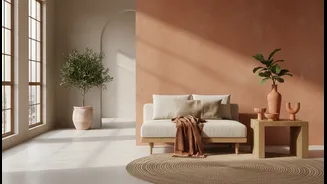
Before you pick out your first pot, it helps to understand the power of an earthy colour scheme. Tones like terracotta, burnt sienna, ochre, and sand are more than just colours; they evoke a feeling of calm and connection to the outdoors. In interior
design, these hues are known to bring warmth and a sense of nostalgia, reminiscent of sun-baked walls and traditional Indian homes. Unlike fleeting trends, an earthy palette is timeless and versatile, working beautifully in settings from bohemian to minimalist. It creates a soothing, grounded atmosphere that promotes emotional wellness, a quality many homeowners are now seeking. The key is to balance these deeper tones with lighter neutrals like beige, cream, or off-white to prevent a space from feeling too heavy.
A Guide to Indian Clay Pottery
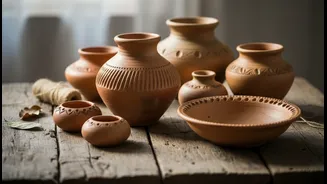
India has a rich, diverse history of pottery, with different regions producing unique styles that are perfect for home decor. Classic terracotta, with its iconic reddish-brown hue, is the most well-known. This material has been used for centuries and instantly adds a rustic, warm feel. But there's more to explore. Look for the black pottery of Uttar Pradesh or the unique textures of Longpi pottery from Manipur. Painted pottery from regions like Rajasthan can introduce intricate motifs and designs. These handcrafted pieces are not just decorative objects; they are a connection to local craftsmanship and sustainable production. Choosing local pottery means you’re not only beautifying your home but also supporting artisan communities.
Start with a Statement Piece
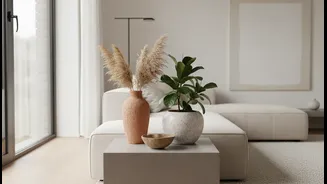
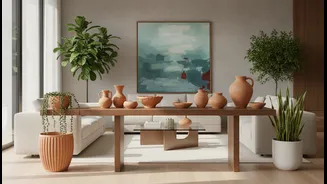
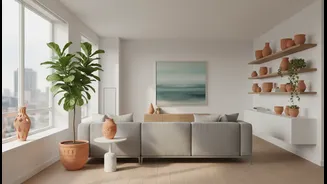
The easiest way to make an impact is to start with one or two large statement pieces. An oversized clay pot or a tall urn can serve as a stunning focal point in an empty corner of a living room, a hallway, or an entryway. You can leave it empty to appreciate its sculptural form or fill it with tall, dried botanicals like pampas grass or bamboo stems for added height and texture. A large floor pot grounds the space and anchors your design theme. Placing it near a window or next to a simple wooden console allows its natural colour and texture to stand out, instantly defining the room’s warm, earthy character.
Layer with Smaller Accents
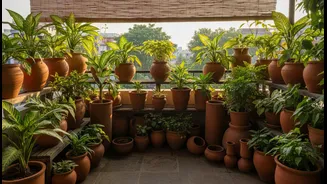
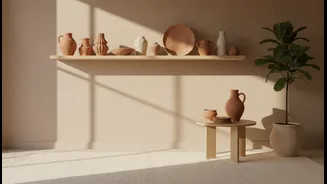
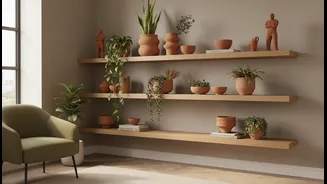
Once you have your anchor piece, it’s time to layer in smaller accents. Grouping smaller pots together creates a more dynamic look than scattering them randomly. A collection of three or five small pots of varying heights on a bookshelf, side table, or windowsill adds visual interest. Use them as planters for lush green indoor plants; the green foliage against the reddish-brown clay is a classic, can't-miss combination. Beyond plants, small clay bowls can hold keys on an entryway table, while miniature painted pots can become charming decorative objects on a shelf. These small touches, when repeated, create a cohesive and curated feel.
Creative Uses Beyond Planters
Think beyond just using pots for plants. Clay pottery is incredibly versatile. A sturdy terracotta pot can be repurposed as a unique base for a side table by placing a round wooden top on it. Clay 'matkas' or pitchers can be used as beautiful, rustic water dispensers that also have natural cooling properties. Hand-painted clay plates can be mounted on a wall for a touch of ethnic art. Terracotta tea-light holders or diyas cast a warm, flickering glow that enhances the cosy atmosphere you’re trying to create, especially during festive seasons. Using these items connects your decor to a sense of tradition and function.
Pairing Pottery with Other Textures
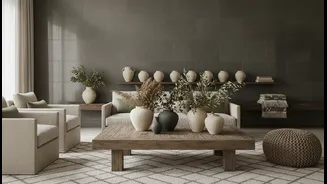
The beauty of clay pottery is amplified when paired with other natural materials. To create a rich, tactile experience, combine your terracotta pieces with wood, jute, rattan, and natural fabrics like cotton and linen. A jute rug under a cluster of clay pots, linen curtains softening the light behind them, or a wooden bench next to a large urn all contribute to a layered, harmonious look. These materials share a similar natural, imperfect quality that makes the entire space feel cohesive and inviting. For a touch of modern contrast, you can even add a hint of matte black or brass through light fixtures or frames.