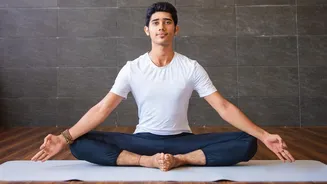

From Burnout to Balance
Long days staring at screens, packed meeting schedules, and cramming for exams can leave you feeling mentally drained and physically stiff. This state of constant high alert, driven by deadlines and pressure, keeps your body in a 'fight-or-flight' mode.
The result is mental fog, irritability, and a body that holds onto tension in the neck, shoulders, and back. Before you know it, you are just recovering from the day instead of enjoying your evening. This cycle of stress is not just exhausting; it can have long-term effects on your well-being. Finding a way to consciously switch off and reset is no longer a luxury but a necessity for sustainable success and health.
The Science of Switching Off
Mindful yoga isn't just about stretching. It's a practice that combines physical postures (asanas), controlled breathing (pranayama), and meditation to unite mind and body. Scientifically, this practice works by activating your parasympathetic nervous system, often called the 'rest and digest' system. This activation acts as a direct counter to the 'fight-or-flight' response. As you move and breathe with awareness, your brain gets the signal to calm down, leading to a measurable reduction in cortisol, the body's primary stress hormone. Studies have shown that even a single yoga session can begin to lower cortisol levels, while a consistent practice helps regulate your body's stress response over the long term.
Clearing the Mental Clutter
A tired mind struggles to focus. After hours of processing information, your cognitive resources are depleted. Yoga helps restore mental clarity in several ways. The focus on breath and physical sensations anchors you in the present moment, interrupting the cycle of repetitive thoughts about work or studies. Research using brain imaging has revealed that regular yoga practice can lead to changes in brain structure, strengthening areas like the hippocampus and prefrontal cortex, which are crucial for memory, attention, and information processing. In fact, studies suggest yoga may even be more effective than other forms of physical activity at improving cognitive function because it combines movement with mindfulness.
Simple Poses to Start Your Reset
You don't need a fancy studio or an hour of free time to feel the benefits. These simple poses can be done in a small space, even next to your desk, to release tension and calm your mind. Seated Cat-Cow: Sit on a chair with your feet flat on the floor. Place your hands on your knees. As you inhale, arch your back and look up, opening your chest (Cow). As you exhale, round your spine and drop your chin to your chest (Cat). Repeat 8-10 times to gently mobilise your spine. Child's Pose (Balasana): Kneel on the floor, sit back on your heels, and fold forward, resting your forehead on the mat. Extend your arms forward or rest them alongside your body. This pose is incredibly calming and gently stretches the back. Legs-Up-the-Wall (Viparita Karani): Lie on the floor and swing your legs up so they rest against a wall. This simple inversion is deeply restorative, helping to calm the nervous system and reduce fatigue in the legs.
Breathing: Your Anchor to Calm
The most powerful tool in your yoga practice is your breath. When you feel overwhelmed, your breathing often becomes shallow and rapid. Consciously slowing it down can instantly shift your mental state. A simple technique is Diaphragmatic Breathing, or belly breathing. Sit or lie down comfortably. Place one hand on your chest and the other on your belly. Breathe in deeply through your nose, allowing your belly to rise. Exhale slowly through your mouth or nose, feeling your belly fall. Focusing on the physical sensation of your breath makes it difficult for the mind to wander, providing an immediate sense of peace.