






The Backpacker’s Power Dilemma
For any modern adventurer, the packing list involves a crucial, heavy trade-off. In one corner, you have your essential electronics: the camera to capture stunning vistas, the phone for navigation and emergencies, perhaps a drone for epic aerial shots.
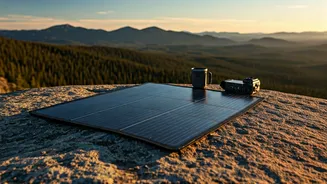
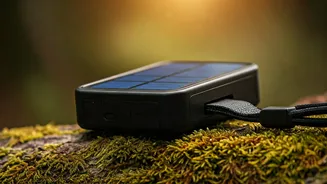
In the other, you have the power sources needed to keep them alive. This usually means heavy, bulky power banks or cumbersome, rigid solar panels. Every gram counts when you’re trekking at high altitudes, and for too long, staying powered up has meant sacrificing lightness and mobility. This compromise often forces us to choose between capturing the moment and conserving energy for the journey ahead.
Beyond Today’s Solar Panels
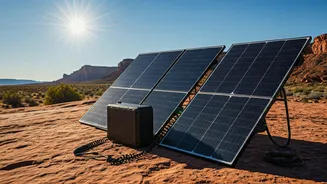
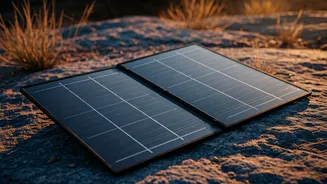
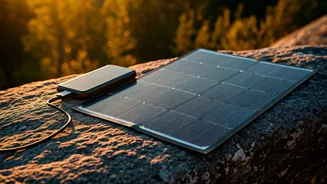
Portable solar isn’t new. For years, campers have used foldable, suitcase-style solar panels to juice up their gear at base camp. While functional, these options have significant drawbacks. They are often made of rigid or semi-rigid silicon cells, making them relatively heavy and awkward to pack. They can be brittle, prone to cracking if mishandled. Strapping one to your backpack while hiking is possible, but it’s often a clunky, inefficient affair. They represent a good first step in off-grid power, but they are far from the seamless, integrated solution adventurers dream of.
Enter the Paper-Thin Revolution
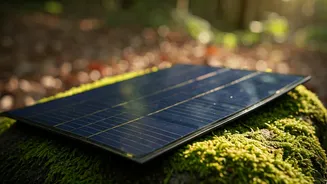
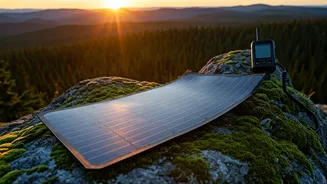
Now, a new class of photovoltaic technology is emerging from research labs and starting to appear in high-tech applications. Known variously as organic photovoltaics (OPV) or perovskite solar cells, these are not your traditional silicon panels. This technology allows for the creation of solar cells that are incredibly thin—sometimes just micrometres thick—as well as flexible and lightweight. They can be 'printed' onto flexible materials, much like ink on a newspaper. This means solar power generation is no longer confined to a hard, fragile glass panel. It can be integrated into fabric, plastic, or almost any surface.
How It Changes the Camping Game
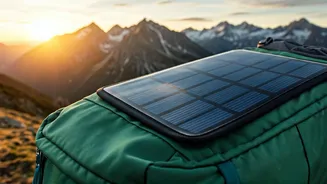
The implications for outdoor enthusiasts are massive. Instead of a separate, bulky panel, imagine a solar framework woven directly into the fabric of your tent. As you set up camp for the afternoon, your shelter itself starts passively generating power. Imagine a thin solar film laminated onto your backpack, trickle-charging a small power bank as you hike through a sun-drenched valley. These frameworks are so light that their weight is negligible. They can be rolled, folded, and bent without breaking, making them far more durable for the rough-and-tumble reality of the great outdoors. For a photographer, this means no more rationing shots or carrying multiple heavy batteries. You can keep your camera, drone, and other devices topped up continuously and sustainably.
The Reality Check: When Can You Use It?
While this sounds like science fiction, the technology is very real. Researchers at institutions like MIT and Oxford are pushing the efficiency and durability of these flexible cells every day. A few niche, high-end products are already on the market, primarily aimed at specialised applications like ultra-lightweight sailing or aerospace. For the average consumer in India, widespread availability is still a few years away. The main hurdles are scaling up manufacturing to bring costs down and ensuring long-term durability against UV exposure and moisture. However, as production techniques improve, experts predict these paper-thin solar frameworks will become a common feature in high-end outdoor gear within the next decade.