


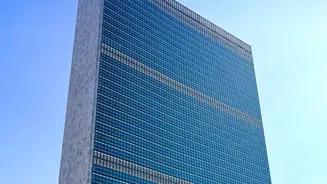

The World's Top Diplomat
The United Nations Secretary-General holds what is often called the most impossible job in the world. As the UN's chief administrative officer, they are part diplomat, part advocate, and part CEO. Their role, outlined in the UN Charter, involves acting
as a spokesperson for the world's peoples, particularly the poor and vulnerable, and bringing any matter threatening international peace to the Security Council's attention. From mediating conflicts to championing sustainable development and human rights, the Secretary-General sets the tone and priorities for the entire UN system, navigating the complex currents of global politics. The person who holds this office must embody the ideals of the UN while managing a sprawling bureaucracy and responding to the often-conflicting demands of its member states.
The Security Council's Decisive Recommendation
The selection process is governed by a simple but powerful sentence in Article 97 of the UN Charter: the Secretary-General is appointed by the General Assembly 'upon the recommendation of the Security Council'. This gives the 15-member Security Council—and especially its five permanent members (P5): China, France, Russia, the United Kingdom, and the United States—immense power. For months, candidates nominated by member states have engaged in public dialogues, a relatively new feature designed to increase transparency. But the real test happens behind closed doors, where the Council holds a series of informal 'straw polls' to gauge support. In these secret ballots, members vote to 'encourage', 'discourage', or express 'no opinion' on each candidate. A 'discourage' vote from a P5 member acts as a veto, effectively ending a candidacy. This continues until one candidate emerges who can secure at least nine affirmative votes without a veto.
The General Assembly's Formal Appointment
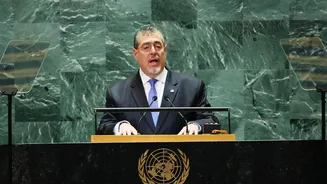
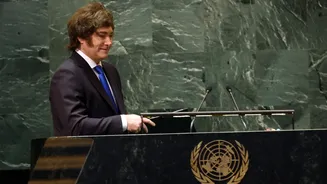
Once the Security Council agrees on a single candidate, it passes its recommendation to the 193-member General Assembly in the form of a resolution. At this stage, the process becomes public. The General Assembly then meets to consider the recommendation and holds a formal vote. While it has the power to reject the Council's nominee, it has never done so. The appointment is typically made by acclamation, meaning it is adopted by consensus without a formal vote, signaling unity among the member states. This final step may appear to be a rubber stamp, but it serves as the crucial, legitimizing act of the entire UN membership. For the current 2026 selection, the process is in its tense final weeks, with several straw polls held but no consensus yet reached in the Security Council as of late November.
The Politics Behind the Procedure
Beyond the formal rules, the selection is shaped by powerful unwritten conventions. One is the principle of regional rotation, which suggests that the top job should cycle between the world's different geographic regions. With the outgoing Secretary-General from Europe, many believe it is the turn for a candidate from the Latin American and Caribbean Group. There is also growing pressure to appoint the first-ever female Secretary-General, a goal explicitly encouraged in the official call for nominations. However, the ultimate decision often comes down to geopolitical horse-trading among the P5 members, who tend to favour a candidate who will not strongly challenge their interests. This political reality means the 'best' candidate might lose out to the one who is most broadly acceptable, or least objectionable, to the world's major powers.
Why India Watches Closely
For India, the selection of the UN's leader is a matter of significant strategic interest. As a key voice for the Global South and an aspirant for a permanent seat on the Security Council, India advocates for a more transparent and democratic selection process. Indian officials have consistently called for the principles of equitable geographical distribution and gender balance to be respected in all senior UN appointments. The country's stance is that the UN's leadership should reflect contemporary global realities, not the power structures of 1945. The choice of Secretary-General can have a tangible impact on issues vital to India, including global security, counter-terrorism efforts, climate change negotiations, and sustainable development goals. A leader who is receptive to the concerns of developing nations and committed to genuine multilateral reform is seen as essential to advancing India's interests on the world stage.