

More Than Just Finding Water
Scientists have known for years that water ice exists on the Moon, primarily hidden in permanently shadowed regions (PSRs) near the poles where sunlight never reaches. These areas are incredibly cold, allowing ice to remain stable for potentially billions
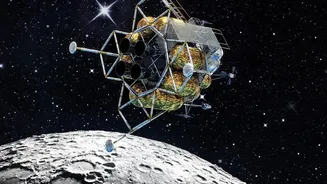
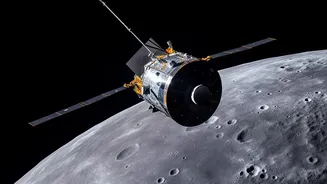
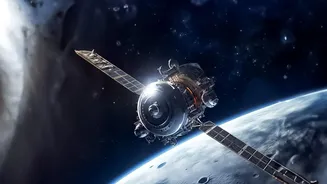
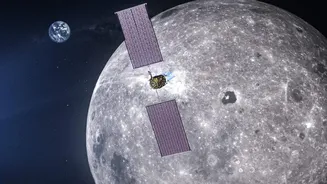
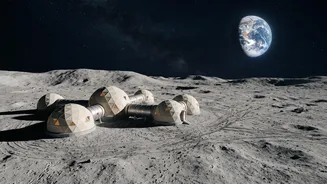
of years. The recent breakthrough isn't just confirming the presence of water, but creating detailed, high-resolution maps of where it is most likely concentrated. Using data from orbiters like NASA's Lunar Reconnaissance Orbiter and advanced AI techniques, scientists can now identify the most promising locations for future landings, turning a planetary mystery into a usable resource map. This is a crucial step for programs like NASA's Artemis, which aims to establish a sustainable human presence on the Moon.
From Ice to Rocket Fuel
So, how does a chunk of frozen water become rocket fuel? The process is surprisingly straightforward chemistry. Water (H2O) is made of hydrogen and oxygen. Through a process called electrolysis, an electric current is passed through the water, splitting it into its component parts: hydrogen and oxygen gas. When these are cryogenically cooled into liquids, they become one of the most powerful and efficient chemical rocket propellants known. Liquid hydrogen serves as the fuel, and liquid oxygen acts as the oxidizer needed for combustion. The ability to generate this on the Moon is called In-Situ Resource Utilization (ISRU), a concept central to making deep space exploration practical.
A Game-Changer for Space Logistics
The main benefit of ISRU is cutting the immense cost and weight of launching everything from Earth. Water is heavy, and launching it into space is prohibitively expensive. By sourcing water directly on the Moon, future missions can dramatically reduce the mass they need to carry from Earth. This doesn't just apply to rocket fuel. The harvested oxygen can be used for breathable air in habitats, and the water itself is essential for drinking and growing food. Essentially, the Moon's water ice deposits could transform it from a desolate destination into a logistical hub—a refueling station and supply depot that makes missions to Mars and beyond more feasible and affordable.
The Challenges of Lunar Mining
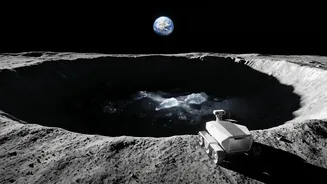
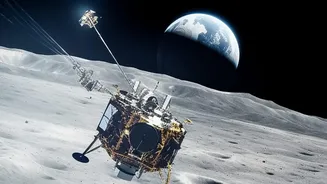
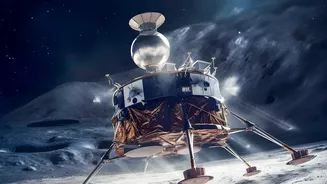
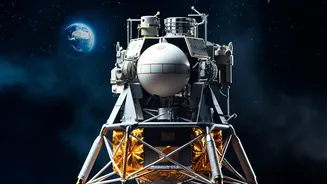
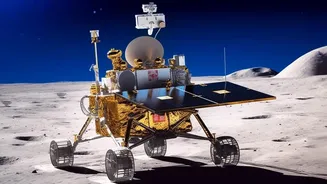
Despite the promise, harvesting this lunar resource will be a significant engineering challenge. The water ice isn't a convenient, solid rink. It's likely mixed in with lunar soil (regolith), possibly in concentrations of a few percent by weight, and exists in some of the coldest places in the solar system. Temperatures in these permanently shadowed craters can drop below -160 degrees Celsius. Future robotic missions, like NASA's Polar Resources Ice Mining Experiment (PRIME-1), are designed to test the technologies needed to drill into this frozen ground, extract the icy regolith, and analyze its contents. Engineers will have to design hardware that can operate reliably in extreme cold and darkness, excavate the material, and then heat it to release the water vapor for collection.
Mapping the Future of Exploration
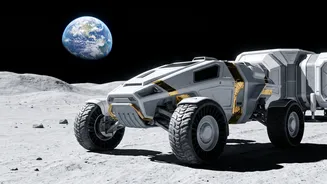
These new maps are a critical first step, guiding where to send the first generation of lunar mining robots. Knowing the most prospective areas allows agencies like NASA to select landing sites for robotic and human missions, such as the upcoming VIPER rover, which is designed to prospect for water ice on the ground. By combining orbital data with on-the-ground measurements, a comprehensive picture of the Moon's water resources will emerge. This detailed understanding moves the concept of a lunar base from science fiction toward a concrete engineering and logistical plan. We are no longer just asking 'is there water on the Moon?' but 'where is the best place to set up the pump?'.