





A Pathfinder's Grand Tour
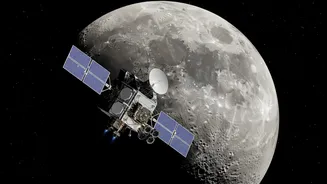
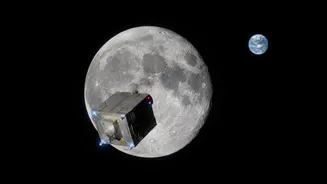
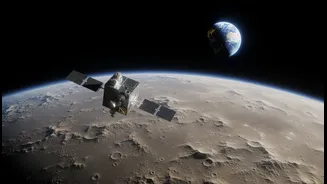
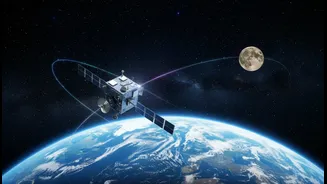
Launched in June 2022, the Cislunar Autonomous Positioning System Technology Operations and Navigation Experiment, or CAPSTONE, was a trailblazer from the start. Owned and operated by the private company Advanced Space for NASA, its primary goal was to test
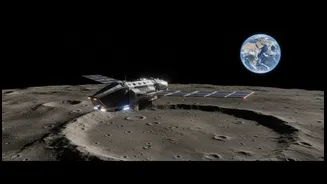
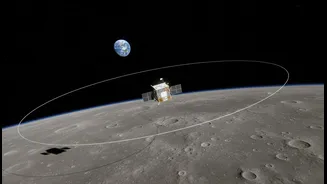
a unique and highly efficient path around the Moon called a Near-Rectilinear Halo Orbit (NRHO). This fuel-saving orbit is where NASA planned to place its Gateway space station, a future outpost for astronauts. After successfully entering this complex orbit and completing its primary mission goals within six months, CAPSTONE was granted an extended mission. This new phase transformed the small satellite into a powerful testbed for technologies that will define the future of deep-space exploration.
Validating the Lunar Gateway's Orbit
The single most important achievement of CAPSTONE was proving the NRHO is a stable and viable place to operate. This peculiar, elongated orbit uses a delicate gravitational balancing act between the Earth and the Moon. By flying this path for an extended period, CAPSTONE confirmed simulations that predicted it would require minimal fuel for station-keeping. This is a massive advantage for a long-term outpost like the Gateway, as it means less propellant needs to be ferried from Earth, reducing cost and complexity. The mission provided invaluable real-world data, characterizing the orbit and giving mission planners the confidence needed to design future spacecraft and missions that will use this new lunar highway.
Pioneering Autonomous Navigation
One of the most significant tests during the extended mission was proving a spacecraft could navigate in deep space without constantly “phoning home” to Earth. CAPSTONE demonstrated the Cislunar Autonomous Positioning System (CAPS), a revolutionary navigation technology. The system works by communicating directly with another spacecraft—in this case, NASA's Lunar Reconnaissance Orbiter (LRO)—to determine its own position. By cross-linking with LRO, CAPSTONE’s software could calculate its location autonomously. During its extended mission, it also tested a camera-based optical navigation system, using images of the Earth and Moon to orient itself. At times, this onboard system performed even better than traditional ground-based tracking, a huge step toward making lunar missions more independent and resilient.
A Testbed for Future Technologies
The extended mission turned CAPSTONE into a flexible, software-defined satellite, allowing NASA to upload and test new applications on existing hardware. This is far more cost-effective than launching entirely new missions for each experiment. One key test involved delay/disruption tolerant networking (DTN), a communication method designed for the intermittent connectivity of deep space. Unlike the internet on Earth, DTN is built to handle long delays and signal gaps, automatically resending data packets when a connection is re-established. This technology will be crucial for astronauts who might be working in lunar craters or on the far side of the Moon, ensuring no data is lost. The mission provided the first live demonstration of these advanced software capabilities in the challenging lunar environment.
A New Commercial Model for Space
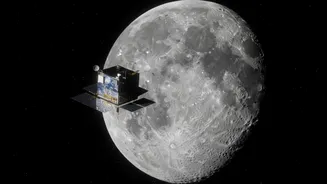
Beyond its technical feats, CAPSTONE represented a successful new way of doing business in space. The mission was a partnership between NASA and a commercial company, Advanced Space, which owned and operated the spacecraft. Terran Orbital designed and built the satellite. This model, where NASA buys a service rather than owning and operating the entire mission itself, allows the agency to leverage private sector innovation and speed while reducing costs. CAPSTONE demonstrated that small, affordable CubeSats can perform critical pathfinding work for major exploration programs, establishing a blueprint for future commercial support of missions to the Moon, Mars, and beyond.