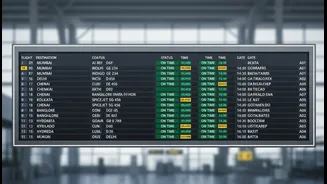








The Current State of Flight Delays
Flight disruptions have become an increasingly common part of air travel in India. A combination of factors contributes to this, including rising passenger numbers that congest airports, unforeseen technical issues with aircraft, and crew shortages. Airlines
also grapple with seasonal challenges like monsoon rains and winter fog, which can cause cascading delays across the entire network. In 2025 and 2026, operational pressures from new crew duty regulations and volatile fuel prices have also led some carriers to reduce flight frequencies on major routes, further tightening seat availability and putting pressure on schedules. For passengers, this means a higher chance of facing disruptions, making the choice of airline more critical than ever.
Which Indian Airlines Are Most Punctual?
The Directorate General of Civil Aviation (DGCA) tracks the On-Time Performance (OTP) of domestic airlines operating out of India's major metro airports. A flight is considered 'on-time' if it departs or arrives within 15 minutes of its scheduled time. According to recent DGCA reports, IndiGo consistently leads the pack, with an OTP often between 80-85%. Newcomer Akasa Air also performs strongly, frequently recording an OTP in the 78-82% range. The Air India Group, which includes Air India Express, has been showing significant improvement, with its OTP hovering around 70-78% and even ranking fourth globally for punctuality in a June 2026 report by analytics firm Cirium. These figures show a clear performance gap between airlines, giving travellers a tangible metric to consider when booking.
Your Rights When a Flight Is Delayed
While no cash compensation is offered for delays under Indian regulations, passengers are not without rights. According to the DGCA's Passenger Charter, if your flight is delayed by two hours or more, the airline is obligated to provide you with free meals and refreshments. If a delay extends beyond six hours, the airline must offer you an alternative flight or a full refund of your ticket. For significant overnight delays, particularly for flights scheduled between 8 p.m. and 3 a.m., airlines are required to provide free hotel accommodation and transport. It's important to remember these are legal obligations, not just gestures of goodwill. If an airline fails to provide these, you can file a complaint on the government's AirSewa portal.
How to Plan for a Punctual Journey
While you can't control air traffic or weather, you can make smarter choices to minimise your risk of delay. The first flight of the day is often the most reliable, as it is less susceptible to the cascading delays that accumulate throughout the day. Whenever possible, book non-stop flights, as connections introduce more opportunities for disruption. Before booking, check an airline's recent OTP on the DGCA website or through aviation analytics reports. Even a few percentage points can make a difference, especially during peak travel seasons. Also, consider flying out of airports with better punctuality records. For instance, in May 2026, Chennai's airport had the best on-time performance among India's busiest hubs, while Mumbai and Delhi were at the bottom of the list.
Beyond the Numbers
Punctuality data is a powerful tool, but it doesn't tell the whole story. An airline's response during a disruption is just as important. How well does it communicate with passengers? How quickly does it rebook them on other flights? These factors significantly impact the travel experience. Air India, for example, has been investing in improving its operational resilience and network planning to better handle disruptions at congested hubs like Delhi and Mumbai. While choosing an airline with a high OTP is a good start, also consider carriers known for proactive communication and customer support when things go wrong. A delay is frustrating, but being kept in the dark makes it significantly worse.