





Composition: More Than Just Sweetness
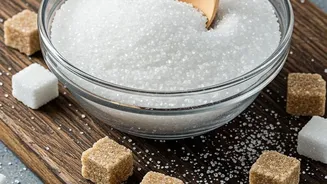
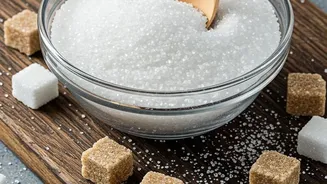
At a basic level, both honey and table sugar are composed of the same building blocks: glucose and fructose. Table sugar, or sucrose, is a simple molecule where one glucose and one fructose are bonded together in a perfect 50/50 split. Your body must
break this bond before it can use the energy. Honey, on the other hand, is a more complex mixture. Bees have already done some of the work, using enzymes to split most of the sugars. A typical jar of honey contains roughly 38% free fructose and 31% free glucose, along with water and trace amounts of minerals, vitamins, amino acids, and antioxidants. This difference in structure is why our bodies handle them slightly differently.
The Calorie Conundrum
Here’s where it gets tricky. Gram for gram, honey has fewer calories than sugar because it contains water. However, honey is denser. This means a tablespoon of honey actually contains more calories than a tablespoon of sugar — roughly 64 calories versus 49. So, if you swap sugar for honey one-for-one in your tea, you might be consuming more calories. The saving grace is that honey is often perceived as sweeter than sugar, mainly due to its higher fructose content. This might lead you to use less of it to achieve the same level of sweetness, potentially balancing out the calorie difference.
The Glycemic Index Showdown
The glycemic index (GI) measures how quickly a food raises your blood sugar. This is a key area where honey has a modest edge. Table sugar has a GI of around 65, while honey’s GI is typically lower, averaging around 58. The exact GI of honey can vary widely depending on its floral source, from as low as 35 to over 80. The generally lower GI means that honey tends to raise blood sugar a bit more gradually than sugar, avoiding the dramatic 'spike and crash' effect. This is likely due to its higher fructose content, which is processed by the liver and doesn't trigger the same immediate insulin response as glucose.
Nutritional Edge: Small but Real
Refined table sugar is often described as providing 'empty calories' because it contains no other nutrients. Raw honey, in contrast, contains trace amounts of B vitamins, vitamin C, and minerals like calcium, iron, and potassium. It is also a source of antioxidants, such as flavonoids and phenolic acids, which have anti-inflammatory properties. While these amounts are too small to meet your daily nutritional needs, they represent a clear advantage over sugar, which offers none. However, it's important to note that many commercially processed honeys are heated and filtered, which can diminish these beneficial compounds.
The Golden Rule: Portion Control
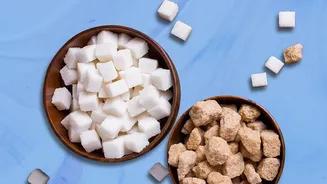
Despite honey's slight advantages, health authorities like the World Health Organization classify it as a 'free sugar', just like table sugar. This means it contributes to your daily added sugar intake and should be consumed in moderation. The UK's NHS recommends adults consume no more than 30 grams of free sugars per day, which is about seven sugar cubes. A single heaped teaspoon of honey can contain around 11.5 grams of sugar, which is a significant portion of that daily limit. The American Heart Association suggests an even stricter limit of about 24 grams for women and 36 grams for men. Ultimately, the biggest difference between honey and sugar isn't what's in the sweetener, but how much of it you use.