





The Sound of Silence
The technology at the heart of this new wave of pest management is ultrasonic sound. These are high-frequency sound waves, typically above 20 kilohertz (kHz), which are completely inaudible to the human ear. For certain animals and insects, however, this silent
treatment is anything but peaceful. The idea is that these ultrasonic frequencies create a hostile, uncomfortable environment for pests, disrupting their nervous systems, movement, and even their ability to reproduce. In some cases, the sound mimics the echolocation calls of natural predators like bats, triggering the innate instinct of insects like moths to flee the area. The goal isn't necessarily to kill the pests, but to make the targeted area so unpleasant that they voluntarily pack up and leave, creating a protective, invisible barrier around the crops.
Why Urban Farms Are Tuning In
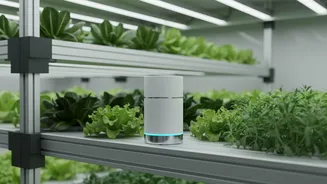
Traditional agriculture has long relied on chemical pesticides, but that model doesn't translate well to cities. Using potent chemicals near homes, offices, and public spaces is a significant health and environmental concern. Urban agriculture, which often emphasizes sustainability and direct community engagement, needs a different playbook. This is where soundwave technology finds its ideal niche. It’s a non-toxic, eco-friendly alternative that leaves no residue on the plants or in the soil. Because it’s targeted, it helps preserve biodiversity by not harming beneficial insects like bees and other pollinators. For indoor vertical farms and greenhouses, which are controlled environments, ultrasonic devices can be particularly effective. The contained space allows the soundwaves to permeate the area more consistently than they would in a wide-open field, where their range can be limited.
But Does It Actually Work?
This is the million-dollar question, and the answer is complex. The evidence for ultrasonic pest control is mixed, and its effectiveness seems to depend heavily on the specific pest, the frequency used, and the environment. Some studies have shown remarkable success. One experiment in a greenhouse found that ultrasonic signals completely eradicated pests like whiteflies and aphids on tomato and cucumber plants within eight days. Other research confirmed that using specific ultrasonic pulses could significantly reduce the number of moths entering crop fields. However, the broader scientific community remains cautiously optimistic at best. Many consumer-grade ultrasonic devices marketed for home use have been found to have little to no long-term effect, as pests like rodents can simply get used to the sound over time. Skeptics point out that many manufacturers' claims are not backed by rigorous scientific evidence, a concern echoed by the Federal Trade Commission. The consensus is that while it shows promise for specific applications, particularly in controlled agricultural settings, it is not yet a universal, foolproof solution.
The Future of Farm-to-Table Tech
Despite the debate over efficacy, the drive toward sustainable and chemical-free agriculture is pushing innovation forward. The global market for ultrasonic pest repellers is growing, driven by consumer demand for eco-friendly solutions and stricter regulations on chemical pesticides. For urban farms, the appeal is undeniable. As this technology becomes more sophisticated—perhaps integrating smart sensors that detect specific pests and tailor the frequency accordingly—it could become a critical tool in the quest to grow fresh, local food safely and sustainably. It represents a fundamental shift in thinking: instead of waging a chemical war on nature, we might learn to manage it with something as simple and elegant as sound. The quiet hum of an ultrasonic device on a city rooftop may just be the sound of a cleaner, greener future for agriculture.