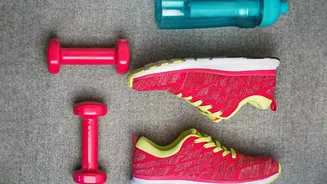







Why A Smart Warm-Up Is Non-Negotiable
A proper warm-up prepares your body for the demands of your workout by increasing your body temperature and sending oxygen-rich blood to your muscles. Warmer muscles are more elastic and less prone to injury. This preparation also “wakes up” your nervous
system, which improves the communication between your brain and muscles. This leads to better coordination, balance, and reaction time. Modern sports science emphasizes a dynamic warm-up, which involves controlled, continuous movements through a full range of motion, rather than holding static stretches. This approach not only preps the body physically but also serves as mental preparation, helping you focus on the session ahead.
Part 1: General Movement Preparation
The first phase of your warm-up should be general movement preparation. The goal here is to elevate your heart rate and warm up the entire body with broad, dynamic movements. Think of this as a full-body activation. This phase should include activities that move your major joints and muscles without being overly intense. Examples include light cardio like jogging or jumping jacks, followed by dynamic stretches such as leg swings, arm circles, torso twists, and walking lunges. These movements promote flexibility and joint mobility, preparing your body for more complex actions later in your workout. This part of the warm-up should last for a few minutes, gradually increasing in intensity.
Part 2: Exercise-Specific Preparation
The second phase tailors the warm-up directly to your main workout. This is where you prime the specific muscles and movement patterns you'll be using. For example, if your workout includes heavy back squats, your specific warm-up should involve bodyweight squats or squats with a very light weight. If you're going for a run, you might perform high knees and butt kicks to mimic the running motion. For a workout focused on upper body pushing movements like the bench press, performing some light push-ups or presses with an empty barbell gets the chest, shoulders, and triceps ready for the load to come. This step not only physically prepares the target muscles but also allows you to mentally rehearse the form and technique of the main exercises.
The Power of Potentiation
For more advanced individuals, particularly in strength and power training, the specific warm-up can include a technique called post-activation potentiation (PAP). This involves performing a near-maximal effort of an exercise to acutely excite the neuromuscular system, which can enhance performance in the subsequent explosive movements. For instance, performing a single heavy squat (but not to failure) a few minutes before your main sets can make the working weight feel lighter and allow you to generate more force. This is due to several factors, including increased muscle activation and improved nerve signaling. This technique requires careful management of intensity and rest to gain the benefit without causing fatigue.
Putting It All Together: A Sample Plan
A complete, effective warm-up should take about 10 to 15 minutes. Here’s a sample structure for a strength training session focused on lower body: 1. General Movement (5 minutes): Start with 2-3 minutes of light cardio, such as cycling or jogging. Follow this with dynamic stretches like leg swings (forward and side-to-side), walking lunges with a torso twist, and hip circles. 2. Specific Preparation (5-10 minutes): If your main lift is the squat, perform 2-3 sets of bodyweight squats, focusing on depth and form. Then, do a few sets with just the barbell, followed by one or two light-weighted sets, gradually building up to your working weight for the day. This primes the exact movement pattern and muscles involved.