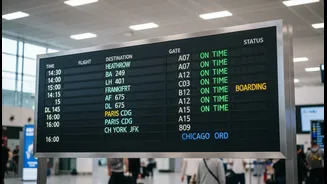





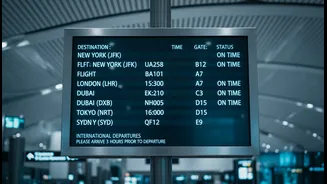


Understanding On-Time Performance (OTP)
The single most important metric for predicting a smooth journey is On-Time Performance, or OTP. In India, the Directorate General of Civil Aviation (DGCA) defines a flight as 'on-time' if it departs or arrives within 15 minutes of its scheduled time.
Anything beyond that is officially a delay. Airlines and airports are tracked on this measure, and the data is published monthly. This moves punctuality from a marketing promise to a verifiable number that savvy travellers can use to their advantage. Instead of booking based on price or schedule alone, adding OTP to your checklist can significantly stack the odds of a timely departure in your favour.
Where to Find Reliable Flight Data
For Indian domestic travel, the DGCA is the primary source. It releases monthly reports on the OTP of scheduled domestic airlines operating out of India's major metro airports, including Delhi, Mumbai, Bengaluru, and Hyderabad. This official data provides a clear, unbiased look at how airlines are performing. Globally, aviation analytics firms like Cirium publish monthly rankings for both airlines and airports worldwide. Additionally, third-party apps and websites like FlightAware, FlightStats, and even a simple Google search of the flight number can provide historical data and real-time tracking for specific routes.
Decoding the Airline Punctuality League
The DGCA data reveals a clear performance hierarchy. According to recent 2026 reports, IndiGo has consistently been a leader in punctuality, with an OTP often between 80-85%. Newcomer Akasa Air follows closely, performing well with an OTP around 78-82%. The Air India Group has shown significant improvement, with its performance for June 2026 ranking it among the world's most punctual airlines, a notable turnaround. At the other end, some carriers have struggled, with punctuality figures occasionally dipping significantly. When choosing between two similarly priced flights, a quick check of the latest DGCA report can reveal which airline is statistically more likely to get you there on time.
Not All Airports Are Created Equal
An airline's efficiency is only half the story; the airport itself plays a massive role. Congestion, runway capacity, and weather patterns all affect an airport's OTP. For instance, DGCA data from May 2026 showed Chennai International Airport as the most punctual in India, with an impressive 92.2% of flights on time. In contrast, some of the nation's busiest hubs like Mumbai and Delhi can have lower OTP scores due to high traffic volume. Seasonal factors also have a major impact. Monsoon season (June-September) can reduce OTP across all airlines by 5-10%, while winter fog in North India can slash punctuality for Delhi departures by an additional 8-12 percentage points.
Timing Is Everything
The time of day you choose to fly has a significant impact on your delay risk. The first flights of the morning are almost always the most punctual. They are less susceptible to the cascading effect of delays that accumulate throughout the day. As airports get busier and air traffic peaks, delays become more frequent. Midday and evening flights are statistically more likely to be late because they are impacted by any and all disruptions that occurred earlier. A delay in an aircraft's first flight of the day can have a ripple effect on every subsequent flight that plane is scheduled to operate. For time-critical travel, booking the earliest possible flight is a proven strategy.
Your Pre-Booking Punctuality Checklist
Before you click 'buy', take ten minutes to run through this checklist: 1. Check the Airline's OTP: Look up the last few months of DGCA reports. Is your chosen airline consistently in the top tier, or are they frequently at the bottom? 2. Compare Airports: If you're flying between cities with multiple airports, check their respective OTP scores. A slightly less convenient airport might be a more reliable one. 3. Analyse the Time of Day: Opt for the first flight out in the morning if your schedule allows. Avoid late evening flights if a timely arrival is crucial. 4. Consider the Season: If travelling during monsoon or peak winter fog season, be mentally prepared for potential delays and perhaps choose an airline with a historically better performance during those periods.