

The New Space Age in India
For decades, a career in India's space sector meant one thing: joining the prestigious Indian Space Research Organisation (ISRO). While ISRO remains the backbone of the nation's space endeavours, a seismic shift is underway. The government's decision
to open the sector to private enterprise has unleashed a wave of innovation, with over 400 space startups now registered in the country. This new ecosystem, covering everything from launch vehicles to satellite data analysis, is rapidly maturing. Recent successes by private companies like Skyroot Aerospace and Agnikul Cosmos have proven that the private sector can build on ISRO's foundation to create commercially viable technologies. This public-private synergy, supercharged by international collaborations like the Artemis Accords, is creating a universe of new job roles that didn't exist a decade ago. India's space economy, currently valued at over $8 billion, is projected to reach as high as $44 billion by 2033, creating a massive demand for skilled professionals.
1. Data Science and AI Specialists
Modern space exploration is fundamentally about data. Satellites orbiting Earth generate petabytes of information used for everything from climate monitoring and urban planning to agriculture and national security. The real value lies in interpreting this data. This has created a surge in demand for data scientists and AI/ML engineers who can build algorithms to analyze satellite imagery and telemetry. As India's participation in global projects like the NASA-ISRO Synthetic Aperture Radar (NISAR) mission and privately-owned satellite constellations grows, so will the need for experts who can turn raw data into actionable intelligence. Skills in Python, machine learning, and geospatial analysis are now as critical to the space industry as rocket science.
2. Aerospace and Propulsion Engineers
While new-age tech roles are booming, the core of the space industry remains rooted in aerospace engineering. The race to build more efficient, powerful, and reusable launch vehicles is a key focus for both ISRO and private players. There is a specific demand for engineers with hands-on experience in advanced fields like liquid propulsion, turbomachinery, cryogenic engineering, and guidance, navigation, and control (GNC) systems. Startups are operating in fast-paced environments, requiring engineers who can be involved in every stage, from design and simulation to building and testing hardware that flies within months, not years. A strong foundation in mechanical, electrical, or aerospace engineering is the launchpad for these roles.
3. Robotics and Autonomous Systems Experts
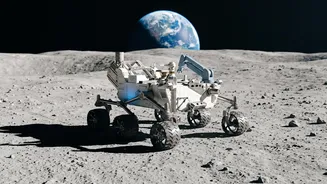
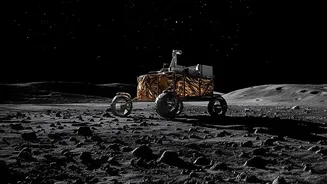
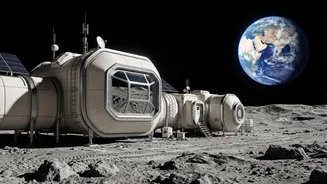
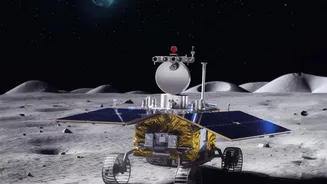
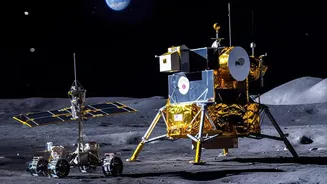
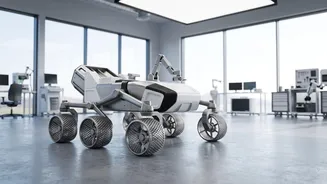
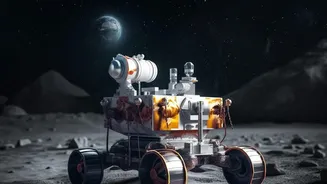
As missions become more complex and venture into harsher environments like the lunar surface or Mars, the need for advanced robotics is skyrocketing. From rovers that navigate autonomously to robotic arms that assist astronauts, these systems are essential. ISRO has already showcased its growing capabilities with the 'Vyommitra' humanoid robot for the Gaganyaan mission and the autonomous navigation of the Pragyan rover on the Moon. The collaboration on a lunar base will only intensify this demand. Careers in this domain require a multidisciplinary blend of mechanical engineering, electronics, and artificial intelligence to design, build, and operate the robots that will be our proxies on other worlds.
4. Satellite and Systems Engineers
Satellites are the workhorses of the space economy. Designing, building, and managing these complex systems is a rapidly growing field. This involves not just the satellite itself but also the ground systems that control it and receive its data. As India aims to launch hundreds of satellites in the coming years for communication, navigation, and Earth observation, the demand for satellite systems engineers is immense. Furthermore, as private companies like OneWeb and Indian startups build out their constellations, they require experts in radio frequency (RF) systems, electronics, signal processing, and embedded systems. These roles are found at ISRO, large international players, and the burgeoning startup ecosystem.
5. Space Law and Policy Professionals
With great opportunity comes great responsibility—and regulation. As more public and private entities launch objects into space, a new field of legal and policy expertise is emerging. The Artemis Accords themselves are a framework of principles for responsible space exploration. Domestically, India has established IN-SPACe as a single-window agency to authorize and regulate private space activities. This growing regulatory landscape requires professionals who understand international treaties, domestic policy, intellectual property rights, and liability issues related to space. A background in law, public policy, or international relations can pave the way for a unique career shaping the rules of this new frontier.