


A New Space Race Begins
India's space sector is undergoing a monumental shift. For decades, the Indian Space Research Organisation (ISRO) was the sole custodian of the nation's celestial ambitions. Today, a vibrant ecosystem of private companies is emerging, fueled by policy
reforms and a surge in investment. The government's decision in 2020 to open the space sector to private enterprise has unlocked a wave of innovation, with the number of registered space startups soaring from just one in 2014 to over 400 in 2026. This new landscape is not just about launching satellites; it's about tackling the final frontier, including the hardware needed for lunar exploration.
The Phoenix from the Prize
At the forefront of this lunar push is Axiom Research Labs, a Bengaluru-based company with a storied past. The firm rose from the legacy of TeamIndus, India's only entrant in the ambitious Google Lunar X Prize competition. While the prize ended without a winner, the dream did not. TeamIndus, which had attracted high-profile investors like Ratan Tata and Nandan Nilekani, developed a wealth of expertise and a prototype rover named 'Ek Choti Si Asha' (E-CA), meaning 'A Small Hope'. Now, as Axiom Research Labs, the team is leveraging that hard-won knowledge to build a new generation of lightweight, affordable lunar rovers, continuing its original mission in a new commercial era.
The 'Frugal Engineering' Advantage
The key differentiator for these Indian startups is cost. Building on India's global reputation for 'frugal engineering'—a principle that guided the remarkably inexpensive Chandrayaan-3 and Mars Orbiter Missions—these private firms are designing rovers at a fraction of the cost of their international counterparts. This is achieved through a combination of innovative design, smaller and lighter payloads, and leveraging a domestic supply chain with deep experience in precision manufacturing for ISRO's own demanding projects. By focusing on creating rovers that are robust yet economical, startups like Axiom are not just building machines; they are creating a new, accessible business model for lunar logistics.
Hitching a Ride to the Moon
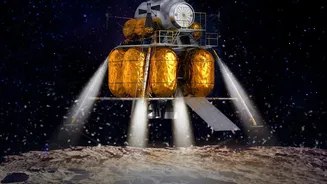
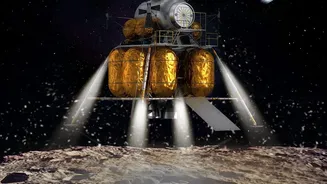
A rover is only as good as its ride to the Moon. Indian startups are forging crucial partnerships with international commercial lander companies. A prime example is the collaboration with US-based Intuitive Machines, a key partner in NASA's Commercial Lunar Payload Services (CLPS) program. These American companies are developing landers, like the Nova-C, to deliver scientific and commercial payloads to the lunar surface. By securing a spot on these upcoming missions, Indian-built rovers can get to the Moon without the massive expense of developing their own lander and launch vehicle. This symbiotic relationship allows Indian startups to focus on their core competency—rover development—while providing commercial lander companies with cost-effective payloads for their manifests.
Powering India's $45 Billion Space Dream
The development of commercial lunar rovers is a significant step towards India's ambitious goal of expanding its space economy to an estimated $40-45 billion by 2030. This move into deep-space hardware signals a maturation of the country's private space sector, moving from satellite services to more complex interplanetary missions. It positions India as a potential hub for low-cost space exploration hardware, attracting global interest and investment. Companies like Skyroot Aerospace, which recently became the first Indian private company to launch a rocket into orbit, are building the launch capabilities, while others like Axiom are building the explorers that will ride them. Together, they are creating a vertically integrated private space ecosystem that promises to be a major economic driver.