





The Building Blocks: Amino Acids
First, let's talk about what protein actually is. Proteins are crucial for almost everything your body does, from building muscle and repairing tissue to supporting your immune system. They are made up of smaller units called amino acids. There are 20
different amino acids your body uses, but nine of them are special. These are called 'essential amino acids' because our bodies can't produce them. We have to get them from the food we eat every day. The nine essential amino acids are histidine, isoleucine, leucine, lysine, methionine, phenylalanine, threonine, tryptophan, and valine.
What Makes a Protein 'Complete'?
You’ve likely heard the terms 'complete' and 'incomplete' proteins. A food is considered a 'complete protein' when it contains all nine essential amino acids in sufficient quantities. Animal-based foods like meat, fish, eggs, and dairy are generally complete protein sources. Most plant-based foods, on the other hand, are often described as 'incomplete' because they might be low in one or two of these essential amino acids. For example, many grains are low in the amino acid lysine, while legumes like beans and lentils are often low in methionine. This doesn't make them inferior; it just means a little variety is key.
Decoding Protein Quality Scores
To measure how well our bodies can use protein from different foods, scientists use protein quality scores. The most common one you might see is the Protein Digestibility Corrected Amino Acid Score (PDCAAS). This score evaluates a protein based on two things: its amino acid profile and its digestibility. The score ranges from 0 to 1.0, with 1.0 being the highest quality, indicating the protein provides all essential amino acids and is easily absorbed by the body. A newer, more precise method called the Digestible Indispensable Amino Acid Score (DIAAS) is also used in research, but PDCAAS remains the standard for food labeling in many places.
The Power of Pairing: Grains and Legumes
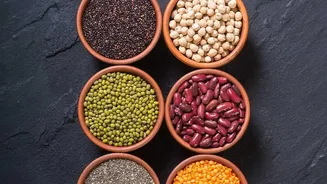
This is where the magic of food combination, or 'protein complementation', comes in. By pairing different plant foods, you can easily create a complete protein profile. The classic example is combining grains with legumes. The amino acid that is low in the grain is typically abundant in the legume, and vice versa. Together, they fill each other's gaps and provide your body with all nine essential amino acids. This isn't a new-age health trend; it’s the foundation of countless traditional cuisines around the world, including many staples of the Indian diet.
Complete Proteins in Your Kitchen
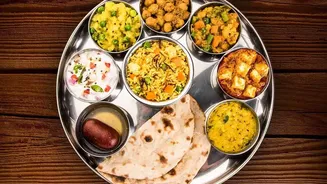
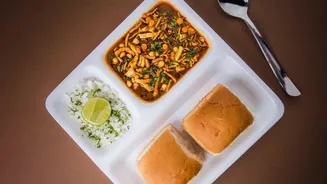
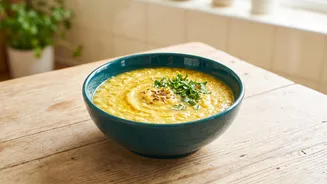
Think about some of the most comforting and common meals in India. Many of them are perfect examples of protein complementation. Dal with rice (dal-chawal) is a classic; lentils (dal) are rich in lysine but low in methionine, while rice is the opposite. The same principle applies to rajma-chawal (kidney beans with rice) and roti with any dal. South Indian staples like idli and dosa, made from a fermented batter of rice and urad dal, are another delicious example of a grain and legume working together to form a complete protein. Even khichdi, made from rice and moong dal, is a nutritionally complete meal.
Do They Need to Be Eaten Together?
For years, the belief was that you had to eat complementary proteins in the same meal for your body to use them. However, nutrition science has since shown this isn't necessary. Your body maintains a 'pool' of free amino acids it can draw from throughout the day. So, as long as you eat a variety of plant-based protein sources—like legumes, grains, nuts, and seeds—over the course of a day, your body can combine them as needed to get the complete set of essential amino acids.