
What's the Big Deal About Saturn This Month?
Throughout August, Saturn is moving towards an event called 'opposition'. While the exact date of opposition is on October 4th this year, the weeks leading up to it are a prime viewing window. Opposition is when Earth passes directly between the Sun and
an outer planet like Saturn. From our perspective, this means Saturn rises in the east around the same time the Sun sets in the west, making it visible all night long. It also means the planet is near its closest point to Earth for the year, so it appears larger and brighter than usual. By late August, Saturn will be rising earlier in the evening, making it conveniently placed for observation after dark.
A Welcome Return for the Famous Rings
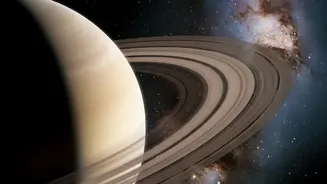
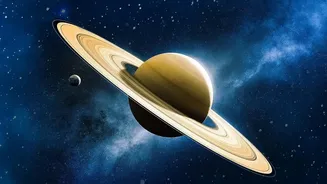
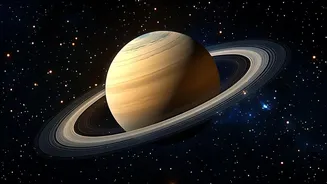
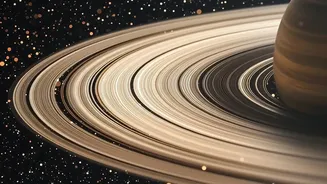
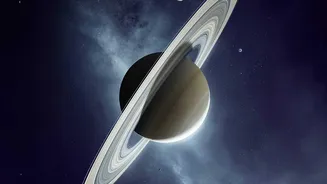
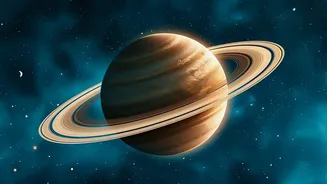
What makes this year's viewing particularly interesting is the angle of Saturn's famous rings. During 2025, Earth passed through the planet's ring plane, causing the rings to appear edge-on and virtually disappear from view in amateur telescopes. Now, in 2026, the rings are once again tilting back towards us. This August, they will be angled enough to be clearly visible as a distinct structure. While they won't be at their widest tilt, seeing them return to prominence after their 'disappearance' is a rewarding experience for long-time skywatchers and a beautiful sight for newcomers.
When and Where to Look from India
In early August, you'll need to wait until later in the evening, around 10 or 11 p.m. local time, for Saturn to climb high enough above the eastern horizon for a clear view. As the month progresses, it will rise earlier each night. The planet will be located in the constellation Pisces, a region of the sky without many bright stars, which actually helps Saturn stand out. To the naked eye, it will appear as a bright, steady, yellowish point of light that doesn't twinkle like a star. On August 3rd and 4th, the waning gibbous Moon will be near Saturn, making it even easier to locate.
Your Guide to Viewing: From Eyes to Eyepieces
You don't necessarily need expensive equipment to enjoy this celestial event. With just your eyes, you can easily spot Saturn as a bright 'star'. A good pair of binoculars will steady the view and might even reveal Saturn not as a point, but as a tiny, elongated oval. However, to truly experience the 'wow' factor, a telescope is needed. Even a small beginner's telescope with at least 25x magnification should be able to show you that the oval is, in fact, a set of rings distinct from the planet itself. A telescope with an aperture of 60mm or more will provide a clearer view of the rings, and larger scopes can even begin to reveal the Cassini Division, a dark gap in the rings.
Tips for the Best Saturn Sighting
To make the most of your stargazing session, try to get away from bright city lights. The darker your location, the more your eyes will be able to see. Give your eyes at least 15-20 minutes to fully adapt to the darkness. If you're using a star map or an app on your phone, set the screen to its dimmest red-light mode to preserve your night vision. Finally, be patient. Atmospheric conditions can change, and sometimes the best views come in moments of steady air. Check your local weather forecast for a clear night and take the opportunity to look up at this distant, beautiful world.