




A New Player Aims for Orbit
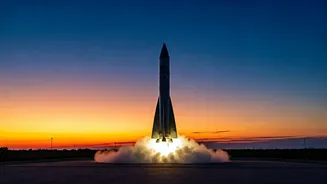
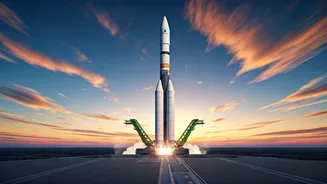
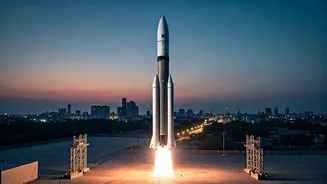
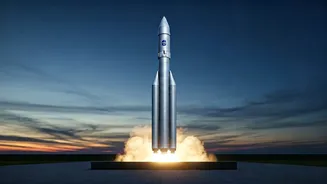
Hyderabad-based startup Skyroot Aerospace is preparing for a landmark event: the maiden launch of its Vikram-1 rocket. The launch window for this historic mission, named 'Aagaman' (Sanskrit for 'arrival'), is set between July 12 and August 4, 2026, from
the Satish Dhawan Space Centre in Sriharikota. This isn't just another rocket launch; it's poised to be India's first-ever privately developed and operated orbital-class launch. While Skyroot successfully flew a suborbital test rocket, Vikram-S, in November 2022, Vikram-1 is the real prize. It’s a seven-storey-tall, multi-stage vehicle designed to deliver satellites into a stable orbit around Earth, a capability that, until now, has been the exclusive domain of national space agencies in India. Named in honour of Dr. Vikram Sarabhai, the father of India's space program, the rocket's success would signal the true arrival of the country's private space industry on the global stage.
Built for the Modern Space Economy
Vikram-1 is engineered specifically for the booming global market of small satellites. It’s designed to carry payloads of up to 350 kg into Low Earth Orbit. What sets it apart is its innovative and cost-effective design. The rocket features an all-carbon composite body, making it lightweight yet strong. Crucially, it incorporates 3D-printed engines and other components, which drastically reduce manufacturing time and costs. Skyroot has positioned Vikram-1 as a 'space taxi,' offering dedicated and on-demand launches. This gives satellite operators greater flexibility compared to 'ridesharing' on larger, less frequent rocket missions. The ability to offer rapid, customised launches is a significant competitive advantage in a market eager for faster and more affordable access to space.
The Policy Shift That Opened the Skies
This moment was made possible by a fundamental shift in India's space policy. In 2020, the government opened the sector to private participation, a domain previously dominated by the Indian Space Research Organisation (ISRO). This led to the creation of the Indian National Space Promotion and Authorisation Centre (IN-SPACe), a regulatory body designed to promote, authorise, and supervise private space activities. IN-SPACe acts as a single-window agency, allowing startups like Skyroot to use ISRO's world-class facilities, from testing sites to launchpads, and providing crucial technical support. These reforms were designed to unburden ISRO, allowing it to focus on deep-space exploration and strategic missions, while private firms drive the commercial launch and satellite business. The goal is to significantly expand India's current 2% share of the global space economy.
More Than Just One Rocket
The significance of the Vikram-1 launch extends far beyond a single mission. A successful flight would provide a powerful validation of the private enterprise model in India's space sector, likely triggering a fresh wave of investment. Skyroot Aerospace, founded by former ISRO scientists Pawan Kumar Chandana and Naga Bharath Daka, has already achieved unicorn status, signaling strong investor confidence. Its success could inspire a new generation of engineers and entrepreneurs, fostering a robust domestic ecosystem of companies building satellites, developing ground station services, and creating downstream applications. This industrial base is crucial for India's ambition to become a self-reliant, high-tech manufacturing hub and a key player in the projected $44 billion Indian space economy by 2033.
Challenges on the Launchpad
The path to orbit is never without risk. The 'Aagaman' mission is primarily a test flight, with its main objective being to gather critical in-flight performance data to validate the rocket's design. Co-founder Pawan Kumar Chandana has emphasized that this real-world data cannot be fully replicated in ground tests and is essential for building a reliable commercial launch program. Beyond the technical hurdles of the first flight, Skyroot and other Indian space startups face intense global competition from established players. Building a reputation for reliability and maintaining a high launch frequency will be key to securing a foothold in the international market. However, the successful integration of all Vikram-1 stages at the launch pad is a major step forward, showing that the company is ready for this challenge.