




The Fibre You're Missing
When you choose a glass of juice over an apple or an orange, you're missing out on the best part of the fruit, nutritionally speaking. The juicing process, which extracts the liquid and discards the pulp and skin, removes almost all the dietary fibre.
This fibre is not just filler; it's a powerhouse nutrient essential for digestive health, regulating bowel movements, and reducing the risk of chronic diseases. Plant-based foods contain two types of fibre, both of which are abundant in whole fruits but absent in juice.
Soluble and Insoluble: Fibre's Two Forms
Dietary fibre comes in two forms: soluble and insoluble, and whole fruits contain both. Soluble fibre dissolves in water to form a gel-like substance in your digestive system. This gel helps lower 'bad' LDL cholesterol and slows digestion, which is key for controlling blood sugar. It's found in the fleshy part of fruits like apples and oranges. Insoluble fibre, found mostly in the skins and seeds, doesn't dissolve. It adds bulk to stool, promoting regularity and preventing constipation. By juicing a fruit, you effectively strip away this entire dual-action system that is so beneficial for your gut and overall health.
The Blood Sugar Rollercoaster
Perhaps the most significant difference between juice and whole fruit is the effect on your blood sugar. The fibre in whole fruit acts as a natural brake, slowing down your body's absorption of the fruit's natural sugars (fructose). This leads to a gradual, gentle rise in blood glucose. When you drink juice, you're consuming what the World Health Organization calls 'free sugars'—sugars that are no longer contained within the fruit's cellular structure. Without fibre to slow them down, these sugars hit your bloodstream all at once, causing a rapid spike in blood sugar and insulin, much like a soft drink would. This can increase the risk for type 2 diabetes over time.
The Satiety Factor: Feeling Full
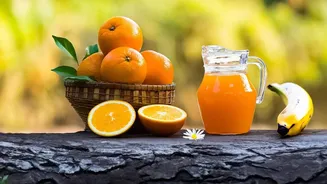
There's a reason you can drink the juice of four oranges in a minute but would feel quite full after eating two whole ones. Whole fruits are significantly more satisfying. The combination of fibre and the physical act of chewing sends signals to your brain that you are full, helping to regulate your appetite. Juice, being a liquid, bypasses this completely. It's very easy to consume a large number of calories from juice without feeling full, which can contribute to weight gain over time. Whole fruits, being more filling and lower in 'energy density', are a much better ally for weight management.
Nutrients Lost in Translation
While juice does retain some vitamins, the juicing process can degrade or remove other important compounds. Many beneficial antioxidants and phytonutrients are concentrated in the skin and pulp of fruits—the very parts that get thrown away. For example, the skin of an apple is rich in compounds that have numerous health benefits. While fresh juice is certainly a better choice than a sugar-sweetened beverage, it is a nutritionally incomplete version of the original fruit.