

A Quick Cosmic Glossary
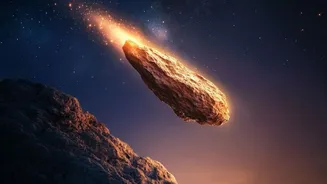
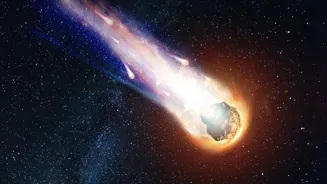
Before we begin our journey, let's get our terms straight. That flash of light is called a meteor. The piece of rock or metal that creates it is called a meteoroid while it is still in space. If any part of that rock survives the intense trip through
the atmosphere and lands on Earth, it earns a new name: a meteorite. So, we are tracing the origin of a meteoroid, the object that becomes the meteor you see.
The Fiery Grand Finale
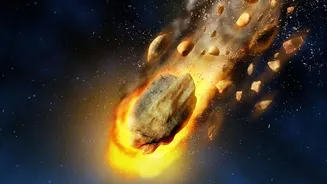
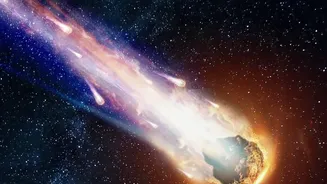
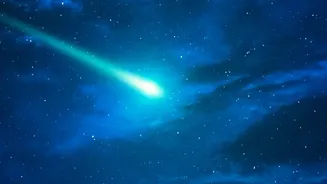
Our story begins at the end. A meteoroid, which can be anything from a grain of sand to a small boulder, smashes into Earth's atmosphere at incredible speed—sometimes as fast as 42 kilometres per second. At this velocity, it compresses the air in front of it, generating immense heat and pressure. This is what causes the object to burn up in a spectacular flash of light—the meteor or 'shooting star'. Most meteoroids, especially those smaller than a football field, completely disintegrate during this process and never reach the ground.
The Usual Suspect: The Asteroid Belt
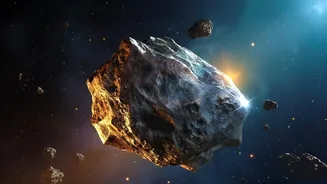
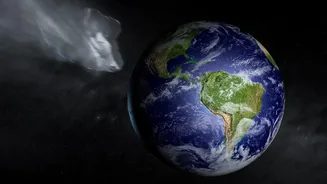
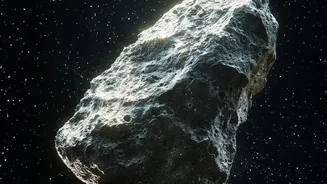
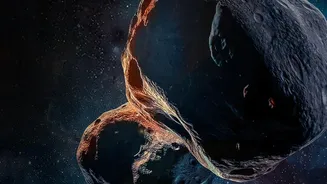
So, where was this rock before its fiery demise? The vast majority of meteorites found on Earth originate from the main asteroid belt, a sprawling, torus-shaped region of space between the orbits of Mars and Jupiter. This belt is filled with millions of rocky and metallic bodies left over from the formation of our solar system, about 4.6 billion years ago. It’s not a crowded field like in the movies; asteroids are actually millions of kilometres apart. Every so often, the immense gravity of Jupiter or a collision with another asteroid can knock a fragment out of its stable orbit and send it careening toward the inner solar system, where it might cross paths with Earth.
Icy Wanderers and Their Dust Trails
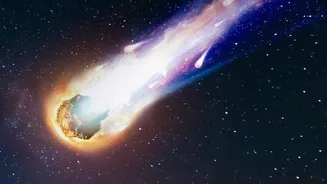
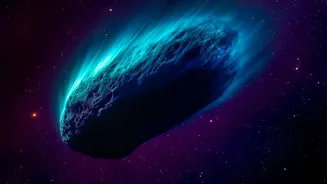
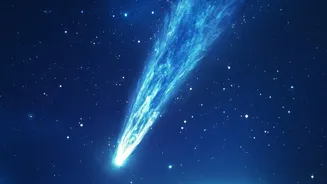
Asteroids aren't the only source. Many meteors, especially those that arrive in predictable annual 'showers' like the Perseids or Leonids, are the children of comets. Comets are essentially giant, dirty snowballs made of ice, dust, and rock. As a comet's orbit brings it closer to the Sun, the heat vaporises some of its ice, releasing a trail of dusty debris. When Earth's orbit intersects with one of these dust trails, we sweep through the debris, causing dozens or even hundreds of meteoroids to burn up in our atmosphere as a meteor shower. Because the debris from comets is typically small and fragile, these meteoroids almost always burn up completely and rarely produce meteorites.
Planetary Postcards from Mars and the Moon
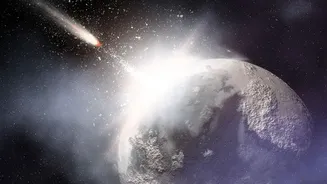
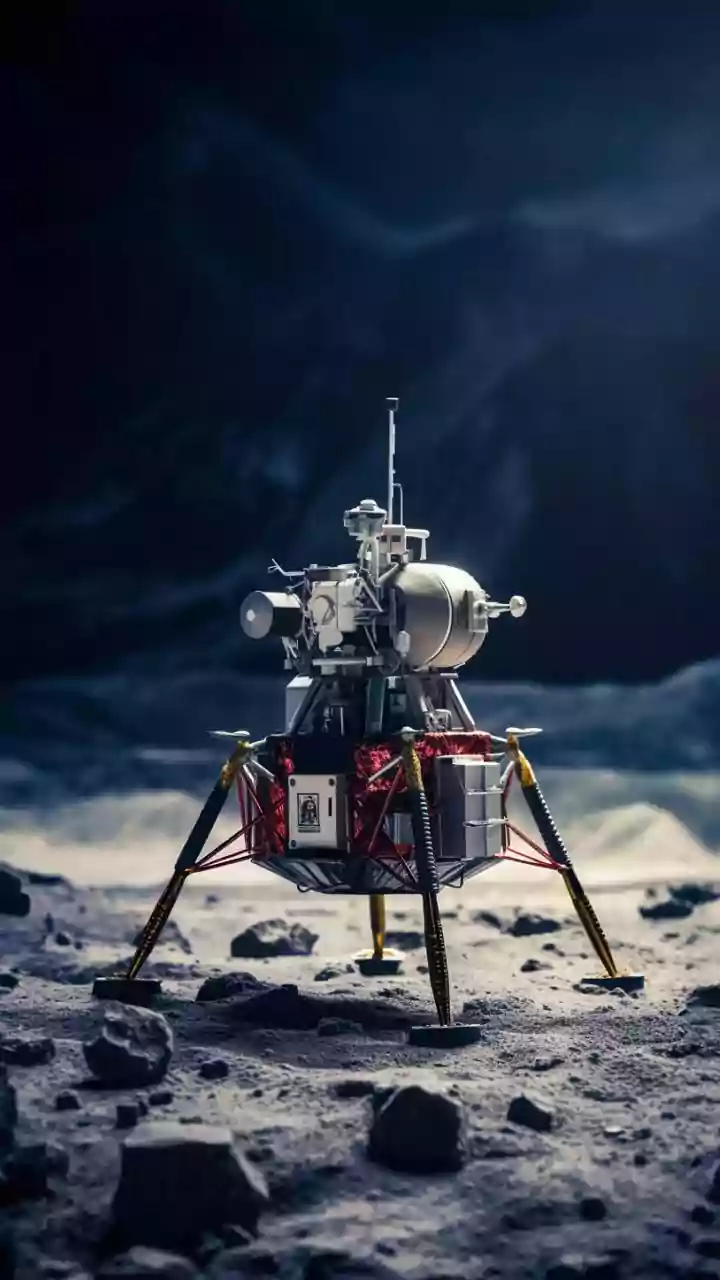
A small but fascinating number of meteorites are actually pieces of other worlds. A powerful asteroid impact on a body like Mars or our own Moon can have enough force to blast surface rocks into space. After drifting for potentially millions of years, some of these planetary fragments can be captured by Earth's gravity and fall to the surface. Scientists can identify these special meteorites by comparing their mineral and chemical composition to samples returned from the Moon by Apollo astronauts or data gathered from the Martian atmosphere by probes like the Viking mission.
The Science of Tracing a Meteor
Scientists act like cosmic detectives to trace a meteor's origin. By using networks of wide-angle cameras to photograph a meteor from multiple locations, they can triangulate its speed and trajectory through the atmosphere. This allows them to calculate the object's original orbit around the Sun and project it backward to its likely source, whether the asteroid belt or a specific comet's path. For meteorites that are recovered, their chemical makeup provides further clues. Spectroscopic analysis of asteroids can be compared to the composition of meteorites to find a match, sometimes even linking a specific meteorite type to a specific asteroid family or a large asteroid like Vesta.