


The Science of Seeing Stars
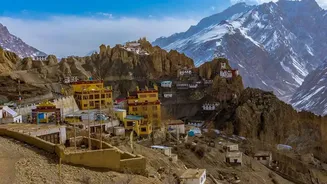
The magic of stargazing in places like Langza, which sits at an altitude of about 4,400 metres, begins with basic physics. At such heights, the Earth's atmosphere is thinner and carries far less dust, moisture, and pollutants. This high-altitude advantage
means there is less atmospheric distortion, the phenomenon that causes stars to twinkle and blurs our view of the heavens. The air is cleaner and drier, resulting in a crisp, sharp view of celestial objects that is simply unattainable at lower elevations. For stargazers, this translates to a sky that feels closer and more crowded with stars, revealing details that are otherwise lost in the haze of thicker air.
A World Without Light Pollution
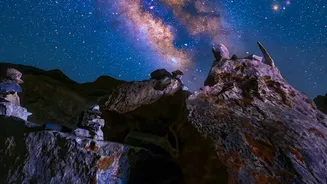
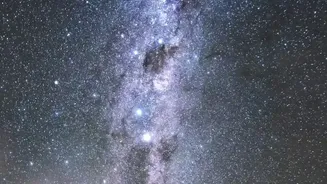
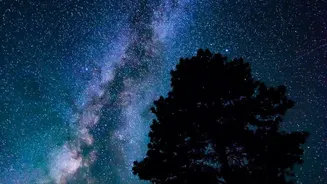
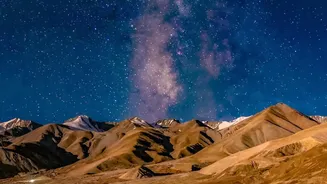
The second, and perhaps most crucial, ingredient is the profound darkness. Spiti Valley is one of the least populated regions in India, and its remote villages have minimal infrastructure, which means almost zero light pollution. Unlike urban centres where artificial light from buildings and streets washes out all but the brightest stars, the skies over Langza are recognised as some of the darkest in the country. This pristine darkness allows the human eye to adapt fully, revealing the faint, ethereal glow of the Milky Way stretching across the horizon, a sight that is impossible to witness from a city. This absence of man-made light is what transforms the night sky from a simple backdrop into an immersive, main event.
Langza’s Unique Celestial Theatre
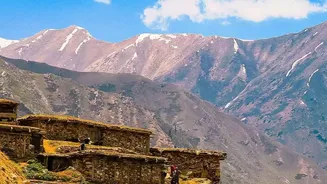
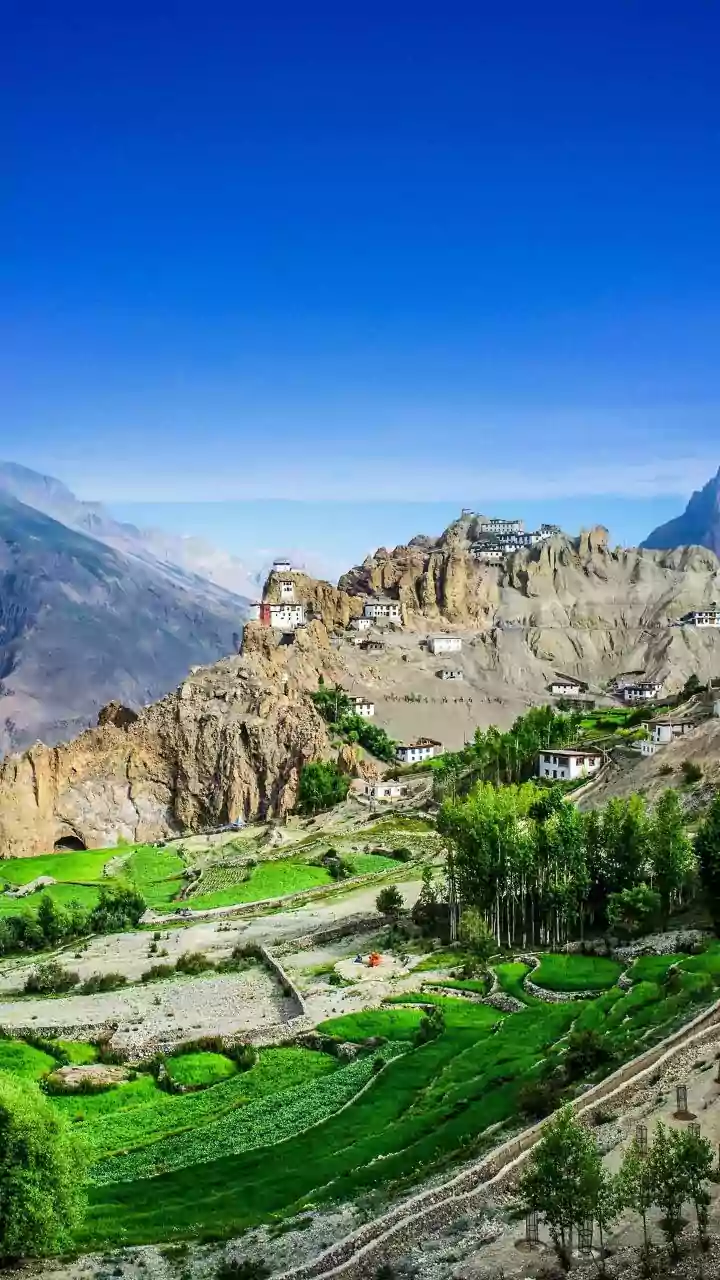
While the entire Spiti Valley is a stargazer's paradise, Langza offers a particularly dramatic setting. Known as the 'Fossil Village' for the abundance of ancient marine fossils found in its soil, the landscape itself feels otherworldly. The village is home to a towering, iconic statue of the Buddha that provides a stunning foreground for astrophotography, creating a powerful juxtaposition of earthly heritage and celestial wonder. This unique combination of accessible remoteness, cultural landmarks, and near-perfect sky conditions makes Langza a magnet for both casual tourists and serious astrophotographers.
The Rise of Community-Led Astrotourism
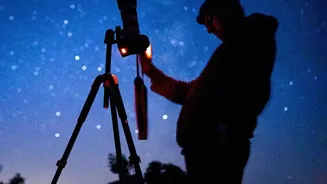
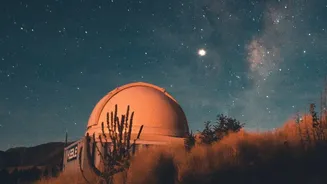
The growing interest in stargazing has sparked a sustainable economic model for these remote communities. Astrotourism is defined as travel for the primary purpose of observing the night sky, and it is providing a new source of livelihood in Spiti. Local families have opened their homes, offering authentic homestay experiences where travellers can enjoy Spiti's warm hospitality. More recently, the Himachal Pradesh government has actively started promoting astro-tourism by providing high-end telescopes and training local youth in Kaza, Langza, and other villages to become astro-guides. This empowers the community to lead guided night-sky sessions and workshops, ensuring that the economic benefits of tourism stay within the region and create sustainable, year-round employment.
A Glimpse into the Cosmos
So what can one actually see? On a clear, moonless night in Langza, the spectacle is breathtaking. The Milky Way is often visible to the naked eye as a brilliant, dense band of stars. Countless constellations like Cassiopeia and Orion are easily identifiable. Viewers can also spot bright planets such as Jupiter and Saturn, and with a bit of luck, the fleeting magic of shooting stars, especially during annual meteor showers like the Perseids or Geminids. The government's recent initiative to equip locals with powerful telescopes further enhances the experience, allowing visitors to get a closer look at distant celestial bodies. This direct engagement with the universe offers a profound sense of scale and wonder.