



A New Horizon for Indian Travel
For years, many of India’s most beautiful potential vacation spots—secluded islands, remote lakes, and coastal backwaters—have remained just out of reach for the average traveller, accessible only through long road journeys or infrequent boat services.
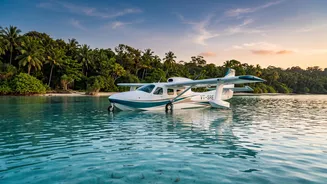
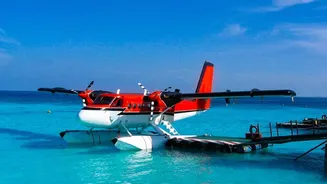
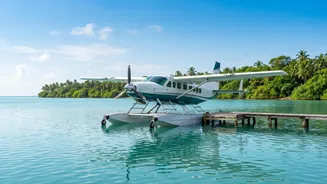
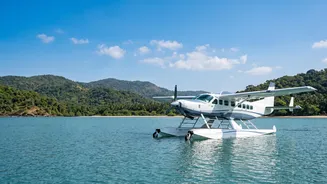
Seaplanes are changing that narrative. These specialised aircraft are uniquely equipped with floats, or pontoons, allowing them to take off from and land directly on water. This capability eliminates the need for traditional runways, opening up a vast network of India’s rivers, lakes, and coastal waters as potential landing sites. By connecting urban centres directly to these scenic destinations, seaplanes offer a revolutionary blend of speed, convenience, and adventure.
Connecting Hubs to Landmarks and Retreats
India's first major seaplane service was launched in October 2020, connecting the Sabarmati Riverfront in Ahmedabad to the Statue of Unity in Kevadia, Gujarat. Operated by SpiceJet's subsidiary, SpiceShuttle, the service demonstrated the immense potential of seaplanes to boost tourism to specific landmarks. While this service was suspended, it served as a crucial test case. The focus is now expanding, with government initiatives under the UDAN (Ude Desh ka Aam Naagrik) scheme actively promoting the development of water aerodromes across the country. Plans are in motion for networks in states like Kerala, Andhra Pradesh, and Assam, aiming to link major cities with tourist hotspots like backwaters and reservoirs.
Unlocking Island Paradises
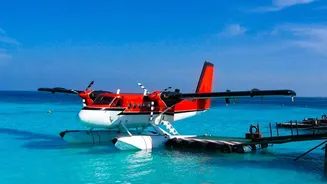
Perhaps the most exciting application of seaplane travel is in enhancing connectivity to India’s island territories. In the Andaman and Nicobar Islands, where travel between islands like Port Blair, Havelock, and Neil often involves hours-long ferry rides, seaplanes promise a dramatic reduction in travel time. A journey that takes over two hours by sea can be completed in as little as 15-25 minutes by air. Under the UDAN scheme, several water aerodrome routes have been awarded for the Andamans and Lakshadweep. Recent developments indicate that new operators like Flybig and SkyHop Aviation are preparing to launch services, which will connect various islands, making island-hopping a faster and more seamless experience for tourists. This mirrors the successful tourism model of the Maldives, where seaplanes are integral to accessing remote resort islands.
More Than Just a Faster Route
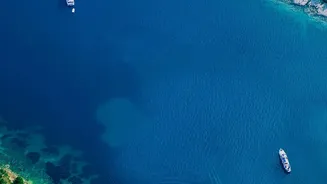
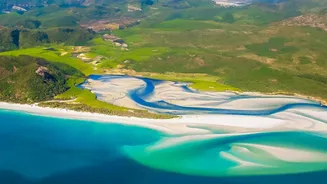
The appeal of seaplane travel goes beyond mere convenience. The journey itself is a significant part of the experience. Seaplanes typically fly at lower altitudes than commercial jets, offering passengers breathtaking, panoramic views of the landscapes below. Imagine soaring over the turquoise waters and lush green islands of the Andamans or gliding above the winding backwaters of Kerala. The unique thrill of taking off from and landing on water adds an element of adventure to the trip, turning a simple transfer into a memorable part of the vacation. This scenic, low-altitude perspective provides a visual feast that ground or sea travel simply cannot match.
The Future of Seaplane Tourism in India
The path to a widespread seaplane network has faced challenges, including high operating costs and regulatory hurdles that have stalled past projects. However, with renewed government focus, simplified guidelines, and financial incentives under schemes like UDAN, the future looks promising. The government has sanctioned crores for developing water aerodromes and has identified numerous potential routes across the country. Airlines are once again investing in amphibious aircraft, with plans to connect mainland destinations to islands and create new tourism circuits. As infrastructure develops and more operators enter the market, seaplanes are set to become a vital, exciting, and highly practical option for travellers seeking to explore India's hidden gems.