






The Core of the Problem: Demand vs. Supply
India holds the unique position of being the world's largest producer, consumer, and importer of pulses. Despite significant domestic production, a structural gap between what we grow and what we consume has existed for years. For staple pulses like tur (pigeon
pea) and urad (black gram), consumption consistently outstrips local supply. This deficit is driven by several factors, including population growth, rising incomes leading to higher protein demand, and agricultural challenges. Most pulses are cultivated in rain-fed areas, making them highly vulnerable to erratic monsoon patterns, as seen with concerns over the 2026 harvest after below-average rainfall in key states. When domestic output falters, this inherent supply-demand gap widens, putting immediate upward pressure on prices in local mandis and, eventually, on retail shelves.
The Government's Go-To Tool: Import Liberalisation
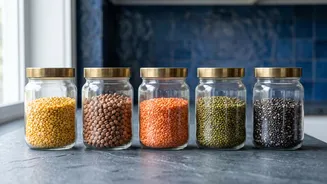
To prevent prices from spiralling out of control, the government often turns to trade policy as a short-term fix. One of the primary tools is the liberalisation of imports by reducing or eliminating import duties. For instance, to combat rising prices, the government has allowed duty-free imports of tur and urad until March 2027. More recently, reports in early October 2026 suggest the government is considering cutting import duties on lentils (masoor) and yellow peas to further boost supplies and curb food inflation. By making it cheaper for traders to bring in pulses from major suppliers like Canada, Australia, Myanmar, and Russia, the government aims to increase overall availability in the market, thereby cooling down wholesale and retail prices.
How Imports Can Bring Down Your Dal Bill
The logic is straightforward. When domestic supply is tight, traders can command higher prices. By opening the doors to imports, the total available stock in the country increases. This enhanced supply introduces more competition into the market. Hoarding becomes less effective as fresh stock is expected to arrive. As a result, millers and wholesalers have access to more raw material, which should, in theory, translate into lower prices for consumers. For example, after a period of price hikes in late September 2026 driven by crop concerns and festive demand, the strategic release of imported stocks and the prospect of further duty cuts act as a crucial pressure release valve on the market.
A Balancing Act: The Farmer's Perspective
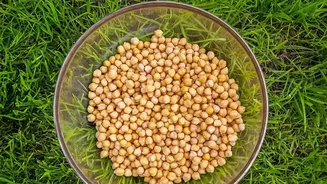
However, relying heavily on imports is a double-edged sword. While it can provide immediate relief to consumers, it can also hurt domestic farmers. If the market is flooded with cheaper imports around harvest time, local farmers may be forced to sell their produce at prices below their Minimum Support Price (MSP), or even below their cost of production. This disincentivises them from cultivating pulses in the following season, potentially worsening the domestic supply problem in the long run. Recognising this, the government often employs a calibrated approach. For instance, while considering duty cuts for lentils, there has been talk of keeping the import duty on chickpeas (chana) to encourage farmers who are about to begin planting the crop. It’s a delicate balance between consumer affordability and farmer welfare.
Beyond Imports: The Quest for Self-Reliance
Most experts agree that while imports are a necessary tool for managing short-term price shocks, they are not a sustainable long-term solution. The ultimate goal is 'Aatmanirbharta' or self-reliance in pulses. Achieving this requires a multi-pronged strategy focused on boosting domestic production. This includes developing high-yield, climate-resilient seed varieties, improving irrigation facilities for pulse-growing regions, and ensuring robust procurement mechanisms so that farmers have an assured market for their produce at a fair price. Initiatives like organising "pulses villages" and the National Food Security Mission are steps in this direction, aiming to make India's pulse production more stable and resilient.