

A Giant Leap for Lunar Logistics
Colorado-based aerospace company Lunar Outpost has made significant progress in identifying specific locations that are promising candidates for future lunar bases. The key isn't just finding a flat place to land; it's about finding water. Using advanced
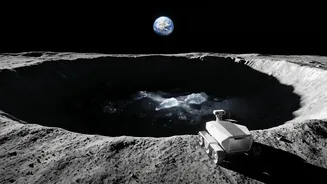
mapping technologies, including data from orbital probes and its own prospecting rover platforms, the company is pinpointing areas, particularly around the Moon's South Pole, where water ice is believed to be accessible. This isn't just an academic exercise. This is a crucial step in the plan to build a sustainable, long-term human presence on the Moon, a core goal of programs like NASA's Artemis mission. The data gathered by companies like Lunar Outpost helps answer the most critical question for any lunar settlement: where do you get your resources?
Why Water Is the Moon’s Gold
On Earth, water is essential for life. In space, it's that and so much more. Water (H2O) can be split into its component elements, hydrogen and oxygen, through a process called electrolysis. Liquid oxygen and liquid hydrogen are the primary ingredients in modern rocket propellant. The ability to source water on the Moon and convert it into fuel is a game-changer for space exploration. This concept, known as in-situ resource utilization (ISRU), means that spacecraft leaving Earth would no longer need to carry all the fuel for their entire round trip. Instead, they could launch to the Moon, refuel at a lunar outpost, and then travel onward to Mars or other deep-space destinations. This dramatically reduces the cost and complexity of missions, making the entire solar system more accessible.
The Tech Behind the Treasure Map
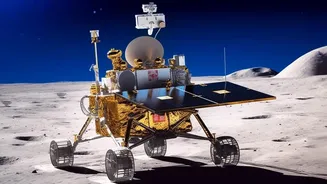
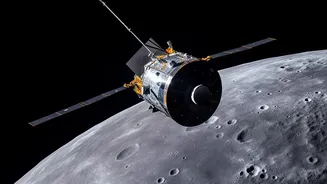
Identifying these icy reservoirs is a high-tech treasure hunt. It involves a combination of orbital data and ground-level prospecting. Orbiters like NASA’s Lunar Reconnaissance Orbiter and its ShadowCam instrument have been mapping the permanently shadowed regions of polar craters, where temperatures are low enough for ice to remain stable. However, recent studies suggest this surface ice might be patchier than once hoped. This makes ground-based prospecting even more critical. Lunar Outpost is developing a fleet of rovers, including its Mobile Autonomous Prospecting Platform (MAPP) and larger Pegasus and Eagle models, designed to explore these areas. These rovers use instruments like drills and mass spectrometers to analyze the lunar soil, or regolith, confirming the presence and concentration of water ice beneath the surface. The company is also integrating advanced AI chips to help its rovers navigate and analyze data autonomously, a vital capability given the communication delays between Earth and the Moon.
From Maps to Mining
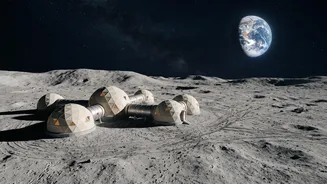
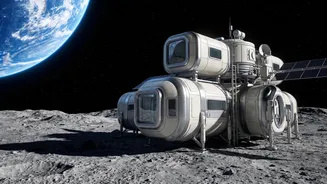
With candidate locations identified, the next monumental task is figuring out how to extract and process the water. This will involve robotic missions to drill into the frozen regolith, heat it to release the water vapor, and then capture and purify it. NASA is actively testing technologies for this entire process, from ice extraction to liquefying the resulting oxygen for storage as propellant. Companies like Lunar Outpost are not just focused on exploration; their business model is built on providing the infrastructure and robotic workforce needed for these future construction and mining operations. The goal is to create a fully operational lunar base, complete with habitation modules, power systems, and the all-important ISRU facilities that turn local resources into usable products like water, air, and fuel.
Building a Gateway to the Solar System
The progress made by Lunar Outpost and its partners represents a fundamental shift in our approach to space. We are moving from an era of temporary visits to one of permanent settlement and industrialization. A lunar base with refuelling capabilities would serve as a critical staging point, or 'gateway,' for more ambitious missions. It makes voyages to Mars more feasible by allowing for a lighter launch from Earth and a refuelling stop on the way. This international effort, with both national agencies like NASA and private companies like Lunar Outpost playing key roles, is laying the foundation for a true lunar economy. The identification of these water-rich sites is not just a scientific discovery; it's the drawing of a map that will guide the next generation of human expansion into the solar system.