


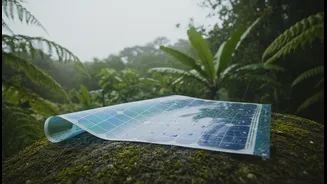


The Monsoon Challenge
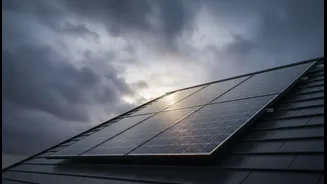
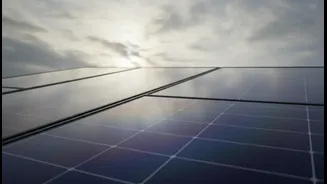
India has made massive strides in solar energy, building some of the largest solar parks in the world as it pushes towards ambitious renewable energy targets. However, the annual monsoon season presents a significant hurdle. For several months a year,
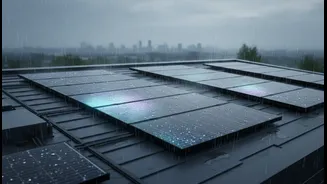
heavy cloud cover and continuous rain can cause solar power generation to drop substantially. Studies have shown that solar output can decrease by 15% or more during this period, creating volatility in the power grid and making it harder to rely on solar as a consistent, year-round source of energy. This seasonal dip is a major challenge for grid planners and investors who depend on predictable energy yields.
Harnessing the Power of Raindrops
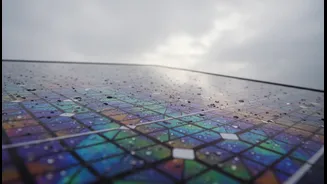
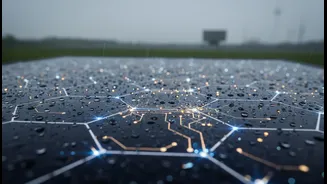
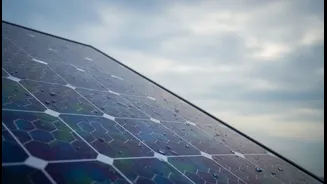
The solution sounds like science fiction: a solar panel that generates electricity from falling rain. Researchers across the globe are turning this idea into a reality by developing hybrid, all-weather solar panels. The concept isn't to replace the primary function of capturing sunlight, but to add a complementary technology that harvests energy from a different source. The most promising approach involves placing a special, transparent layer on top of a conventional photovoltaic (PV) solar cell. When the sun is out, this layer is see-through and doesn't interfere with the solar cell beneath. When it rains, this top layer gets to work.
How Triboelectricity Works
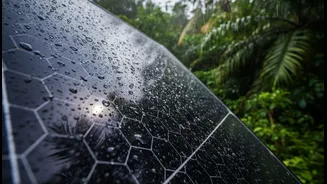
The magic behind these panels is a principle called the triboelectric effect. It's the same phenomenon that creates static electricity when you rub a balloon on your hair. This new layer on the solar panel is a type of device called a Triboelectric Nanogenerator, or TENG. TENGs are designed to generate an electric charge through the friction of two different materials coming into contact. In this case, when a raindrop (which is slightly positively charged) strikes the negatively charged silicone or polymer surface of the TENG layer, it creates a charge imbalance. This process generates a tiny but usable electric current, effectively turning the kinetic energy of the falling raindrop into electricity.
Current Progress and Realistic Expectations
While the concept is proven, it's important to manage expectations. The amount of electricity generated from raindrops is currently much lower than what a panel can produce from direct sunlight. Think of it as a supplemental trickle charge rather than a full-power torrent. Research teams, including those at Soochow University in China and the Institute of Materials Science of Seville in Spain, have demonstrated successful lab prototypes. Some have generated over 100 volts from a single droplet's impact, enough to power small electronics. However, the technology is still in the advanced research and development phase. The main challenges are scaling it up for mass production, ensuring long-term durability, and improving the power output to make it economically viable for large-scale solar farms.
A Game-Changer for India's Energy Future?
Even with the current limitations, the potential for India is enormous. An all-weather solar panel could fundamentally change the reliability of solar power, especially in regions that experience heavy and prolonged monsoons like the Western Ghats and Northeast India. By providing a small but consistent power source during rainy and overcast days, these next-generation panels could help stabilize the grid, reduce reliance on backup fossil fuel plants, and make solar power a more dependable asset throughout the year. It could also provide power for off-grid applications in remote, rainy areas. The goal isn't just to make solar panels work in the rain, but to make our clean energy infrastructure more resilient and adaptable to the local climate.