
Seeing Water in a New Light
The breakthrough came from instruments like NASA's Stratospheric Observatory for Infrared Astronomy (SOFIA), a modified Boeing 747 carrying a powerful telescope. By flying high in Earth's atmosphere, SOFIA could detect the unique infrared signature of
water molecules (H2O) at a specific wavelength that is impossible to see from the ground. This allowed scientists to definitively distinguish water from its chemical cousin, hydroxyl (OH), which had been detected before. The data confirmed water was present not just in the extremely cold, permanently shadowed craters near the poles, but also on sunlit surfaces, trapped within glass beads or between grains of lunar dust, shielded from the harsh environment.
From Scarcity to Abundance
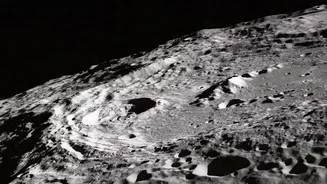
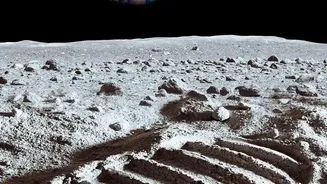
For decades, the prevailing view based on samples from the Apollo missions was that the Moon was bone-dry. That picture began to change with missions like India's Chandrayaan-1, which carried a NASA instrument that provided the first direct evidence of water in 2009. However, the latest infrared findings have elevated this understanding, suggesting water is more widespread than previously thought. Data from SOFIA indicated concentrations of 100 to 412 parts per million in the soil of Clavius Crater — roughly equivalent to a 350 ml bottle of water in a cubic meter of soil. While this makes the Moon about 100 times drier than the Sahara desert, the sheer volume of accessible regolith means this could translate into a significant resource.
The Moon as a Deep Space Fuelling Station
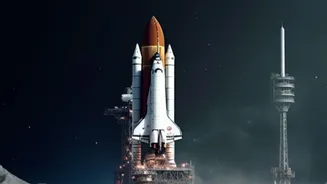
The confirmation of accessible water is a game-changer for space exploration. Water is one of the heaviest and most crucial resources to launch from Earth. Finding it in-situ on the Moon has transformative potential. Beyond providing drinking water and breathable air for astronauts, water (H2O) can be split into its components: hydrogen and oxygen. These are the primary components of modern rocket propellant. This means the Moon could one day serve as a fuelling station for missions venturing further into the solar system, such as to Mars. It dramatically reduces the cost and complexity of deep-space travel by allowing spacecraft to "live off the land."
India's Role and the Next Lunar Frontier
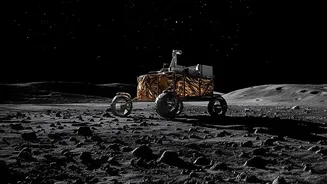
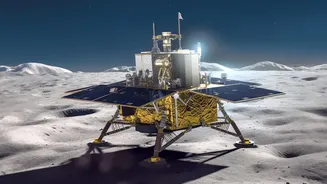
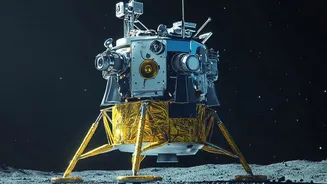
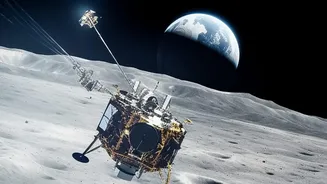
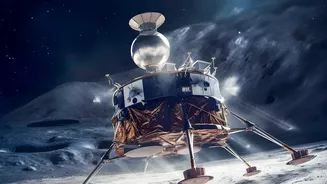
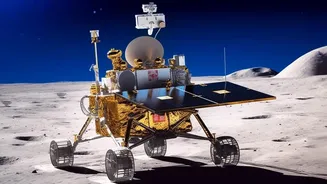
India's space programme has been central to the story of lunar water. ISRO's Chandrayaan-1 mission was instrumental in the initial discovery. The historic landing of Chandrayaan-3 near the lunar south pole in 2023 was driven by the goal of exploring this region, which is believed to hold vast reservoirs of water ice in its permanently shadowed craters. The orbiter from Chandrayaan-2 is continuing this work, mapping water concentrations with its advanced spectrometers. This positions India at the forefront of the new lunar rush, as nations and private companies look to understand and eventually utilise these resources under frameworks like the Artemis Accords.
Unlocking the Secrets of the Solar System
Beyond its practical applications, lunar ice is a scientific treasure trove. These ice deposits, some of which may have been locked away in cold traps for billions of years, are a pristine record of the early solar system. By analysing the ice, scientists can learn more about the delivery of water to Earth and other planets, and gain insights into the history of comet and asteroid impacts. The Moon, in essence, holds a frozen archive of our cosmic neighbourhood's past. Future missions, including robotic landers and eventually human explorers, will be tasked with drilling into these deposits to unlock their secrets.