
From Flat to Fantastic
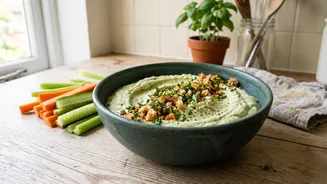
A homemade vegetable dip can be a beautiful thing—a creamy, vibrant centerpiece for any platter of crudités. But often, the reality falls a bit short. The flavor might be pleasant, but the texture is uniform and unexciting. It lacks the satisfying crunch
and layered complexity that make a dip truly memorable. Before you reach for another store-bought tub, consider the potential of what you might otherwise discard. The path to a superior dip doesn't require expensive, exotic ingredients; it simply calls for a little kitchen creativity and a desire to waste less. The stale end of a loaf of bread and the often-ignored stems of fresh herbs are two powerhouse ingredients hiding in plain sight, ready to add the crunch and depth that will make your dips the talk of the party.
The Ultimate Crunch: Toasted Breadcrumbs
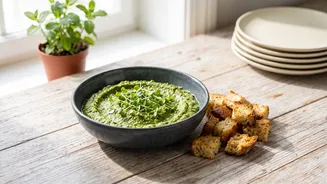
Stale bread is a culinary gift. Its lack of moisture makes it the perfect candidate for creating exceptionally crispy breadcrumbs. Unlike fresh bread, which can turn gummy, dried-out bread transforms into a crunchy, irresistible topping. Some recipes even use breadcrumbs as a thickener within the dip itself, like in the Middle Eastern red pepper dip, muhammara. Making your own is simple. Cut your stale bread—pumpernickel, sourdough, or a simple white loaf all work well—into cubes and bake them at a low temperature (around 160°C) until they are completely dry and crisp. Once cooled, pulse them in a food processor until you have coarse crumbs. To take them to the next level, toss the crumbs in a skillet with a little olive oil or melted butter, stirring until they're golden brown and fragrant. This is your moment to add flavor. A sprinkle of paprika, garlic powder, or grated Parmesan cheese tossed with the warm crumbs will make for a truly dynamic topping that provides both a savory taste and a delightful textural contrast to a creamy dip.
The Hidden Flavor: Tender Herb Stems
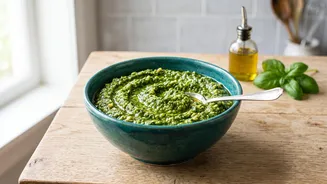
For too long, the stems of fresh herbs have been wrongfully discarded. While woody stems from plants like rosemary or thyme are best reserved for infusing stocks or oils, the tender stems of soft herbs are packed with flavor. The stems of cilantro, parsley, and dill are not only edible but contain a potent, fresh taste that is sometimes even more pronounced than the leaves. Instead of painstakingly picking off each leaf, you can put the entire upper part of the herb to good use. The key is to chop them very finely. By mincing the tender stems, you release their aromatic oils and ensure they integrate seamlessly into your dip, providing bright, grassy notes and a subtle, pleasant texture. For dips like a chimichurri or a green goddess dressing, using the stems along with the leaves is a classic technique. They add a layer of complexity and a satisfying freshness that cuts through the richness of creamy bases like yogurt or cream cheese.
Bringing It All Together
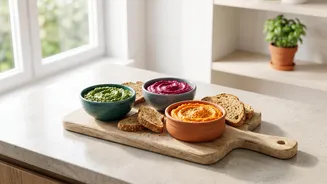
The magic happens when you combine these two elements. The savory, toasted breadcrumbs provide a crunchy, hearty texture on top, while the finely minced herb stems woven throughout the dip offer pops of fresh, zesty flavor. Imagine a creamy cannellini bean and yogurt dip. On its own, it's smooth and mild. But fold in finely chopped parsley stems and top it with garlic-and-olive-oil-toasted breadcrumbs, and you have a multi-layered experience. The crunch of the crumbs gives way to the creamy dip, which is then punctuated by the fresh bite of the parsley. For the best result, add the breadcrumbs just before serving to ensure they stay as crispy as possible and don't become soggy. This combination works for nearly any dip, from a classic ranch or onion dip to a simple hummus or a tangy pickle dip.